Unlocking Ancient Rhythms: Zimbabwean Rock Art Reveals Trance, Dance, and Ritual
New research from the ERC Artsoundscapes project is transforming our understanding of Zimbabwe's ancient rock art. Far from mere depictions, these millennia-old paintings, created by hunter-gatherers and early farmers, are now believed to be vivid records of trance states, ritualistic dance, and the profound spiritual experiences of their creators. This groundbreaking analysis sheds light on the deep connection between sound, movement, and spirituality in ancient African societies, offering a unique window into their complex belief systems.
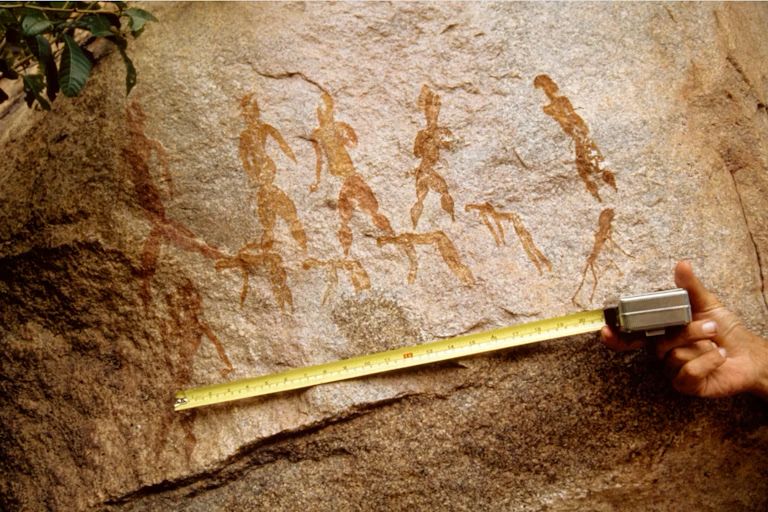
For millennia, the silent narratives etched onto the rock faces of Zimbabwe have captivated observers, hinting at stories far deeper than their static forms suggest. These ancient canvases, painted by successive waves of hunter-gatherer societies and later by farming communities over the last 10,000 years, are more than just historical records; they are profound windows into the spiritual and social lives of their creators. Now, thanks to the meticulous work of the ERC Artsoundscapes project, based in Spain, a revolutionary interpretation is emerging: these paintings are not just art, but dynamic chronicles of trance states, ritualistic dance, and the immersive sensory experiences that defined ancient Zimbabwean spirituality.
The Echoes of Ancient Soundscapes
The Artsoundscapes project, which began its focused study of Zimbabwean rock art in 2021, has shifted the paradigm from viewing these images as purely visual artifacts to understanding them as integral components of a multi-sensory world. The project's core hypothesis posits that many of the enigmatic figures and scenes—often depicting humans with exaggerated postures, animal-headed beings, and intricate patterns—are direct representations of experiences induced by altered states of consciousness. These states, frequently achieved through rhythmic dance, drumming, chanting, and sometimes psychoactive plants, were central to the spiritual practices of many ancient cultures, including the San people, whose descendants are known for their rich trance traditions.
Researchers are particularly interested in the dynamic poses of the human figures. Many are shown bending forward from the waist, with arms thrown back, or with heads tilted upwards, positions strikingly similar to those adopted during intense, prolonged dancing that can lead to trance. The presence of animal-human hybrids, a common motif, is interpreted as a depiction of shamans or spiritual practitioners undergoing transformation during these states, bridging the human and spirit worlds. The art, therefore, becomes a visual diary of spiritual journeys, a guide to understanding the cosmology and inner experiences of these ancient societies.
Deciphering the Dance of the Spirits
The connection between rock art and trance states is not a new concept, particularly in Southern Africa, where pioneering work by scholars like David Lewis-Williams has illuminated the shamanistic interpretations of San rock art. However, the Artsoundscapes project brings a fresh, interdisciplinary lens, incorporating archaeoacoustics and neuroscience to bolster these theories. By analyzing the acoustic properties of the rock shelters themselves, researchers can infer how sound would have resonated within these spaces, potentially enhancing the immersive quality of rituals and contributing to the induction of trance. Imagine the rhythmic clapping, the deep thrum of a drum, or the hypnotic chanting echoing off the cave walls, creating an environment ripe for spiritual transcendence.
The project emphasizes that the art wasn't just about trance; it was likely part of the ritual. The act of painting itself, often performed in dimly lit caves, could have been a meditative or trance-like experience. The repetitive motions, the focus on intricate details, and the sacred context of the locations all contributed to a holistic spiritual engagement. This perspective transforms the rock shelters into sacred theaters, where art, sound, dance, and spiritual communion converged. The visual narratives served not only as records but also as mnemonic devices, guiding future generations through the complex pathways of their spiritual heritage.
Beyond Hunter-Gatherers: The Farmers' Legacy
While much of the focus on Southern African rock art traditionally centers on the San hunter-gatherers, the Zimbabwean context is unique because it also includes contributions from later farming communities. These groups, who arrived in the region millennia after the initial hunter-gatherer artists, also left their mark on the rock faces. This presents a fascinating layer of cultural continuity and adaptation. Did the farming communities adopt, adapt, or entirely re-interpret the spiritual traditions depicted by their predecessors? The evidence suggests a complex interplay, with some themes potentially carrying over or being re-imagined within new cultural frameworks.
For instance, while the iconic trance dance figures are often attributed to hunter-gatherers, later farming communities also engaged in their own forms of ritual and spiritual expression. Understanding the distinctions and overlaps in artistic styles, thematic content, and placement of art between these different groups is crucial for a complete picture. The Artsoundscapes project is meticulously cataloging these differences, using techniques like radiocarbon dating and stylistic analysis to differentiate between periods and cultural influences. This allows for a more nuanced understanding of how spiritual practices evolved and persisted across diverse societies inhabiting the same landscapes over vast stretches of time.
Implications for Cultural Heritage and Modern Understanding
This new research has profound implications, not only for archaeology and anthropology but also for the preservation of cultural heritage and our understanding of human cognition. By highlighting the dynamic, multi-sensory nature of this ancient art, the project elevates its status from mere archaeological curiosity to a vibrant testament to human spirituality and creativity. It underscores the deep human need for connection to the transcendent, a need expressed through art, music, and movement since time immemorial.
Furthermore, the findings provide invaluable insights into the cognitive processes involved in altered states of consciousness, offering a unique historical perspective on the interplay between mind, body, and environment. For the people of Zimbabwe, this research reaffirms the richness and depth of their ancestral heritage, providing a powerful narrative that connects contemporary cultural practices to ancient roots. It also serves as a poignant reminder of the fragility of these irreplaceable sites, emphasizing the urgent need for their protection against natural degradation and human impact.
A Future Illuminated by the Past
The work of the ERC Artsoundscapes project is far from over. Future endeavors will likely involve more detailed archaeoacoustic studies, virtual reality reconstructions of the rock shelters to simulate ancient ritual environments, and continued collaboration with indigenous communities to incorporate their oral traditions and contemporary spiritual insights. This holistic approach promises to unlock even more secrets from these ancient canvases, ensuring that the whispers of trance, the rhythms of dance, and the echoes of ritual continue to resonate through time.
Ultimately, the rock art of Zimbabwe, when viewed through this new lens, ceases to be a static collection of images. It transforms into a living archive, pulsating with the energy of ancient ceremonies, inviting us to listen more closely to the stories it tells, and to appreciate the enduring power of human spirituality to transcend the boundaries of time and perception.
Stay Informed
Get the world's most important stories delivered to your inbox.
No spam, unsubscribe anytime.
Comments
No comments yet. Be the first to share your thoughts!