High North Security: Allied Unity Critical Amidst Geopolitical Shifts, Says First Sea Lord
The security of the High North and North Atlantic hinges on unwavering allied cooperation, a sentiment underscored by First Sea Lord General Sir Gwyn Jenkins. His remarks, made ahead of a crucial Joint Expeditionary Force (JEF) meeting, highlight the escalating strategic importance of the Arctic region. This article delves into the complex geopolitical landscape, the role of international alliances, and the challenges posed by a resurgent Russia in this critical maritime domain, emphasizing the need for permanent, coordinated action.
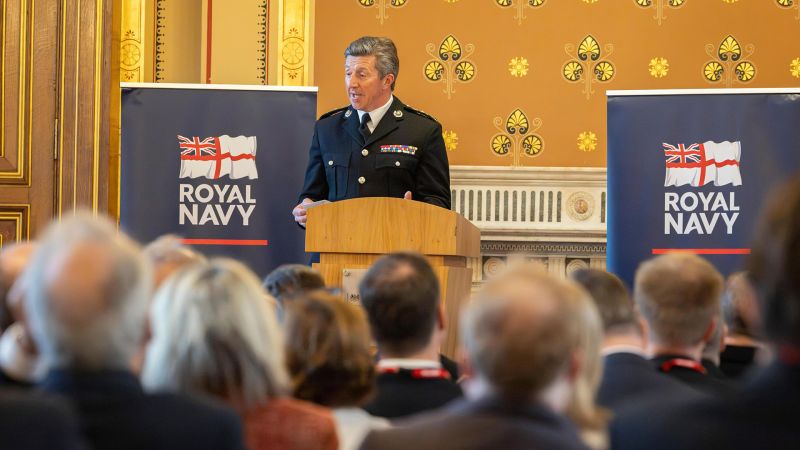
In the icy expanse where geopolitics meets geography, the High North and North Atlantic have emerged as a crucible of international security concerns. The region, once primarily a domain for scientific exploration and resource extraction, is now a focal point for strategic competition, demanding a unified and resolute response from Western allies. This critical assessment comes directly from General Sir Gwyn Jenkins, the UK's First Sea Lord, who recently emphasized that the security of this vital area "depends on our ability to act together with allies, permanently at pace."
General Jenkins' remarks, delivered in anticipation of a pivotal meeting of the Joint Expeditionary Force's (JEF) naval chiefs in Whitehall, underscore a growing consensus among defense strategists: collective security, sustained vigilance, and interoperability are not merely desirable but absolutely essential. The High North, encompassing the Arctic and its surrounding seas, represents a unique convergence of environmental fragility, economic opportunity, and military significance, making its stability paramount for global peace.
The Resurgent Arctic: A New Geopolitical Frontier
The Arctic's strategic importance has surged dramatically in recent decades, driven by climate change and shifting geopolitical dynamics. As polar ice recedes, new shipping lanes, such as the Northern Sea Route, become increasingly viable, offering shorter transit times between Asia and Europe. This accessibility, however, also opens up unprecedented opportunities for military maneuvers and resource exploitation, drawing the attention of both established and emerging powers. Russia, with its extensive Arctic coastline and significant military presence, views the region as a cornerstone of its national security and economic future. Its ongoing militarization of the Arctic, including the reactivation of Soviet-era bases and the deployment of advanced weaponry, has raised alarm bells across NATO and its partners.
Historically, the Arctic was a relatively quiet front during the Cold War, primarily serving as a transit route for submarine patrols. Today, it is a potential flashpoint. The melting ice caps are not just an environmental crisis; they are a geopolitical accelerant, creating new maritime frontiers that demand constant surveillance and robust defense. The strategic waterways, rich energy reserves, and critical underwater infrastructure (such as fiber optic cables) make the High North an indispensable theater for global power projection and economic leverage. The First Sea Lord's insistence on "acting together" highlights the recognition that no single nation can effectively manage the multifaceted challenges presented by this evolving landscape.
The Joint Expeditionary Force: A Pillar of Collective Defense
The Joint Expeditionary Force (JEF), a UK-led rapid response force comprising ten Northern European nations (UK, Denmark, Estonia, Finland, Iceland, Latvia, Lithuania, Netherlands, Norway, and Sweden), plays a crucial role in addressing these challenges. Conceived as a high-readiness force capable of responding to crises across a spectrum of operations, the JEF's focus on the High North and North Atlantic is particularly pertinent. Its members share a common interest in maintaining regional stability and deterring aggression, especially from a resurgent Russia.
The JEF's strength lies in its flexibility and its ability to integrate diverse national capabilities into a cohesive operational whole. Regular joint exercises, such as Exercise Nordic Response, are vital for enhancing interoperability, refining command and control structures, and demonstrating collective resolve. These drills are not merely symbolic; they are practical demonstrations of the JEF's capacity to deploy, operate, and sustain forces in challenging Arctic environments. General Jenkins' emphasis on acting "permanently at pace" speaks to the need for continuous presence, ongoing intelligence sharing, and the ability to adapt swiftly to evolving threats, rather than episodic engagements.
Challenges and the Path Forward: Deterrence Through Presence
Despite the clear imperative for cooperation, significant challenges persist. The sheer scale and harsh conditions of the High North present formidable logistical and operational hurdles. Maintaining a persistent presence requires substantial investment in ice-capable vessels, specialized equipment, and highly trained personnel. Furthermore, navigating the complex legal frameworks governing Arctic territories and resources demands diplomatic acumen alongside military readiness.
Another critical aspect is the need for deterrence through presence. A visible, credible allied naval and air presence in the North Atlantic and Arctic sends an unmistakable message to potential adversaries. It signals a collective commitment to defend shared interests and uphold international law. This presence is not solely about military might; it also encompasses intelligence gathering, surveillance, and reconnaissance (ISR) capabilities, which are essential for understanding the operational environment and anticipating threats.
The First Sea Lord's call to action is a reminder that the strategic calculus in the High North is constantly evolving. The long-term security of the region will depend on several key factors:
* Sustained Investment: Member nations must continue to invest in modern naval assets, Arctic-specific capabilities, and advanced surveillance technologies. * Enhanced Interoperability: Continued efforts to standardize procedures, share intelligence, and conduct joint training are paramount. * Diplomatic Engagement: While military readiness is crucial, diplomatic channels must remain open to de-escalate tensions and manage potential conflicts. * Resilience of Critical Infrastructure: Protecting underwater cables, energy pipelines, and other vital infrastructure from sabotage or disruption is a growing concern.
Conclusion: A Unified Front for a Frozen Frontier
The security of the High North is not an isolated concern; it is inextricably linked to broader global stability. The remarks by General Sir Gwyn Jenkins serve as a potent reminder that the challenges in this rapidly changing region demand a collective, coordinated, and unwavering response. The Joint Expeditionary Force and its allies are at the forefront of this effort, demonstrating that unity, vigilance, and the ability to act "permanently at pace" are the most effective deterrents against aggression and the surest path to safeguarding shared interests in this vital, frozen frontier. As the world watches the Arctic transform, the resolve of these nations to act together will define the future of security in the High North and beyond, ensuring that this critical maritime domain remains a zone of stability rather than contention. The message is clear: in the face of complex threats, allied unity is not just a preference, but an absolute necessity for regional and global security.
Stay Informed
Get the world's most important stories delivered to your inbox.
No spam, unsubscribe anytime.
Comments
No comments yet. Be the first to share your thoughts!