Hokkaido Quake Rattles Japan, Igniting Mega-Quake Fears in Tectonic Hotspot
A powerful 6.2-magnitude earthquake struck Hokkaido, Japan, early Monday, intensifying long-standing anxieties about a potential 'mega-quake' in the highly seismic nation. While no tsunami warning was issued and initial damage was minimal, the tremor serves as a stark reminder of Japan's precarious position on the Pacific Ring of Fire. Experts are closely monitoring seismic activity, urging continued vigilance and preparedness amidst growing concerns.
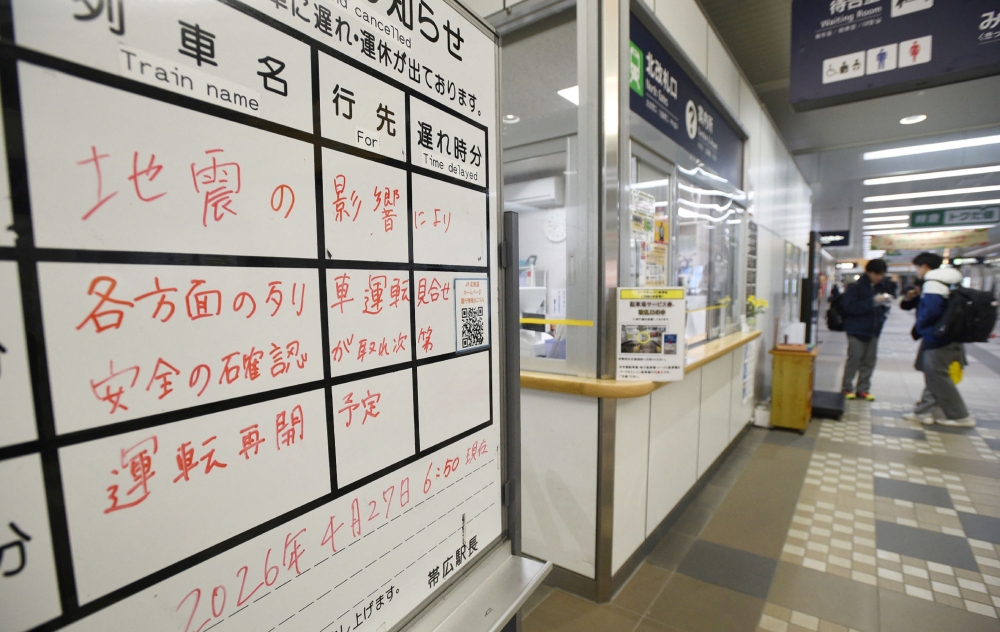
TOKYO, Japan – Early Monday morning, as the first light of dawn began to touch the eastern horizon, a formidable 6.2-magnitude earthquake sent tremors across Hokkaido, Japan's northernmost main island. The seismic event, reported by both US and Japanese meteorological agencies, occurred at a relatively shallow depth of 136 kilometers (85 miles) off the coast, sparking immediate, though ultimately unfounded, fears of a tsunami. While no tsunami warning was issued and initial reports indicated no significant damage or casualties, the incident has reignited a pervasive and deeply rooted anxiety within the island nation: the specter of a catastrophic 'mega-quake' and its devastating aftermath.
Japan, a nation intrinsically linked to its geological volatility, sits precariously atop the Pacific Ring of Fire, a horseshoe-shaped belt of intense seismic activity that encircles the Pacific Ocean. This latest tremor, though not on the scale of the 2011 Tohoku earthquake and tsunami, serves as a potent reminder of the constant, underlying threat that shapes Japanese society, infrastructure, and cultural psyche. For residents of Hokkaido, accustomed to frequent seismic activity, the jolt was a familiar, yet unsettling, wake-up call, prompting a collective pause to assess and reflect on their preparedness.
Japan's Tectonic Tapestry: A History of Seismic Resilience
Japan's geographical position is both a blessing and a curse. Its volcanic soils are fertile, and its coastlines offer rich marine resources, but these benefits come at the cost of being one of the world's most tectonically active regions. The country lies at the confluence of four major tectonic plates – the Pacific, North American, Eurasian, and Philippine Sea plates. These plates are in constant motion, grinding against each other, building immense pressure that is periodically released in the form of earthquakes. Historically, Japan has endured countless seismic events, from minor tremors to cataclysmic quakes that have reshaped its landscape and history.
One of the most defining moments in recent memory was the Great East Japan Earthquake and Tsunami of March 11, 2011. This magnitude 9.1 undersea megathrust earthquake triggered a massive tsunami that devastated large swathes of the Tohoku region, claiming over 15,000 lives and causing the Fukushima Daiichi nuclear disaster. The 2011 event profoundly altered Japan's approach to disaster preparedness, leading to stricter building codes, more sophisticated early warning systems, and enhanced public awareness campaigns. Yet, despite these advancements, the sheer unpredictability and immense power of nature remain a humbling challenge.
The Looming Threat of a Nankai Trough Mega-Quake
The recent Hokkaido tremor, while significant, pales in comparison to the potential magnitude of a feared Nankai Trough earthquake. The Nankai Trough is a subduction zone off the southern coast of Japan where the Philippine Sea Plate is subducting beneath the Eurasian Plate. Scientists have long warned that this region is overdue for a massive earthquake, potentially exceeding magnitude 9.0, with devastating consequences. Such an event could trigger widespread tsunamis affecting coastal areas from Kyushu to Tokyo, causing unprecedented damage and loss of life.
Government estimates suggest that a Nankai Trough mega-quake could result in: * Up to 320,000 fatalities. * Economic losses exceeding 220 trillion yen (approximately $1.5 trillion USD). * Widespread infrastructure collapse, including roads, bridges, and utilities. * Long-term societal disruption and displacement of millions.
The Japanese government and scientific community are investing heavily in research and mitigation strategies for this scenario. This includes advanced seismic monitoring, sophisticated tsunami modeling, and public education on evacuation routes and emergency protocols. The Hokkaido quake, therefore, serves as a crucial, albeit smaller, data point in the ongoing effort to understand and prepare for larger, more destructive events.
Preparedness and Innovation: Japan's Proactive Stance
Japan stands as a global leader in earthquake engineering and disaster preparedness. Its buildings are designed to sway rather than collapse, incorporating advanced seismic isolation and damping technologies. The country's early warning system, which can detect P-waves (the faster, less destructive primary waves) and issue alerts before the more damaging S-waves (secondary waves) arrive, provides precious seconds for people to take cover, slow down trains, and shut down critical infrastructure. This system was activated during the Hokkaido quake, demonstrating its efficacy.
Beyond technological solutions, Japan's culture of preparedness is deeply ingrained. Regular earthquake drills are conducted in schools and workplaces. Emergency kits are common in homes. Public awareness campaigns emphasize the importance of securing furniture, knowing evacuation routes, and having communication plans. This collective resilience, forged over centuries of living with seismic activity, is perhaps Japan's greatest asset in the face of natural disasters.
Global Implications and Lessons Learned
The recent Hokkaido earthquake, while a localized event, carries broader implications for disaster management worldwide. As climate change potentially exacerbates natural phenomena and urban populations continue to grow in vulnerable regions, Japan's experience offers invaluable lessons. The emphasis on: * Robust infrastructure designed to withstand seismic forces. * Advanced early warning systems that leverage cutting-edge technology. * Comprehensive public education and community-level preparedness. * Continuous scientific research into seismic activity and mitigation strategies.
These pillars of Japan's disaster resilience framework are models for other earthquake-prone nations. The world watches Japan not just for its technological prowess, but for its enduring spirit in the face of nature's formidable power. The Hokkaido quake, therefore, is not merely a news item; it is a reminder of humanity's ongoing dance with the dynamic forces of our planet, and the imperative to remain ever vigilant and prepared.
As Japan continues to navigate its seismic reality, the focus remains on enhancing resilience and minimizing future risks. The 6.2-magnitude tremor in Hokkaido, while causing no major disruption, reinforces the critical need for constant vigilance and continuous innovation in disaster preparedness. The conversation around the next 'big one' is never far from the surface, driving a nation to continually adapt and strengthen its defenses against the inevitable forces of the Earth.
Stay Informed
Get the world's most important stories delivered to your inbox.
No spam, unsubscribe anytime.
Comments
No comments yet. Be the first to share your thoughts!