Iran Declares Hormuz Control 'Definitive Strategy' Amid Soaring US Tensions
Iran's Revolutionary Guard has reaffirmed control over the Strait of Hormuz as a 'definitive strategy,' escalating an already volatile standoff with the United States. This declaration follows the cancellation of diplomatic talks and heightened military posturing in the crucial oil chokepoint. The move signals a dangerous new phase in a decades-long rivalry, with global economic and geopolitical ramifications.
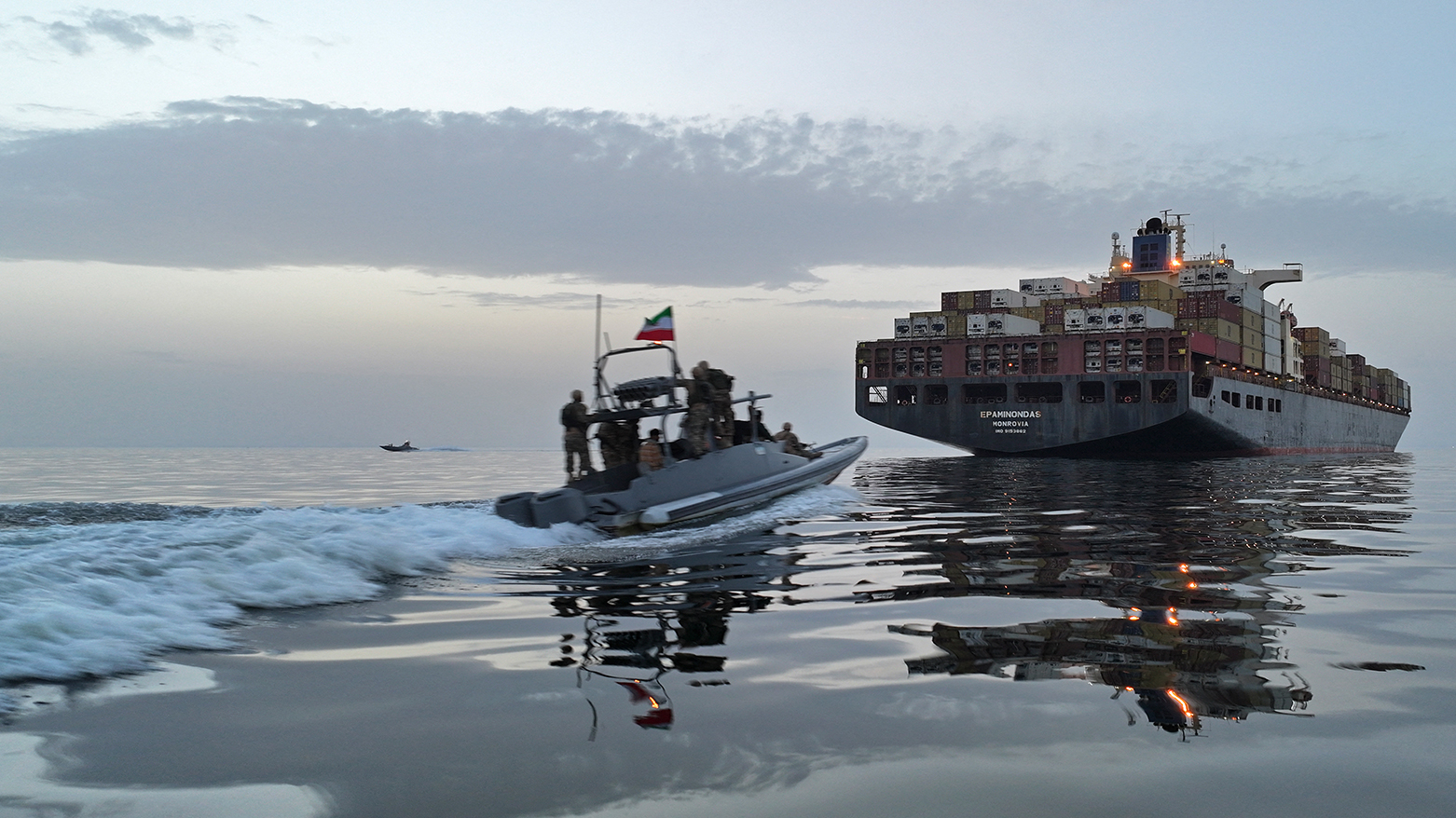
The Strait of Hormuz, a narrow waterway connecting the Persian Gulf to the open ocean, has long been a flashpoint in the tumultuous relationship between Iran and the West. On Saturday, Iran’s Islamic Revolutionary Guard Corps (IRGC) dramatically escalated this tension, declaring that control over the Strait remains a “definitive strategy” in its ongoing confrontation with the United States. This assertive stance, delivered amidst the backdrop of canceled diplomatic talks and increased military maneuvers, underscores a perilous new chapter in a rivalry that has global implications, particularly for energy markets and international shipping.
A Chokepoint of Global Significance
For decades, the Strait of Hormuz has been synonymous with geopolitical risk. Approximately one-fifth of the world's total oil consumption and one-third of all seaborne oil passes through this 21-mile-wide passage at its narrowest point. This makes it an indispensable artery for global energy supplies, linking major oil producers in the Middle East—including Saudi Arabia, Iraq, UAE, Kuwait, and Iran itself—to markets in Asia, Europe, and North America. Any disruption, or even the credible threat of one, sends immediate ripples through global financial markets and prompts anxieties among major oil-importing nations.
Iran's strategic leverage over the Strait is undeniable. Its southern coastline forms the northern boundary of the Strait, granting it significant geographical advantage. The IRGC's latest pronouncement is not merely rhetoric; it serves as a stark reminder of Tehran's capacity to disrupt global trade and its willingness to wield this power as a deterrent against perceived external threats. The declaration comes at a time when the U.S. has intensified its naval presence in the region, conducting exercises and deploying additional assets, further ratcheting up the military stakes.
Decades of Escalation: A Historical Context
The current standoff is not an isolated incident but rather the latest iteration of a protracted and often hostile relationship between Iran and the United States, dating back to the 1979 Islamic Revolution. The Strait of Hormuz has repeatedly featured in this narrative:
* 1980s Tanker War: During the Iran-Iraq War, both sides attacked oil tankers in the Gulf, leading to U.S. naval intervention to protect shipping. This period saw direct clashes, including the U.S. Navy's accidental downing of Iran Air Flight 655 in 1988. * Sanctions and Nuclear Program: U.S. and international sanctions over Iran's nuclear program have consistently fueled tensions, with Iran often threatening to close the Strait in response to economic pressure. * Recent Incidents: In recent years, there have been numerous incidents involving Iranian forces harassing or seizing commercial vessels, and confrontations with U.S. naval assets. These actions are often interpreted as Iran's way of demonstrating its capability and resolve in the face of U.S. pressure.
The IRGC's statement explicitly links the control of Hormuz to a “definitive strategy” against the U.S., implying that any attempt to impose a naval blockade or severely restrict Iran's own shipping would be met with a military response. This rhetoric, while familiar, carries added weight given the current geopolitical climate and the absence of direct diplomatic channels following the cancellation of talks.
The Diplomatic Vacuum and Military Posturing
The cancellation of planned diplomatic talks in Pakistan, reportedly initiated by Washington, has removed a crucial off-ramp for de-escalation. Diplomacy, however fragile, offers a mechanism for dialogue and the potential resolution of disputes. Its absence leaves a vacuum that is often filled by military signaling and heightened rhetoric, increasing the risk of miscalculation. The U.S. decision to cancel talks suggests a hardening of its stance, perhaps in response to Iran's continued defiance or its perceived destabilizing actions in the region.
On the military front, both sides are engaged in a dangerous game of brinkmanship. The U.S. maintains a robust military presence in the Gulf, including the Fifth Fleet based in Bahrain, equipped with advanced naval and air capabilities. Iran, while possessing a less technologically advanced conventional navy, compensates with an asymmetrical warfare doctrine, relying on:
* Fast attack craft: Swarms of small, highly maneuverable boats capable of harassing larger vessels. * Naval mines: A cost-effective weapon that can severely disrupt shipping lanes. * Anti-ship missiles: Both land-based and sea-based systems capable of targeting commercial and military vessels. * Submarines: A small fleet of conventional submarines that can operate stealthily in the shallow waters of the Gulf.
The IRGC's naval arm, in particular, is trained and equipped for operations within the Strait, emphasizing its role in enforcing Iran's claims over the waterway. This layered defense strategy is designed to make any potential naval blockade or large-scale military intervention by external powers exceedingly costly.
Economic and Geopolitical Implications
The implications of this escalating tension are far-reaching. Economically, the threat to the Strait of Hormuz directly impacts global oil prices. Even the threat of disruption can cause prices to spike, affecting consumers and industries worldwide. Major oil importers, particularly in Asia (China, India, Japan, South Korea), are highly dependent on the uninterrupted flow of oil through Hormuz. A prolonged closure or significant disruption would trigger a global energy crisis, with severe economic consequences.
Geopolitically, the situation further destabilizes an already volatile Middle East. Regional allies of the U.S., such as Saudi Arabia and the UAE, are directly impacted by Iranian actions in the Gulf. Their economies are heavily reliant on oil exports, and their security is intertwined with the stability of maritime routes. Any direct conflict could draw in other regional actors, potentially igniting a wider conflagration.
Moreover, the standoff complicates international efforts to address other pressing issues, from nuclear proliferation to regional conflicts. The focus on the Strait of Hormuz diverts diplomatic resources and exacerbates existing divisions within the international community regarding how to manage Iran.
The Path Forward: De-escalation or Confrontation?
The current trajectory suggests a dangerous escalation, with both sides seemingly entrenched in their positions. For Iran, asserting control over Hormuz is a matter of national sovereignty and a powerful bargaining chip against what it perceives as U.S. aggression and economic warfare. For the U.S. and its allies, ensuring freedom of navigation through international waters is a fundamental principle and a vital economic interest.
De-escalation requires a renewed commitment to diplomacy, perhaps through intermediaries, to establish channels of communication and explore potential compromises. Without such efforts, the risk of miscalculation, accidental confrontation, or deliberate escalation remains alarmingly high. The world watches with bated breath, understanding that the Strait of Hormuz is not just a strategic waterway, but a barometer of global stability. The “definitive strategy” declared by Iran could either be a powerful deterrent or a prelude to an unprecedented crisis, depending on the choices made by all parties in the coming weeks and months.
Stay Informed
Get the world's most important stories delivered to your inbox.
No spam, unsubscribe anytime.
Comments
No comments yet. Be the first to share your thoughts!