Iran's Sanctions Survival: How Decades of Pressure Forged Economic Resilience
Decades of relentless Western sanctions, far from crippling Iran, have inadvertently fostered a unique economic resilience. The nation's systematic stockpiling and domestic production capabilities have allowed it to withstand external pressures, challenging conventional notions of economic warfare. Experts suggest that attempts to isolate Iran economically may be failing due to its deeply ingrained self-sufficiency strategies.
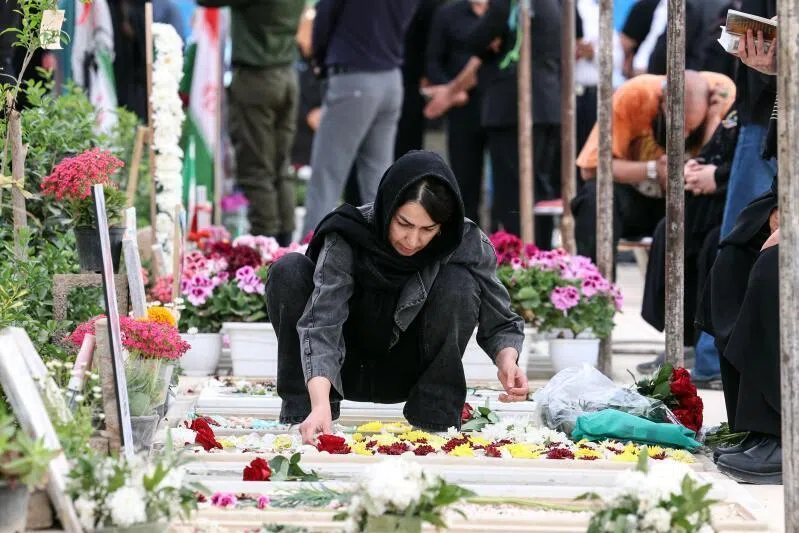
In the intricate geopolitical chess game of the Middle East, Iran has long been a pawn subjected to immense pressure, primarily through a relentless barrage of Western economic sanctions. For decades, these measures, designed to cripple its economy and force policy changes, have instead forged an unexpected and formidable resilience within the nation. Far from collapsing under the weight of isolation, Iran's state, businesses, and people have adapted, innovating and enduring in ways that challenge conventional understandings of economic warfare.
The Anatomy of Sanctions: A Historical Perspective
To understand Iran's current economic fortitude, one must delve into the history of sanctions. The United States first imposed sanctions on Iran in 1979 following the Islamic Revolution and the hostage crisis, targeting its financial assets. These measures escalated significantly in the 1990s, with the Iran and Libya Sanctions Act (ILSA), aiming to deter foreign investment in Iran's energy sector. The most stringent period began in the early 2010s, particularly under the Obama administration, focusing on Iran's nuclear program. These sanctions targeted its oil exports, banking sector, and access to international financial systems, aiming to cut off its primary revenue streams and isolate it from global commerce. The Trump administration later reimposed and expanded these sanctions after withdrawing from the Joint Comprehensive Plan of Action (JCPOA) in 2018, pushing for a policy of "maximum pressure."
The intent behind these sanctions has always been clear: to create sufficient economic pain to compel the Iranian regime to alter its behavior, particularly concerning its nuclear ambitions, regional influence, and human rights record. However, the long-term, cumulative effect has been a forced evolution towards self-reliance, a kind of economic Darwinism where only the most adaptable survive and thrive.
Strategic Stockpiling and Domestic Ingenuity
One of the most significant strategies Iran has employed to counter sanctions is the systematic stockpiling of essential goods, spare parts, and industrial components. This proactive approach ensures that critical sectors, from manufacturing to energy, can continue operating even when international supply chains are severed. Experts note that the US attempt to pressure Iran by halting traffic to its Persian Gulf ports, for instance, may ultimately fail precisely because the country has built up substantial reserves. This isn't a short-term fix but a deeply ingrained policy that anticipates future disruptions.
Beyond stockpiling, Iran has fostered a robust domestic production capability. Faced with import restrictions, Iranian industries have been compelled to innovate and produce locally what they once sourced internationally. This has led to the growth of a "resistance economy", a term often used by Iranian officials, emphasizing self-sufficiency and reducing dependence on foreign goods. While this has undoubtedly come with challenges, including higher production costs and potentially lower quality in some sectors, it has also stimulated local employment and technological advancement in others. The pharmaceutical industry, for example, has seen significant growth, with Iran now producing a large percentage of its own medicines.
The Role of Informal Networks and Parallel Economies
Iran's resilience is not solely a product of state-led initiatives. The country has developed sophisticated informal networks and parallel economic structures to circumvent sanctions. This includes complex systems for oil exports, often involving ship-to-ship transfers, falsified documents, and opaque financial transactions that make tracking and enforcement exceedingly difficult. The hawala system, an informal value transfer network, has also played a crucial role in facilitating financial transactions outside the conventional banking system.
Moreover, Iranian businesses and individuals have become adept at finding alternative markets and trading partners, often turning to countries less aligned with Western sanctioning policies. China, Russia, and even some regional neighbors have continued to engage in trade with Iran, albeit often through indirect or complex mechanisms. This ability to diversify economic relationships and leverage non-Western channels further undermines the effectiveness of broad-based sanctions.
Social Adaptation and Political Implications
The impact of sanctions extends beyond economics, deeply affecting the social fabric of Iran. Decades of hardship have instilled a certain stoicism and adaptability among the populace. While sanctions undoubtedly cause suffering, leading to inflation, unemployment, and reduced living standards, they have also, paradoxically, fostered a sense of national unity and defiance against external pressure. The Iranian people, accustomed to navigating scarcity and economic uncertainty, have developed coping mechanisms that allow them to endure.
From a political standpoint, the sanctions have often been counterproductive to their stated goals. Instead of leading to regime change or significant policy shifts, they have frequently been used by the Iranian government to rally public support, portraying the measures as an act of aggression against the entire nation. This narrative of external siege can strengthen the resolve of the ruling establishment and create a perception of shared struggle, making it harder for external pressure to achieve its desired political outcomes.
The Future of Sanctions: A Diminishing Return?
As Iran continues to demonstrate its capacity for economic survival, the long-term efficacy of sanctions as a primary foreign policy tool comes under increasing scrutiny. Experts like Esfandyar Batmanghelidj, founder of Bourse & Bazaar, suggest that the US maximum pressure campaign has reached a point of diminishing returns. The initial shock value of sanctions has worn off, and Iran has largely absorbed the impact, building structural resilience. Further tightening of sanctions may yield little additional leverage and instead further entrench Iran's self-sufficiency, making it even harder to reintegrate into the global economy should a diplomatic breakthrough occur.
Key takeaways for policymakers: * Sanctions can foster resilience: Prolonged sanctions can inadvertently strengthen a target's ability to withstand pressure. * Diversification of strategies: Relying solely on economic pressure may be insufficient to achieve complex foreign policy goals. * Humanitarian considerations: The impact on ordinary citizens must be weighed against strategic objectives. * Dialogue remains crucial: Economic pressure alone is unlikely to replace the need for diplomatic engagement.
In conclusion, Iran's journey through decades of sanctions offers a compelling case study in national resilience. What began as an attempt to isolate and weaken has, in many ways, inadvertently forged a more self-reliant and strategically adaptable nation. As the international community grapples with complex geopolitical challenges, the Iranian experience serves as a powerful reminder that economic pressure, while a potent tool, can also have unintended consequences, ultimately hardening rather than breaking the will of a determined state.
Stay Informed
Get the world's most important stories delivered to your inbox.
No spam, unsubscribe anytime.
Comments
No comments yet. Be the first to share your thoughts!