Japan on High Alert: Aftershocks and Tsunami Warnings Loom Following 7.7 Magnitude Quake
Japan is bracing for potential further seismic activity after a powerful 7.7 magnitude earthquake struck off its north-east coast, prompting tsunami warnings and widespread evacuations. Meteorological officials have issued a grave warning, indicating a significant risk of another, potentially stronger, tremor within the coming week. This event reignites concerns about the nation's vulnerability to natural disasters and the efficacy of its advanced warning systems.
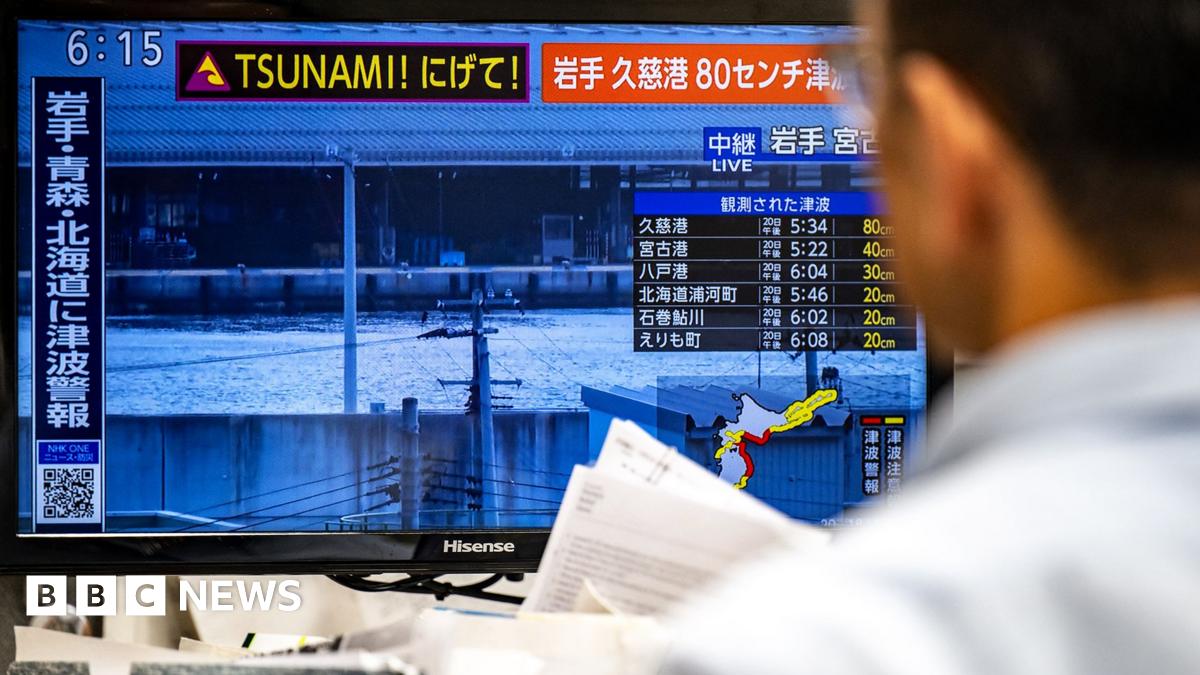
The ground beneath Japan's north-eastern coast violently shuddered recently, as a 7.7 magnitude earthquake ripped through the seabed, sending shockwaves across the region and triggering immediate tsunami warnings. The powerful tremor, which struck off the coast, prompted urgent evacuation orders for thousands of residents and raised fears of waves reaching up to three meters high. While the immediate aftermath saw coastal communities breathe a collective sigh of relief as the worst-case tsunami scenarios did not materialize, the nation remains on edge. Japan's meteorological agency has issued a stark and unsettling warning: the possibility of another, potentially stronger earthquake within the next seven days is significantly elevated, plunging the country into a period of heightened vigilance and anxiety.
A Nation Forged in Fire and Water: Japan's Seismic Reality
Japan sits precariously atop the Pacific Ring of Fire, a horseshoe-shaped belt of intense seismic activity that encircles the Pacific Ocean. This geological reality means the archipelago experiences thousands of earthquakes annually, ranging from imperceptible tremors to devastating mega-quakes. The recent 7.7 magnitude event is a stark reminder of this inherent vulnerability. The nation's advanced infrastructure and stringent building codes are a testament to its long history of coping with seismic events, yet each significant quake tests the limits of preparedness and resilience. From the Great Kanto Earthquake of 1923, which devastated Tokyo and Yokohama, to the more recent 2011 Great East Japan Earthquake and Tsunami, which claimed over 15,000 lives and triggered the Fukushima Daiichi nuclear disaster, Japan's history is inextricably linked to the earth's restless movements. These past catastrophes have shaped a national psyche of preparedness and an unwavering commitment to developing cutting-edge disaster mitigation technologies.
The Anatomy of a Warning: How Japan Responds
When an earthquake of significant magnitude strikes, Japan's sophisticated Japan Meteorological Agency (JMA) springs into action. Utilizing an extensive network of seismometers and ocean-bottom pressure sensors, the JMA can rapidly assess the quake's parameters – its magnitude, depth, and epicenter – and, crucially, determine the potential for a tsunami. For the recent 7.7 magnitude event, the agency swiftly issued tsunami advisories and warnings, urging coastal residents to evacuate to higher ground. This rapid response system, honed over decades, is designed to provide precious minutes or even hours for people to move to safety. The system's effectiveness relies on: * Early detection: Real-time data from seismic sensors allows for immediate alerts. * Public dissemination: Warnings are broadcast via television, radio, mobile phone alerts (J-Alert system), and public address systems. * Pre-established evacuation routes: Communities have designated safe zones and evacuation paths.
However, the current warning of a potential stronger follow-up quake presents a unique challenge. While aftershocks are common, the explicit forecast of a potentially larger event necessitates sustained public awareness and preparedness, extending beyond the immediate post-quake period.
Expert Analysis: The Science Behind the 'Stronger Quake' Warning
Seismologists explain that large earthquakes often alter the stress distribution in the surrounding crust, potentially triggering further seismic activity. "When a large fault ruptures, it doesn't just release stress; it can also transfer stress to adjacent segments of the fault system or to nearby faults," explains Dr. Kenji Tanaka, a seismology expert at the University of Tokyo. "This can make those areas more prone to rupture in the immediate aftermath." The JMA's warning is likely based on complex models that analyze the stress changes induced by the initial 7.7 magnitude quake, identifying areas where accumulated tectonic strain might now be at a critical level. This phenomenon, known as stress transfer, is a well-documented aspect of earthquake dynamics. The challenge for authorities lies in communicating this nuanced scientific risk without causing undue panic, while still ensuring the public remains appropriately vigilant. The specific timeframe of "within the next week" is often a statistical projection based on observed patterns of aftershock sequences and mainshock-aftershock relationships in similar geological settings.
Implications and Preparedness: A Nation on Edge
The ongoing threat has significant implications for Japan. Beyond the immediate safety concerns, there are economic and social repercussions. Businesses in affected regions may face disruptions, and the psychological toll on residents living under the shadow of potential further disaster can be substantial. For individuals, the JMA's warning underscores the critical importance of personal disaster preparedness. This includes: * Having an emergency kit: Stocking water, non-perishable food, first-aid supplies, and essential documents. * Knowing evacuation routes: Familiarizing oneself with local shelters and safe zones. * Securing homes: Fastening heavy furniture and appliances to prevent them from toppling during a quake. * Staying informed: Monitoring official news and weather alerts.
Local governments are also reinforcing their readiness, reviewing evacuation plans, and ensuring emergency services are on standby. The focus is not just on immediate response but on fostering a culture of sustained preparedness, recognizing that the threat extends beyond the initial event.
Looking Ahead: Japan's Enduring Resilience
As Japan navigates this period of heightened alert, the world watches, once again reminded of the nation's unique position at the forefront of natural disaster preparedness. The warning of a potential stronger earthquake serves as a powerful testament to the unpredictability of seismic events, even in a country with the most advanced monitoring systems. Yet, it also highlights Japan's commitment to transparency and public safety. The coming days will be critical, but if history is any guide, Japan's deep-rooted resilience, combined with its scientific prowess and community solidarity, will be its greatest assets in facing whatever challenges the restless earth may present. The lessons learned from past tragedies continue to inform and fortify a nation that lives in constant dialogue with nature's most formidable forces, always striving to protect its people and its future.
Stay Informed
Get the world's most important stories delivered to your inbox.
No spam, unsubscribe anytime.
Comments
No comments yet. Be the first to share your thoughts!