Kim Jong Un's 'Self-Blasting' Praise Reveals North Korea's Brutal Battlefield Doctrine
North Korean leader Kim Jong Un has publicly lauded soldiers who 'self-blasted' to avoid capture while fighting for Russia in Ukraine, confirming a long-suspected and disturbing military policy. This endorsement highlights the regime's extreme control over its forces and its readiness to sacrifice individual lives for perceived ideological purity. The revelation sends a chilling message about the nature of Pyongyang's military ethos and its implications for global security.
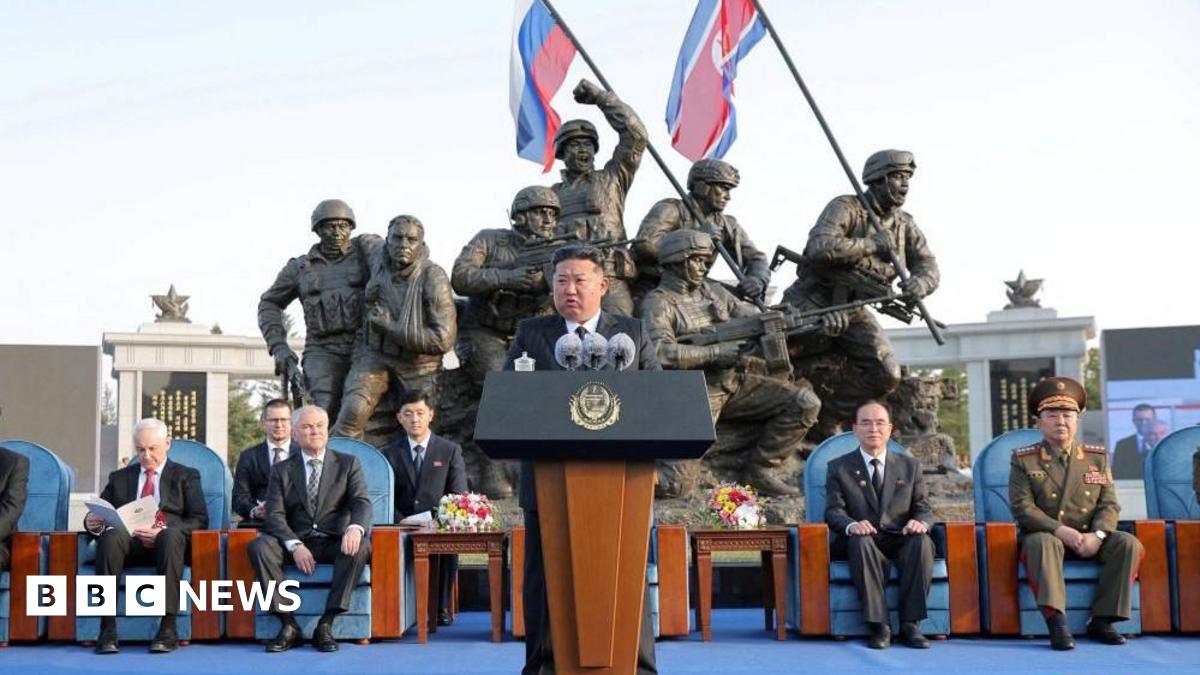
In a chilling public declaration that has sent ripples through international diplomatic and military circles, North Korean leader Kim Jong Un has openly praised soldiers who reportedly chose to 'self-blast' rather than face capture. This grim commendation, delivered in a recent speech, confirms what many intelligence agencies and human rights organizations have long suspected: that Pyongyang actively promotes and expects its soldiers to commit suicide by detonating grenades to avoid falling into enemy hands. The context of this praise – soldiers fighting for Russia in Ukraine – adds another layer of complexity to an already volatile geopolitical landscape, underscoring the brutal realities of North Korea's military doctrine and its deepening ties with Moscow.
The implications of Kim Jong Un's statement are profound. It not only reveals the extreme lengths to which the North Korean regime is willing to push its personnel but also offers a stark glimpse into the ideological indoctrination that underpins its armed forces. For decades, defectors and intelligence reports have hinted at such a policy, but a direct, public endorsement from the supreme leader himself elevates it from rumor to official, state-sanctioned practice. This policy is not merely about preventing intelligence leaks; it is a powerful tool for maintaining absolute control, instilling fear, and projecting an image of unwavering resolve, however horrific the human cost.
A History of Extreme Loyalty and Sacrifice
North Korea's military, the Korean People's Army (KPA), has a long and often brutal history rooted in the Korean War and the Juche ideology of self-reliance. From its inception, the KPA has been portrayed as the ultimate defender of the nation and the Kim dynasty, demanding absolute loyalty and sacrifice from its members. Stories of soldiers fighting to the last man, or engaging in suicidal charges, are deeply embedded in the regime's propaganda and military training. This ethos is reinforced through intense political education, where soldiers are taught to view surrender as the ultimate betrayal of the leader, the party, and the nation.
The concept of 'death before dishonor' is not unique to North Korea; it has historical precedents in various cultures and militaries, from ancient Sparta to Imperial Japan's Bushido code and Banzai charges during World War II. However, North Korea's explicit encouragement of self-destruction in contemporary warfare stands out for its systematic and institutionalized nature. It reflects a regime that prioritizes ideological purity and the prevention of defection or intelligence gathering above the individual lives of its soldiers. The fear of capture is not just about personal suffering; it's about the potential for enemy forces to extract valuable information or, perhaps more critically for the regime, to expose the realities of life in North Korea to the outside world through captured personnel.
The Ukraine Connection: A Proxy for Pyongyang's Ambitions
The revelation that these 'self-blasting' incidents occurred in Ukraine, involving North Korean soldiers fighting alongside Russian forces, is particularly significant. While Pyongyang has consistently denied sending combat troops to Ukraine, numerous reports and intelligence assessments suggest otherwise. The presence of North Korean personnel, whether as direct combatants, artillery operators, or logistical support, underscores the deepening military alliance between Moscow and Pyongyang. For North Korea, participating in the conflict offers several strategic advantages:
* Combat Experience: It provides a real-world battlefield for its troops to gain experience, particularly in modern warfare tactics and equipment. * Military Aid: In exchange for its support, North Korea likely receives critical military technology, resources, or financial aid from Russia, bypassing international sanctions. * Propaganda Value: It allows the regime to portray itself as a significant global player, standing against perceived Western aggression, and bolstering its internal narrative of strength and resilience.
The 'self-blasting' incidents, therefore, are not just isolated acts of desperation but a reflection of the KPA's operational doctrine being applied in a foreign theater. This raises alarming questions about the scale of North Korean involvement and the potential for these extreme tactics to proliferate.
Psychological Warfare and Control
The public praise from Kim Jong Un serves multiple purposes within North Korea. Internally, it reinforces the regime's narrative of ultimate sacrifice and unwavering loyalty. It sends a clear message to all soldiers and citizens: the state demands absolute devotion, even unto death, and will reward such acts with posthumous glory. This psychological conditioning is a cornerstone of the Kim dynasty's rule, ensuring compliance and suppressing dissent. The fear of being labeled a traitor, or of bringing shame upon one's family, is a powerful deterrent against any thought of surrender or defection.
Externally, the statement is a defiant message to the international community. It projects an image of a formidable and fanatical military, one that will stop at nothing to achieve its objectives. This can be interpreted as a form of deterrence, aimed at discouraging potential adversaries from underestimating Pyongyang's resolve. However, it also highlights the regime's profound disregard for human life, a characteristic that further isolates North Korea on the global stage and complicates any efforts towards de-escalation or diplomatic engagement.
International Law and Human Rights Implications
The explicit encouragement of suicide in combat raises serious questions under international humanitarian law and human rights conventions. While soldiers are expected to fight bravely, the systematic promotion of self-destruction to avoid capture could be seen as a violation of the right to life and an extreme form of psychological coercion. Human rights organizations are likely to condemn this policy as yet another example of the North Korean regime's brutality and its systemic abuse of its own people.
Furthermore, the involvement of North Korean soldiers in the Ukraine conflict, particularly under such extreme directives, complicates accountability for potential war crimes. If North Korean troops are indeed operating under orders to commit suicide to avoid capture, it suggests a complete breakdown of individual agency and a severe lack of protection for combatants under their own command.
A Perilous Path Forward
Kim Jong Un's praise for 'self-blasting' soldiers is more than just a disturbing anecdote; it is a critical piece of information that sheds light on the inner workings of one of the world's most opaque and repressive regimes. It confirms the extreme nature of North Korea's military doctrine, its willingness to sacrifice its own people for ideological ends, and its deepening entanglement in global conflicts. For policymakers, this revelation underscores the urgent need for a unified international strategy to address North Korea's nuclear ambitions, its human rights abuses, and its destabilizing role in international relations.
The world watches with growing concern as Pyongyang continues to defy international norms, demonstrating a chilling resolve that prioritizes regime survival and ideological purity above all else. The tragic fates of these soldiers, forced into an impossible choice, serve as a stark reminder of the human cost of such totalitarian control and the perilous path North Korea continues to tread on the global stage. Understanding this brutal doctrine is crucial for comprehending the full scope of the challenges posed by the Kim regime in the years to come.
Stay Informed
Get the world's most important stories delivered to your inbox.
No spam, unsubscribe anytime.
Comments
No comments yet. Be the first to share your thoughts!