Mojtaba Khamenei: Iran's New Supreme Leader Gravely Wounded But Mentally Sharp Amidst Succession Crisis
Iran's new Supreme Leader, Mojtaba Khamenei, has reportedly sustained severe injuries in the US-Israeli airstrike that claimed the life of his father, Ali Khamenei. Despite his physical condition, sources indicate he remains mentally astute, navigating a precarious transition of power. This development plunges Iran into an unprecedented leadership crisis, with profound implications for regional stability and global geopolitics. The incident underscores the escalating tensions in the Middle East.
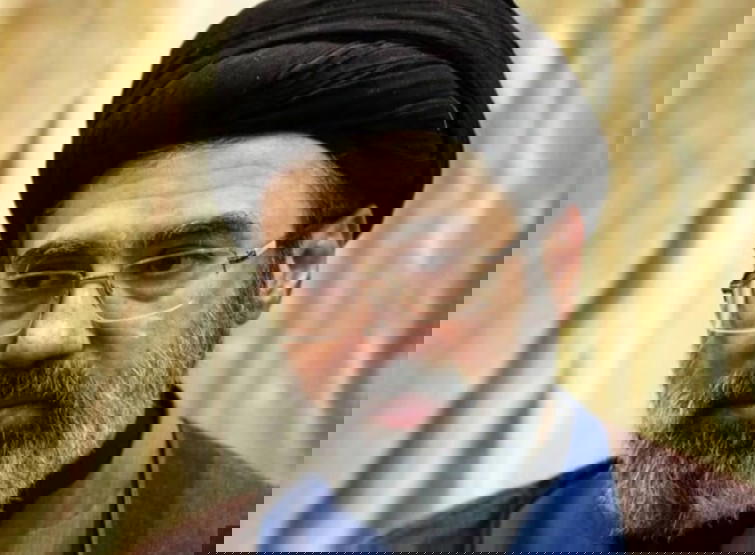
The geopolitical landscape of the Middle East has been irrevocably altered following the dramatic events that led to the ascension of Mojtaba Khamenei as Iran's new Supreme Leader. Reports from the New York Times, citing multiple Iranian officials, indicate that Mojtaba, son of the late Ayatollah Ali Khamenei, was gravely wounded in the US-Israeli airstrike that killed his father. Despite the severity of his physical injuries, sources emphasize his continued mental sharpness, a crucial attribute as he steps into one of the world's most powerful and complex leadership roles.
This unprecedented transition of power, marked by violence and uncertainty, has sent shockwaves across the globe. The death of Ali Khamenei, who had ruled Iran for over three decades, was already a monumental event. The subsequent revelation of his successor's critical condition adds a layer of fragility and unpredictability to an already volatile region. Analysts are scrambling to understand the immediate and long-term ramifications for Iran, its allies, and its adversaries.
The Shadow of Succession: A Violent Ascent
The sudden and violent death of Ayatollah Ali Khamenei has not only created a power vacuum but has also exposed the deep-seated vulnerabilities within Iran's intricate political and religious establishment. For years, Mojtaba Khamenei, a mid-ranking cleric, had been a figure of speculation, often seen as a potential successor due to his lineage and close ties to his father's inner circle. However, his path to leadership was never assured, facing competition from other prominent figures within the clerical hierarchy and the Revolutionary Guard Corps.
The US-Israeli airstrike, which Iranian officials claim was a targeted assassination, has dramatically accelerated this succession process under the most tragic circumstances. While the details of the strike remain shrouded in secrecy, its impact is undeniable. The severity of Mojtaba's wounds suggests he was in close proximity to his father during the attack, highlighting the perilous nature of leadership in a region rife with conflict. The fact that he is described as "mentally sharp" despite his physical state is a testament to his resilience, but also a stark reminder of the immense pressures he now faces.
This violent transition immediately raises questions about the legitimacy and stability of his rule. Will the hardliners rally around him, or will his physical incapacitation be seen as a weakness that could be exploited by internal factions or external adversaries? The circumstances of his father's death are likely to fuel anti-Western sentiment and calls for retaliation, potentially escalating regional tensions to dangerous new levels.
Navigating a Nation in Crisis: Internal and External Challenges
Mojtaba Khamenei inherits a nation grappling with a multitude of challenges, both domestic and international. Internally, Iran faces widespread economic hardship, fueled by years of international sanctions and mismanagement. Public discontent has simmered, occasionally erupting into protests, which the regime has brutally suppressed. The new leader's ability to address these economic grievances and maintain social cohesion will be paramount to consolidating his power.
Furthermore, the intricate power dynamics within Iran's political structure demand a leader with exceptional political acumen. The Supreme Leader sits atop a complex web of institutions, including the Guardian Council, the Expediency Discernment Council, and the powerful Islamic Revolutionary Guard Corps (IRGC). Each of these bodies holds significant sway, and Mojtaba will need to skillfully navigate their competing interests to ensure stability and implement his vision. His father's long tenure allowed him to cultivate a vast network of loyalists; Mojtaba will need to quickly establish his own authority and command respect.
Externally, Iran's relationship with the West, particularly the United States and Israel, remains deeply adversarial. The recent airstrike itself is a testament to this ongoing conflict. Iran's nuclear program, its support for regional proxies, and its human rights record are constant sources of international friction. Mojtaba's leadership will be closely watched for any shifts in foreign policy. Will he adopt a more confrontational stance in response to his father's death, or will he seek to de-escalate tensions and potentially pursue a different diplomatic path?
Regional Implications: A Shifting Balance of Power
The succession in Iran has profound implications for the broader Middle East. Iran's extensive network of proxies – including Hezbollah in Lebanon, Houthi rebels in Yemen, and various militias in Iraq and Syria – gives it significant leverage across the region. Any change in leadership, especially one born out of violence, could trigger a reassessment of these relationships and potentially lead to increased instability.
* Israel: The airstrike that killed Ali Khamenei and wounded Mojtaba is a direct escalation in the long-standing shadow war between Iran and Israel. Israel views Iran's nuclear ambitions and its support for groups like Hezbollah as existential threats. The new leadership could either double down on confrontation or, less likely, seek a new modus vivendi. The immediate aftermath is likely to see heightened alert levels across the region. * Saudi Arabia and Gulf States: Sunni-majority Gulf states, led by Saudi Arabia, have long viewed Iran as their primary regional rival. While recent years saw some attempts at de-escalation, the current crisis could reignite sectarian tensions and proxy conflicts. These nations will be closely monitoring Mojtaba's initial moves and his approach to regional power dynamics. * United States: The US, a key ally of Israel and several Gulf states, will be deeply invested in the stability of the new Iranian regime. The potential for miscalculation and escalation is high. Washington's response to the airstrike and its future engagement with Mojtaba's government will be critical in shaping the region's trajectory.
The Path Forward: Uncertainty and Resilience
The coming months will be a critical test for Mojtaba Khamenei and the Islamic Republic. His physical recovery, while important, is secondary to the immense political and strategic challenges he must overcome. His ability to consolidate power, unify a potentially fractured establishment, and navigate the treacherous waters of regional and international politics will define his tenure.
The narrative of a gravely wounded but mentally sharp leader adds a layer of almost mythical resilience to his persona, potentially bolstering his image among hardliners. However, it also underscores the fragility of the situation. The world watches with bated breath as Iran enters this new, uncertain chapter. The legacy of his father, the circumstances of his own ascension, and the ever-present geopolitical pressures will undoubtedly shape Mojtaba Khamenei's leadership and, by extension, the future of the Middle East. The incident serves as a stark reminder that even in the highest echelons of power, vulnerability can be a constant companion, and the path to leadership can be paved with unforeseen dangers.
Stay Informed
Get the world's most important stories delivered to your inbox.
No spam, unsubscribe anytime.
Comments
No comments yet. Be the first to share your thoughts!