Myanmar's Junta Pardons Ex-President Win Myint: A Strategic Move Amidst Deepening Crisis
Myanmar's military junta has pardoned former President Win Myint, who was detained following the 2021 coup. This unexpected move, coming amidst escalating conflict and international pressure, raises questions about the junta's motivations and potential implications for the country's fractured political landscape. Analysts are dissecting whether this is a genuine gesture towards reconciliation or a calculated maneuver to ease international isolation.
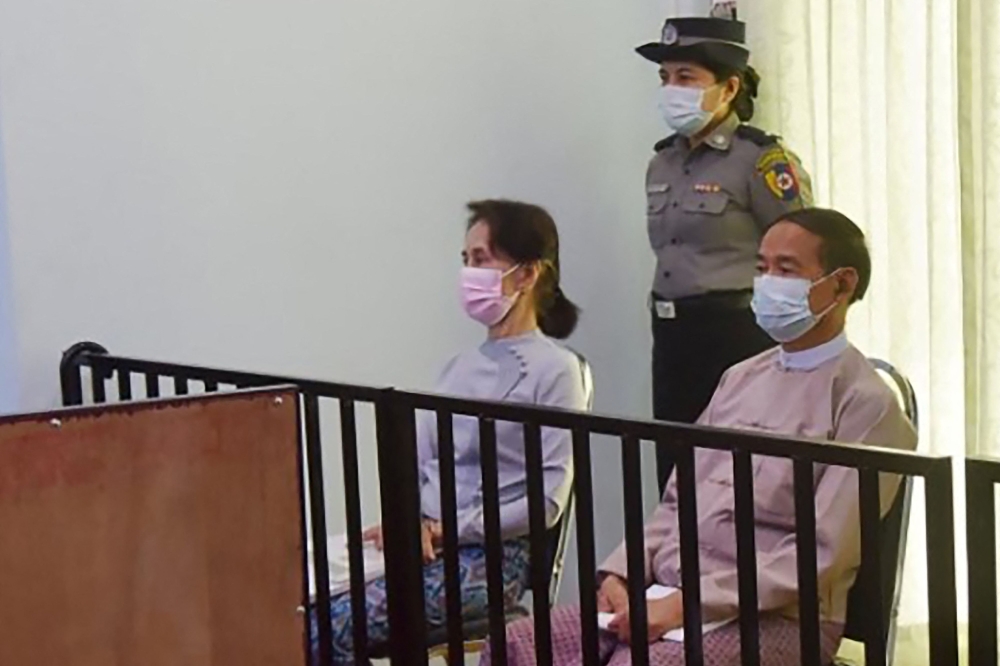
In a surprising development that has sent ripples through Myanmar's deeply fractured political landscape, the ruling military junta announced today the pardon of former President Win Myint. Detained since the February 2021 coup that plunged the Southeast Asian nation into chaos, Myint's release from his various convictions marks a significant, albeit ambiguous, moment in the ongoing crisis. The move comes as the junta, officially known as the State Administration Council (SAC), faces unprecedented internal resistance and mounting international pressure.
Win Myint, who served as president from 2018 under the democratically elected National League for Democracy (NLD) government led by Aung San Suu Kyi, was a prominent figure alongside Suu Kyi when the military seized power. He, like many other NLD officials, was subsequently hit with a barrage of charges, including incitement and violations of COVID-19 rules, which critics widely condemned as politically motivated. His imprisonment, along with Suu Kyi's, symbolized the military's brutal crackdown on dissent and its complete reversal of Myanmar's nascent democratic transition.
The Context of the Pardon: A Junta Under Siege
This pardon is not an isolated event but must be viewed within the broader context of Myanmar's deteriorating situation. The SAC, led by Min Aung Hlaing, has struggled to consolidate control over the country. A nationwide civil disobedience movement (CDM) quickly emerged after the coup, followed by the formation of People's Defense Forces (PDFs) and a resurgence of ethnic armed organizations (EAOs) aligning against the junta. The conflict has escalated dramatically, with the military facing significant losses and territorial setbacks, particularly since late 2023 with the launch of Operation 1027 by the Brotherhood Alliance.
The junta's grip on power is arguably weaker than at any point since the coup. Economically, Myanmar is in tatters, with foreign investment plummeting and widespread poverty. Socially, the country is deeply polarized, and humanitarian crises abound, with millions displaced. Internationally, the SAC remains largely isolated, subject to sanctions from Western nations and condemnation from the United Nations. Even regional body ASEAN has struggled to implement its 'Five-Point Consensus' for peace, often criticizing the junta's lack of cooperation. Against this backdrop of internal and external pressure, the pardon of a high-profile political prisoner like Win Myint could be interpreted as a strategic calculation rather than a genuine change of heart.
Analyzing the Junta's Motivations
Several theories emerge regarding the junta's decision to pardon Win Myint:
* Easing International Pressure: The SAC is desperate for legitimacy and relief from sanctions. Releasing a prominent political figure, even if not Aung San Suu Kyi, might be an attempt to show a facade of flexibility and garner some international goodwill, particularly from regional neighbors or countries like China and India, who have been more cautious in their condemnation. * Internal Political Maneuvering: It could be a move to sow division within the opposition or test the waters for future political dialogue, albeit on the junta's terms. By releasing Myint but keeping Suu Kyi imprisoned, the junta maintains leverage and control over the most influential opposition figure. * Humanitarian Concerns: While less likely given the junta's track record, there could be underlying health concerns for Win Myint, whose age and prolonged detention might have led to declining health. Releasing him could preempt a potential PR disaster if he were to die in custody. * Symbolic Gesture: The pardon might be a symbolic gesture to a populace weary of conflict, signaling a potential, albeit distant, path towards de-escalation, even if the underlying power dynamics remain unchanged.
It's crucial to note that the pardon does not signify a return to democratic rule or an end to the military's control. Win Myint remains a figurehead of the ousted government, but his political agency is severely curtailed under the current regime. The junta has a history of making seemingly conciliatory gestures only to retract them or follow up with further repression.
The Road Ahead: Implications for Myanmar's Future
The immediate implications of Win Myint's pardon are complex. For the NLD and its supporters, it offers a glimmer of hope, yet also a stark reminder of the deep injustices that persist. The release of one political prisoner does not negate the imprisonment of thousands of others, nor does it address the fundamental issue of military rule.
* For the Opposition: The NLD and the National Unity Government (NUG), formed by ousted lawmakers, will likely view this with cautious skepticism. While welcoming the release, they will continue to demand the release of all political prisoners, including Aung San Suu Kyi, and the restoration of democracy. The pardon might test the unity of the opposition, but it is unlikely to fundamentally alter their commitment to resisting military rule. * For the Junta: The SAC will closely monitor international and domestic reactions. If the move fails to yield significant diplomatic dividends or reduce internal resistance, it may be seen as a failed experiment. Conversely, if it creates any perception of legitimacy or reduces pressure, the junta might consider similar, limited gestures in the future. * International Community: The international community will likely welcome the release but maintain its calls for broader human rights adherence and a return to democracy. Sanctions are unlikely to be lifted based on this single event. The focus will remain on the release of Aung San Suu Kyi and a genuine political dialogue involving all stakeholders.
This pardon, while significant for Win Myint personally, is unlikely to be the turning point in Myanmar's protracted crisis. It is a chess move in a much larger, bloodier game. The fundamental struggle between the military and the forces of democracy and federalism continues unabated. The people of Myanmar, who have endured immense suffering since the coup, await a genuine path to peace and self-determination, a path that requires far more than the release of a single political figure. The world watches, hoping for a future where justice and democracy can finally prevail in this embattled nation.
Stay Informed
Get the world's most important stories delivered to your inbox.
No spam, unsubscribe anytime.
Comments
No comments yet. Be the first to share your thoughts!