Nile's Lifeline: Sisi and Ruto Discuss Critical Water Diplomacy Amid Regional Tensions
Egyptian President Abdel Fattah al-Sisi and Kenyan President William Ruto have engaged in high-level discussions regarding the critical Nile water file, emphasizing cooperation among basin countries. This dialogue underscores the enduring geopolitical significance of the Nile River, a vital resource for over 250 million people. The leaders' conversation highlights ongoing efforts to navigate complex water-sharing challenges, particularly concerning the Grand Ethiopian Renaissance Dam (GERD), and foster regional stability through collaborative frameworks.
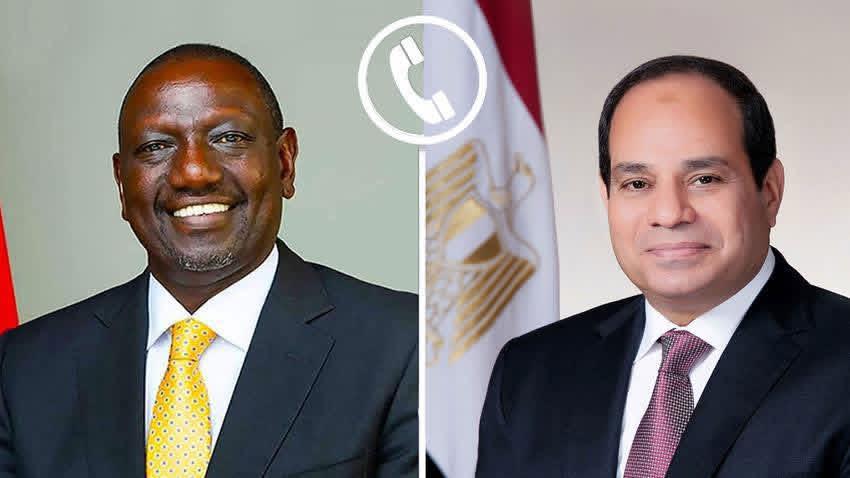
The ancient Nile, a river synonymous with civilization itself, continues to flow at the heart of modern geopolitical discourse, its waters a source of both life and potential friction for the nations it sustains. In a recent high-stakes diplomatic exchange, Egyptian President Abdel Fattah al-Sisi underscored the paramount importance of the Nile water file and the imperative for robust cooperation among Nile Basin countries during a telephone call with Kenyan President William Ruto. This conversation, though brief in its reporting, signals a renewed focus on one of Africa's most sensitive and strategically vital issues, highlighting Egypt's unwavering commitment to securing its water interests while seeking collaborative solutions in a rapidly changing regional landscape.
The Nile: A Historical Tapestry of Life and Conflict
For millennia, the Nile has been the lifeblood of Egypt, sustaining its agriculture, economy, and population. Over 95% of Egypt's freshwater supply originates from the Nile, making any disruption to its flow an existential threat. This profound dependence has historically shaped Egypt's foreign policy, particularly concerning its upstream neighbors. The Nile Basin comprises 11 countries – Burundi, Democratic Republic of Congo, Egypt, Eritrea, Ethiopia, Kenya, Rwanda, South Sudan, Sudan, Tanzania, and Uganda – each with varying degrees of reliance on the river and often conflicting development aspirations. The colonial-era treaties of 1929 and 1959, which granted Egypt and Sudan significant historical water rights and veto power over upstream projects, have long been a point of contention, viewed by upstream nations as inequitable and outdated.
This historical context is crucial for understanding the current dynamics. Egypt's perspective is rooted in its historical dependence and the principle of 'acquired rights,' often citing its 'water poverty line' status, with per capita water availability significantly below the international threshold. Conversely, upstream nations, particularly Ethiopia, argue for their sovereign right to utilize the river's resources for their own development, emphasizing the need for equitable utilization and the principle of 'no significant harm.' The delicate balance between these competing claims forms the core of the Nile water dispute.
The Grand Ethiopian Renaissance Dam (GERD): A Game Changer
No discussion of the Nile water file is complete without addressing the Grand Ethiopian Renaissance Dam (GERD). Ethiopia's ambitious hydroelectric project, initiated in 2011, has become the focal point of regional tensions. Located on the Blue Nile, the GERD is designed to be Africa's largest hydroelectric power plant, with a generating capacity of over 5,000 megawatts. For Ethiopia, the dam represents a critical tool for poverty alleviation, industrialization, and energy security, with the potential to lift millions out of darkness and generate significant export revenue. It is a symbol of national pride and development.
However, for Egypt and Sudan, the GERD poses significant concerns regarding water security. Egypt fears that the rapid filling and long-term operation of the dam could severely reduce its downstream water flow, impacting its agricultural sector, the Aswan High Dam's electricity generation, and ultimately, its entire population. Sudan, while initially expressing concerns, has adopted a more nuanced stance, seeing potential benefits from regulated water flow and electricity, but also fearing impacts on its own dams and irrigation schemes. Despite numerous rounds of negotiations facilitated by the African Union, the United States, and other international actors, a comprehensive, legally binding agreement on the dam's filling and operation remains elusive. The lack of such an agreement continues to fuel uncertainty and diplomatic friction, making bilateral dialogues like the one between Sisi and Ruto even more pertinent.
Kenya's Role and the Quest for Regional Cooperation
Kenya, while not directly on the main Nile River, is a key Nile Basin country and plays an influential role in East African politics. Its involvement in discussions about the Nile's future is significant. President Ruto's engagement with President Sisi signals a broader regional understanding that the Nile's challenges require collective solutions, not just bilateral ones. Kenya's position often leans towards fostering regional integration and development, aligning with the aspirations of upstream nations for equitable resource utilization while also recognizing the stability concerns of downstream states.
Cooperation among Nile Basin countries is not merely a diplomatic nicety; it is an economic and environmental necessity. The Nile Basin Initiative (NBI), established in 1999, is an intergovernmental partnership that aims to achieve sustainable socio-economic development through the equitable utilization of the Nile River's water resources. While the NBI has facilitated numerous technical projects and fostered dialogue, its effectiveness has been hampered by the ongoing political disagreements, particularly Egypt's and Sudan's non-ratification of the Cooperative Framework Agreement (CFA), which seeks to establish a permanent institutional framework for the basin. The CFA is seen by upstream states as a move towards equitable water sharing, while Egypt and Sudan view it as undermining their historical rights.
The Path Forward: Diplomacy, Data, and Development
The conversation between Presidents Sisi and Ruto underscores the enduring belief that diplomacy remains the most viable path to resolving the complex Nile water issues. Future efforts must focus on several key areas:
* Enhanced Data Sharing and Scientific Collaboration: Establishing a transparent, shared understanding of hydrological data, climate change impacts, and water demand projections is fundamental. Joint scientific committees can depoliticize technical aspects of water management. * Multi-Track Diplomacy: Beyond high-level presidential calls, sustained engagement at ministerial, technical, and civil society levels is crucial. Involving regional bodies like the African Union more robustly can provide an indigenous framework for resolution. * Benefit-Sharing Approach: Shifting the focus from water-sharing to benefit-sharing could unlock new avenues for cooperation. This involves identifying joint projects that generate mutual benefits, such as regional power grids, shared agricultural initiatives, and environmental conservation programs, thereby creating interdependencies that foster peace. * Climate Change Adaptation: The Nile Basin is highly vulnerable to climate change, with potential impacts on rainfall patterns, evaporation rates, and overall water availability. Collaborative strategies for climate resilience, including water-saving technologies, watershed management, and early warning systems, are imperative. * International Support: While African solutions are preferred, international partners can play a constructive role by providing technical expertise, financial support for cooperative projects, and diplomatic facilitation without imposing external agendas.
In conclusion, the Nile River remains a powerful symbol of interconnectedness and a critical test of regional states' ability to transform potential conflict into sustainable cooperation. The dialogue between Presidents Sisi and Ruto serves as a vital reminder that even amidst significant challenges, the door to collaborative solutions remains open. For the millions who depend on its waters, the peaceful and equitable management of the Nile is not merely a political aspiration but a fundamental prerequisite for stability, development, and a shared prosperous future across the entire basin. The path ahead is undoubtedly complex, but with sustained political will and a commitment to mutual understanding, the Nile can continue to be a source of life, not division, for generations to come.
Stay Informed
Get the world's most important stories delivered to your inbox.
No spam, unsubscribe anytime.
Comments
No comments yet. Be the first to share your thoughts!