Roads to Rifts: Tanzania Rejects Ruto's Infrastructure Claims, Sparking EAC Data Debate
A diplomatic spat has erupted between Kenya and Tanzania after President William Ruto's assertion that Kenya boasts more tarmacked roads than all other East African Community (EAC) nations combined. Tanzania's Works Minister, Innocent Bashungwa, swiftly refuted the claim, presenting data that challenges Ruto's statistics and highlights the complexities of infrastructure reporting in the region. This dispute underscores deeper tensions within the EAC regarding economic leadership and data transparency, prompting calls for standardized reporting.
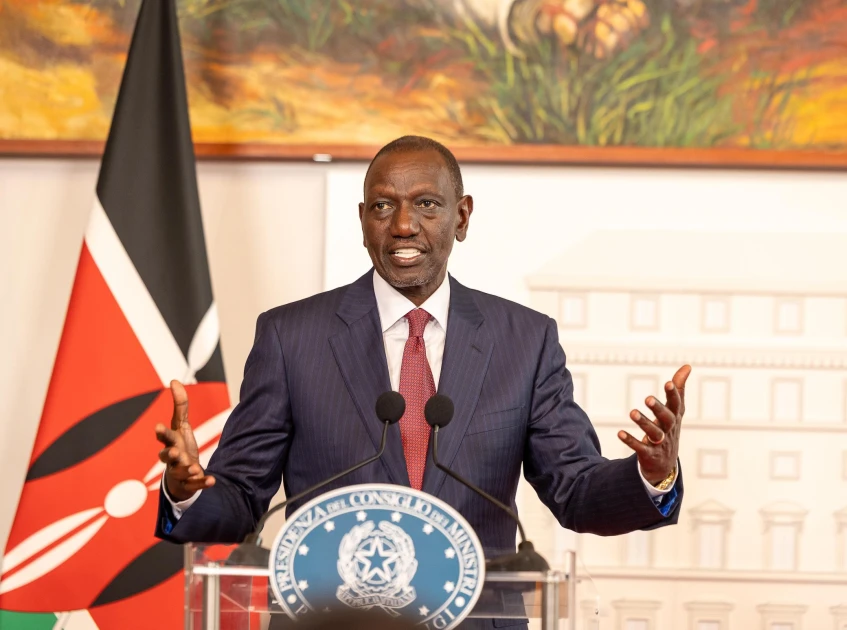
A fresh diplomatic skirmish has ignited within the East African Community (EAC), pitting Kenya against Tanzania over a seemingly straightforward issue: infrastructure data. The catalyst for this latest disagreement was a bold assertion by Kenyan President William Ruto, who claimed during a church service that Kenya possesses more tarmacked roads than all other EAC member states combined. This statement, intended perhaps to highlight Kenya's developmental prowess, quickly drew a sharp rebuke from Tanzania, escalating what might have been a minor statistical discrepancy into a public debate with significant regional implications.
The Spark: Ruto's Claim and Tanzania's Swift Rebuttal
President Ruto's declaration, made in a public forum, was unequivocal. He stated, "We have more tarmacked roads than the rest of East Africa combined." This claim, while seemingly a point of national pride, immediately raised eyebrows, particularly in Tanzania, a nation equally invested in its infrastructure development. The response from Dar es Salaam was swift and decisive. Tanzania's Minister for Works, Innocent Bashungwa, wasted no time in refuting Ruto's statistics, presenting what he argued was a more accurate picture of the region's road networks. Bashungwa asserted that Tanzania alone boasts approximately 36,000 kilometers of tarmacked roads, a figure that significantly challenges Ruto's blanket statement. He further highlighted that Uganda has around 6,000 kilometers and Rwanda approximately 1,500 kilometers, bringing the combined total of just these three nations to well over Kenya's reported figures, let alone including Burundi, South Sudan, and the Democratic Republic of Congo (DRC).
This immediate pushback from Tanzania suggests more than just a factual correction; it hints at underlying competitive dynamics and a sensitivity to perceived slights within the EAC. The exchange underscores the importance of accurate data in regional discourse and the potential for such claims to strain diplomatic relations, even among close economic partners.
Unpacking the Numbers: The Challenge of Infrastructure Data
The dispute brings to light a critical challenge in regional development: the lack of standardized, verifiable, and easily accessible infrastructure data across the EAC. While individual nations meticulously track their own progress, cross-country comparisons often become mired in definitional differences, varying reporting methodologies, and sometimes, political motivations. What constitutes a 'tarmacked road'? Does it include urban streets, rural feeder roads, or only national highways? Are maintenance standards consistent? These questions become paramount when attempting to draw direct comparisons.
For instance, while Kenya's Ministry of Transport and Infrastructure might report a certain figure, other nations might use different criteria for what qualifies as a 'tarmacked' or 'paved' road. The World Bank, African Development Bank, and other international bodies often compile their own statistics, which can sometimes differ from national government figures, adding another layer of complexity. This data ambiguity creates fertile ground for misunderstandings and disputes, hindering effective regional planning and investment coordination.
Historically, infrastructure development has been a cornerstone of economic growth strategies across East Africa. Nations like Kenya, Tanzania, and Uganda have invested heavily in road networks, aiming to improve connectivity, facilitate trade, and boost tourism. These investments are often a source of national pride and a key metric for evaluating government performance. Therefore, any challenge to these figures can be seen as a challenge to national achievement.
Beyond the Tarmac: Deeper Regional Rivalries and Leadership
The road data dispute is not merely about statistics; it reflects deeper currents of competition and leadership within the EAC. Kenya has traditionally positioned itself as an economic powerhouse and a regional leader, often highlighting its advanced infrastructure and robust economy. However, other member states, particularly Tanzania under President Samia Suluhu Hassan, have been asserting their own developmental strides and seeking a more equitable distribution of influence within the bloc.
This rivalry is not new. From trade policies to port dominance (Mombasa vs. Dar es Salaam), and even diplomatic influence, Kenya and Tanzania have often found themselves in a competitive dance. The infrastructure debate serves as another arena for this ongoing dynamic. Tanzania's firm rebuttal can be interpreted as a move to assert its own developmental achievements and to push back against any narrative that might diminish its standing or portray it as lagging behind.
Furthermore, the expansion of the EAC to include new members like the DRC, and the ongoing discussions around harmonizing trade and economic policies, make accurate data and transparent communication more crucial than ever. Misinformation or unsubstantiated claims can erode trust and complicate the already challenging process of regional integration.
Implications for EAC Integration and Data Harmonization
The immediate implication of this dispute is a potential strain on diplomatic relations, albeit likely a temporary one given the broader cooperative framework of the EAC. More significantly, it underscores the urgent need for a unified approach to data collection and reporting across the community. For the EAC to truly function as a cohesive economic bloc, member states need to rely on consistent, credible data for planning, policy formulation, and investment attraction.
One potential path forward could involve the establishment of a dedicated EAC body or a joint task force, perhaps under the EAC Secretariat, to standardize infrastructure data collection and verification. This body could define common metrics, establish reporting protocols, and regularly publish consolidated, verified statistics on key infrastructure indicators. Such a move would not only prevent future disputes but also provide investors and development partners with a clearer picture of the region's progress and needs.
Moreover, leaders must exercise caution and verify data before making public pronouncements that could inadvertently create diplomatic friction. While national pride is understandable, factual accuracy and regional harmony should take precedence, especially when addressing issues that touch upon the collective achievements of the community.
Conclusion: Paving the Way Forward with Facts
The spat over tarmacked roads between Kenya and Tanzania serves as a potent reminder that even seemingly minor statistical differences can ignite significant diplomatic friction, especially in a region striving for deeper integration. President Ruto's claim and Minister Bashungwa's rebuttal highlight the critical need for data transparency, standardization, and careful communication within the East African Community.
Moving forward, the EAC must prioritize the development of robust, harmonized data systems that provide an accurate and undisputed picture of its collective progress. This will not only foster greater trust among member states but also enable more effective regional planning, attract more targeted investment, and ultimately, pave a smoother road towards the shared prosperity and integration goals of the entire East African bloc. The true measure of progress lies not just in the kilometers of road built, but in the shared understanding and collaboration that underpins regional development.
Stay Informed
Get the world's most important stories delivered to your inbox.
No spam, unsubscribe anytime.
Comments
No comments yet. Be the first to share your thoughts!