Somalia's Press Under Siege: A World Press Freedom Day Paradox
As the world observes World Press Freedom Day, Somalia's journalists face a grim reality of killings, arbitrary arrests, and systemic intimidation by security forces. Rights groups warn of escalating dangers as the nation approaches critical elections, highlighting the severe challenges to independent reporting in a fragile state. This article delves into the historical context, current threats, and the global implications of silencing the press in Somalia.
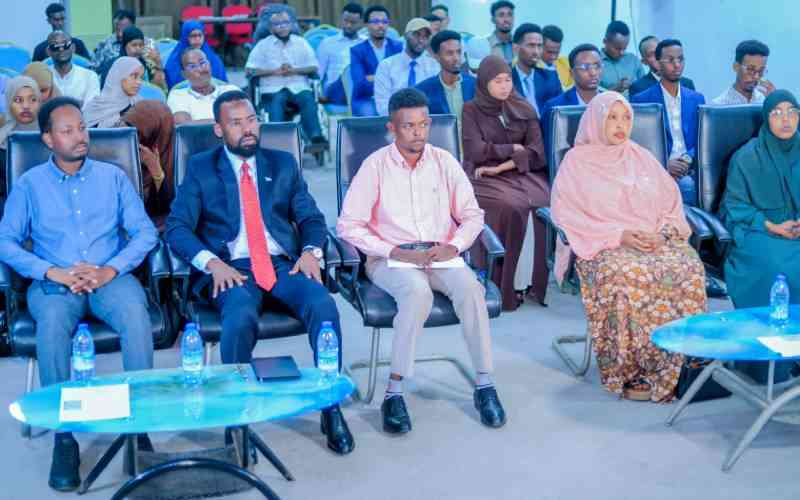
In a world that increasingly champions the ideals of free expression and democratic governance, the plight of journalists in Somalia stands as a stark, tragic paradox. As World Press Freedom Day is commemorated globally, a day meant to celebrate the fundamental principles of press freedom and to defend media from attacks, Somali journalists find themselves on the front lines of a relentless battle for their lives and their right to report. They face a chilling reality marked by killings, arbitrary arrests, and pervasive intimidation at the hands of security forces, a situation that human rights organizations warn is poised to worsen significantly as the nation gears up for crucial elections. This isn't merely a local issue; it's a profound challenge to the very fabric of information dissemination and accountability in a region already grappling with instability.
A Perilous Landscape for Truth-Tellers
For years, Somalia has consistently ranked among the most dangerous places for journalists. The statistics paint a grim picture: numerous journalists have been murdered, often with impunity, while countless others endure physical assaults, unlawful detentions, and threats that force them into self-censorship or exile. The perpetrators are varied, ranging from militant groups like Al-Shabaab, who view independent media as a threat to their narrative, to state security forces who often act with little regard for legal due process or constitutional protections. This dual threat creates an almost impossible environment for investigative journalism, stifling critical reporting on corruption, human rights abuses, and political malfeasance.
The arbitrary arrests are particularly insidious. Journalists are often detained without charge, held incommunicado, and subjected to harsh interrogations. These actions are not random; they are frequently used as a tool to silence dissent, control narratives, and prevent the public from accessing information that might be deemed inconvenient by those in power. The legal framework, while ostensibly guaranteeing press freedom, is often selectively applied or outright ignored, leaving journalists vulnerable and without effective recourse. The psychological toll on these individuals, constantly operating under the shadow of violence and legal persecution, is immense, leading to a climate of fear that permeates newsrooms across the country.
Historical Context and Systemic Challenges
To understand the current crisis, one must look at Somalia's tumultuous history. Decades of civil war, state collapse, and the rise of extremist groups have severely undermined institutions, including those meant to protect fundamental rights. The media landscape emerged from this chaos, often operating in a vacuum of regulation and protection. While a vibrant independent press did manage to take root, it did so in extremely hostile conditions, constantly navigating the dangers posed by warring factions and, later, a nascent but often authoritarian government.
The lack of a strong, independent judiciary capable of upholding press freedom laws is a significant systemic challenge. Cases involving attacks on journalists rarely lead to convictions, fostering a culture of impunity that emboldens perpetrators. Furthermore, many journalists operate with limited resources, inadequate training in safety protocols, and often without the backing of robust media organizations. This vulnerability is exploited by those who wish to suppress information. The financial precarity of many media outlets also makes them susceptible to political pressure or bribery, further compromising their independence.
Moreover, the concept of national security is frequently invoked to justify restrictions on reporting. While legitimate concerns about national security exist, this justification is often broadly interpreted to quash any reporting critical of government actions, particularly concerning military operations or political decisions. This broad interpretation allows authorities to label legitimate journalistic inquiry as 'anti-state' or 'supporting terrorism,' thereby criminalizing reporting that is vital for public accountability.
The Looming Shadow of Elections
The upcoming elections are a critical flashpoint that threatens to exacerbate the already dire situation. Historically, election periods in fragile states are fraught with increased political tensions, and Somalia is no exception. As political actors vie for power, the need to control information and narratives intensifies. Journalists who attempt to cover the electoral process impartially, report on irregularities, or give voice to opposition views are likely to face heightened scrutiny, harassment, and violence.
Rights groups, including the Committee to Protect Journalists (CPJ) and Reporters Without Borders (RSF), have consistently highlighted this pattern. They warn that as the political temperature rises, so too will the risks for media professionals. The stakes are incredibly high: a free and fair election is predicated on an informed electorate, which in turn relies on an independent media to provide accurate and diverse information. If journalists are silenced or intimidated into self-censorship, the integrity of the electoral process itself is severely compromised, potentially leading to further instability and undermining democratic aspirations.
International organizations are urging the Somali government to uphold its constitutional obligations to protect press freedom, ensure the safety of journalists, and investigate all attacks against them. They also call on international partners providing aid and support to Somalia to make press freedom a central component of their engagement, leveraging their influence to advocate for a safer environment for media workers.
Global Implications and the Path Forward
The suppression of press freedom in Somalia is not an isolated incident; it has far-reaching global implications. In an interconnected world, instability in one region can ripple outwards, affecting international security, humanitarian efforts, and global economic stability. When journalists are silenced, the world loses a vital window into complex realities, making it harder to understand root causes of conflict, monitor human rights, and deliver effective aid. It also sets a dangerous precedent, signaling to other authoritarian regimes that attacks on the press can go unpunished.
The path forward for Somalia requires a multi-faceted approach. Domestically, there is an urgent need for judicial reform to ensure accountability for crimes against journalists. The government must publicly commit to protecting media workers and actively investigate and prosecute those who threaten or harm them. Training for security forces on the role of a free press in a democracy is crucial, alongside clear directives to respect journalistic independence.
Internationally, sustained diplomatic pressure and targeted support for independent media organizations are essential. This includes funding for safety training, legal aid, and psychological support for journalists at risk. Advocacy groups must continue to shine a spotlight on the abuses, ensuring that Somalia's plight remains on the international agenda. Ultimately, fostering a culture where journalism is valued as a public good, rather than feared as an adversary, is paramount. Only then can Somalia hope to build a resilient democracy where truth can thrive, and its citizens can be truly informed and empowered.
In conclusion, World Press Freedom Day serves as a poignant reminder of the immense courage displayed by Somali journalists who, despite overwhelming odds, continue their vital work. Their struggle is a testament to the enduring power of truth and a call to action for the international community to stand in solidarity with those who risk everything to inform the world.
Stay Informed
Get the world's most important stories delivered to your inbox.
No spam, unsubscribe anytime.
Comments
No comments yet. Be the first to share your thoughts!