Strait of Hormuz Tensions Escalate: Trump Amplifies US Navy Warning Amid Tightening Iran Blockade
Former US President Donald Trump has significantly escalated rhetoric regarding Iran, sharing a US Navy video and explicitly warning ships to cease transit to Iran. This move signals a hardening stance and highlights a tightening maritime blockade in the critical Strait of Hormuz. The situation raises concerns about global energy markets and regional stability, drawing parallels to past confrontations in this vital waterway.
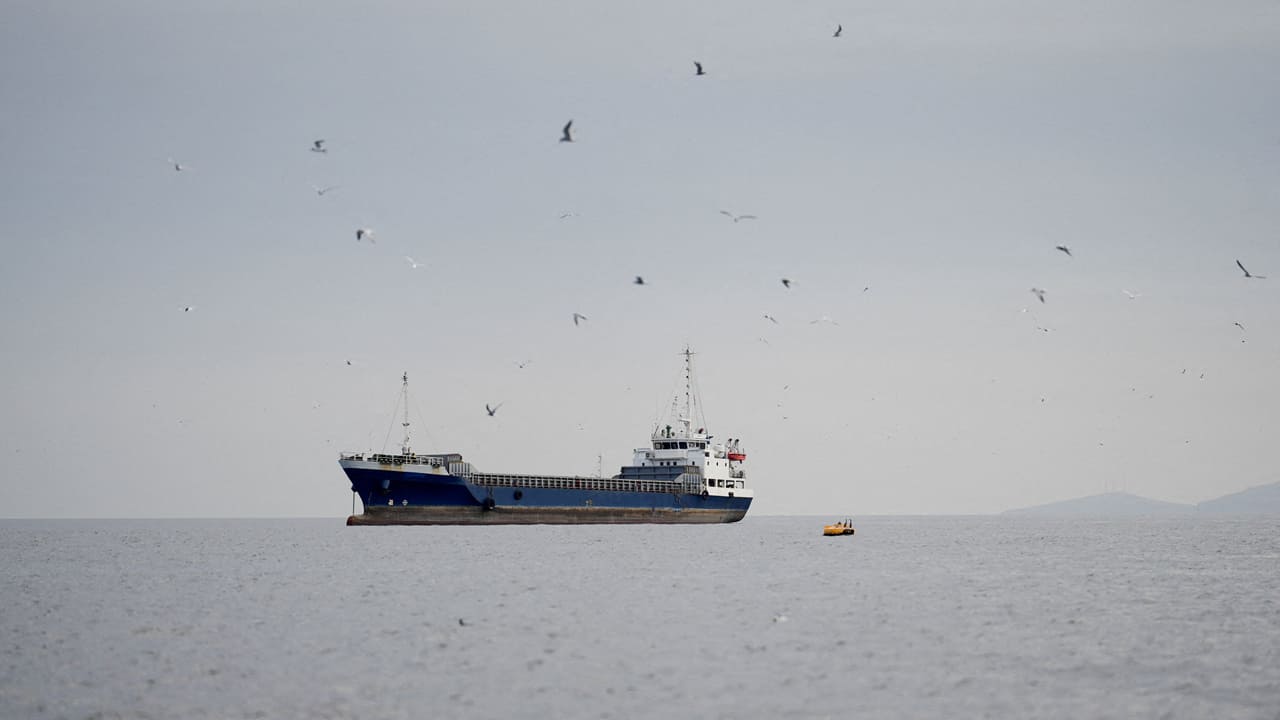
In a dramatic escalation of geopolitical tensions, former US President Donald Trump has once again thrust the volatile dynamics surrounding Iran into the global spotlight. On Wednesday, Trump utilized his Truth Social platform to circulate compelling footage from the US Navy, depicting operations in and around the Strait of Hormuz. Accompanying the video was an unequivocal directive: a stark warning for all vessels to “discontinue transit to Iran” as a sweeping maritime blockade around the Islamic Republic appears to be tightening its grip. This move, coming from a figure known for his assertive foreign policy, underscores a significant hardening of Washington’s posture towards Tehran and reignites fears of a potential flashpoint in one of the world's most critical energy corridors.
The Strait of Hormuz, a narrow choke point between the Persian Gulf and the open ocean, is an artery through which roughly one-fifth of the world’s total oil consumption passes daily. Any disruption to this vital waterway carries immediate and profound implications for global energy markets, international trade, and regional security. Trump's public amplification of the US Navy's presence and his direct warning are not merely rhetorical flourishes; they signal a tangible shift in strategy, potentially moving beyond sanctions to a more direct form of economic and military pressure. The implications of such a blockade are far-reaching, threatening to isolate Iran further and raising the specter of direct confrontation in an already combustible region.
Historical Context: A Choke Point of Conflict
The Strait of Hormuz has a long and storied history as a flashpoint for international tensions, particularly involving Iran. Its strategic importance dates back centuries, but its modern significance was cemented with the advent of the global oil trade. For decades, Iran has viewed the Strait as a crucial leverage point, often threatening to close it in response to perceived aggressions or economic pressures. During the Iran-Iraq War (1980-1988), the "Tanker War" saw both sides attacking oil tankers, leading to significant international intervention, including by the US Navy, to protect shipping lanes. This period highlighted the vulnerability of global energy supplies to regional conflicts and established a precedent for external powers to safeguard transit through the Strait.
More recently, tensions flared significantly during Trump's previous presidency. Following his withdrawal from the Joint Comprehensive Plan of Action (JCPOA), commonly known as the Iran nuclear deal, and the subsequent re-imposition of crippling sanctions, Iran responded with a series of actions that included attacks on oil tankers, drone shoot-downs, and the seizure of foreign-flagged vessels. These incidents underscored Iran's capacity and willingness to disrupt maritime traffic in the Strait, pushing the region to the brink of conflict on several occasions. The current warning, amplified by Trump, evokes these past crises and suggests a return to, or even an intensification of, a confrontational stance.
The Anatomy of a Blockade: Economic and Military Implications
When a major power like the United States speaks of a "maritime blockade," it carries immense weight. Historically, blockades have been acts of war or precursors to it, designed to cripple an adversary's economy by cutting off its access to international trade. In this context, a full-scale blockade of Iran would aim to prevent any goods, including essential humanitarian supplies, from entering or leaving Iranian ports via sea. Such an action would be devastating for Iran's economy, which is heavily reliant on oil exports and maritime trade for imports.
From a military perspective, enforcing a blockade in a region as complex and contested as the Persian Gulf requires a massive deployment of naval assets. The US Navy's Fifth Fleet, based in Bahrain, already maintains a significant presence, but a full blockade would necessitate a much larger and more sustained operation. This would involve: * Extensive surveillance: Monitoring all vessels entering and exiting the Strait. * Interdiction capabilities: The ability to stop, board, and inspect ships suspected of violating the blockade. * Defensive measures: Protecting naval assets from potential retaliatory actions by Iran, which possesses a substantial arsenal of anti-ship missiles, fast attack craft, and naval mines.
The logistical and political challenges of such an undertaking are immense. International law on blockades is complex, and unilateral actions can draw widespread condemnation, even from allies. The legality of a "blockade" without a formal declaration of war or UN Security Council resolution would be highly contentious, potentially isolating the enforcing nation on the global stage.
Geopolitical Ripple Effects and Global Energy Markets
The immediate and most tangible impact of a tightening blockade, or even the credible threat of one, would be felt in global energy markets. Oil prices are highly sensitive to geopolitical instability in the Middle East. Even the hint of disruption in the Strait of Hormuz can send crude futures soaring. A full blockade would likely trigger an unprecedented surge in oil prices, potentially pushing the global economy into recession. Nations heavily dependent on Middle Eastern oil, particularly in Asia, would face severe economic repercussions.
Beyond energy, a blockade would have profound geopolitical ripple effects: * Regional Instability: It could inflame tensions with Iran's regional adversaries, such as Saudi Arabia and Israel, potentially drawing them into a wider conflict. * International Diplomacy: It would severely test international diplomatic efforts to de-escalate tensions with Iran and revive the nuclear deal. Countries like China and Russia, which have economic ties with Iran, would likely oppose such a move. * Humanitarian Concerns: A comprehensive blockade could lead to a humanitarian crisis within Iran, particularly if essential goods like food and medicine are restricted, further complicating international responses.
Expert Analysis and Forward-Looking Perspectives
Analysts are divided on the exact nature and intent behind Trump's latest pronouncement. Some view it as a continuation of his "maximum pressure" campaign, designed to force Iran back to the negotiating table on terms favorable to the US. Others see it as a dangerous escalation that risks miscalculation and unintended conflict. "The rhetoric is clearly designed to send a strong message of deterrence and resolve," notes Dr. Elara Vance, a Middle East security expert. "However, the practicalities and international legality of enforcing a full blockade without broad international consensus are incredibly complex and fraught with danger."
The US administration, while not explicitly confirming a full blockade, has consistently maintained that it will ensure freedom of navigation in international waters and prevent Iran from developing nuclear weapons. The video shared by Trump serves as a powerful visual reminder of the US military's capabilities and its commitment to projecting power in the region. However, the line between deterrence and provocation is thin, and navigating this geopolitical minefield requires delicate diplomacy alongside military strength.
Looking ahead, the situation demands careful monitoring. The international community will be watching closely for any concrete actions that follow Trump's warning. The future trajectory depends on several factors: the response from Iran, the stance of other global powers, and the willingness of the US to commit to such an arduous and potentially costly undertaking. The Strait of Hormuz remains a barometer of global stability, and the latest developments suggest that the pressure gauge is once again rising sharply, demanding urgent attention from policymakers and the international community alike. The world holds its breath, hoping that diplomacy can prevail over the ominous shadow of confrontation that now looms larger over this vital maritime artery.
Stay Informed
Get the world's most important stories delivered to your inbox.
No spam, unsubscribe anytime.
Comments
No comments yet. Be the first to share your thoughts!