Strait of Tensions: Iran Accuses US of 'Piracy' Over Tanker Seizures, Escalating Maritime Standoff
Iran has vehemently condemned the United States, labeling the seizure of two tankers allegedly carrying Iranian oil as 'armed robbery' and a violation of international law. This latest incident dramatically escalates tensions in the critical Strait of Hormuz, a choke point for global oil supplies. The confrontation underscores the ongoing struggle over sanctions, oil flows, and regional diplomacy, raising concerns about maritime security and potential broader conflicts.
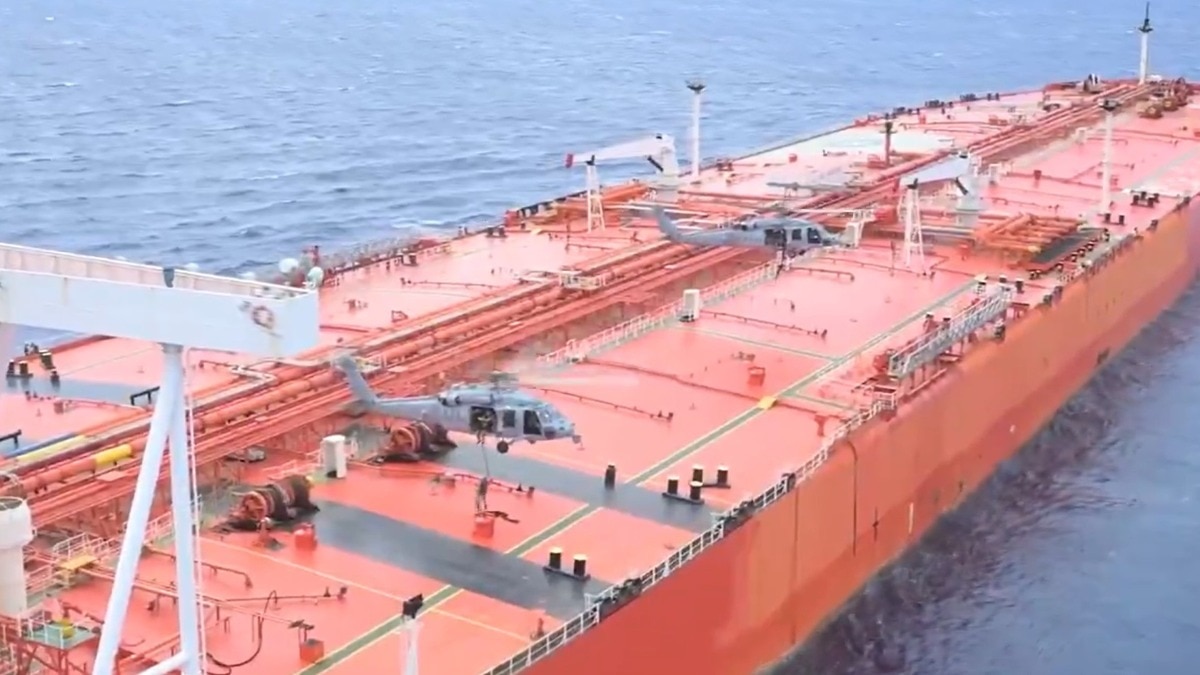
In a dramatic escalation of long-standing geopolitical tensions, Iran has launched a scathing accusation against the United States, denouncing the recent seizure of two oil tankers as an act of "armed robbery on the high seas" and a blatant violation of international law. The incident, which saw American forces intercept vessels allegedly transporting Iranian oil, has ignited a fresh diplomatic firestorm and cast a chilling shadow over the already volatile waters of the Strait of Hormuz.
This is not merely a dispute over cargo; it is a high-stakes confrontation that intertwines economic sanctions, global energy security, and the delicate balance of power in the Middle East. For Tehran, the seizures represent an audacious act of aggression, an infringement on its sovereign rights and an attempt to choke its vital oil exports. For Washington, it is framed as an enforcement of sanctions designed to curb Iran's nuclear ambitions and destabilizing regional activities. The chasm between these narratives is vast, and the potential for miscalculation, given the history of incidents in the region, is alarmingly high.
A History of Maritime Flashpoints
The Strait of Hormuz, a narrow waterway connecting the Persian Gulf to the open ocean, is arguably the world's most strategically important oil transit choke point. Approximately one-fifth of the world's total oil consumption, or about 21 million barrels per day, passes through this strait. Its geopolitical significance cannot be overstated, making any disruption a matter of global concern. The recent tanker seizures are not an isolated event but rather the latest chapter in a protracted saga of maritime confrontations between Iran and Western powers, particularly the United States.
Over the past decade, the region has witnessed a series of incidents, including attacks on tankers, drone strikes, and the seizure of vessels by both sides. In 2019, a series of mysterious attacks on oil tankers in the Gulf of Oman were attributed by the U.S. to Iran, an accusation Tehran denied. Later that year, Iran seized the British-flagged tanker Stena Impero in retaliation for the UK's seizure of an Iranian tanker off Gibraltar. These events underscore a pattern of tit-for-tat actions, where maritime commerce becomes a pawn in a larger geopolitical chess game. Each incident serves to heighten the sense of precariousness, reminding the international community of the fragility of peace in a region vital to the global economy. The current accusations of "piracy" by Iran echo previous condemnations, highlighting a deep-seated grievance against what it perceives as unilateral American aggression and economic warfare.
The Sanctions Straitjacket and Iran's Response
The root cause of much of this tension lies in the stringent economic sanctions imposed on Iran by the United States, particularly since the Trump administration's withdrawal from the Joint Comprehensive Plan of Action (JCPOA), or the Iran nuclear deal, in 2018. These sanctions aim to cripple Iran's oil exports, its primary source of revenue, thereby pressuring Tehran to renegotiate the nuclear agreement and alter its regional behavior. While the Biden administration has expressed a desire to revive the JCPOA, negotiations have stalled, leaving the sanctions regime largely intact.
Iran views these sanctions as illegal and an act of economic warfare. Its strategy has often involved attempting to circumvent these restrictions, frequently through clandestine oil shipments. The tankers seized by the U.S. were allegedly engaged in precisely such activities, attempting to deliver Iranian oil to international markets. For Iran, the ability to export oil is not just an economic necessity but a matter of national sovereignty and resistance against what it perceives as foreign coercion. The seizure of these tankers is thus not just a financial blow but a symbolic challenge to its defiance. Iran’s Foreign Ministry spokesperson, Esmaeil Bagheri, articulated this sentiment, stating that such actions are a clear violation of international law and a form of state-sponsored piracy, demanding the immediate release of the vessels and their cargo. This rhetoric signals a hardening stance and a refusal to back down under pressure, suggesting that future retaliatory measures, though unspecified, remain a distinct possibility.
International Law and the 'Piracy' Debate
The accusation of "piracy" carries significant weight in international law, typically referring to acts of robbery or criminal violence at sea committed by private individuals for private ends. However, Iran's use of the term is directed at a state actor – the United States – and is intended to frame the U.S. action as an illegal and illegitimate exercise of power. From the U.S. perspective, the seizures are an enforcement of its domestic sanctions regime, which it views as legitimate tools of foreign policy.
Legal experts are divided on the precise classification of such incidents. While the U.S. might argue it is enforcing sanctions under its jurisdiction, the seizure of a vessel in international waters raises complex questions about sovereignty and the extent of extraterritorial jurisdiction. The principle of freedom of navigation is a cornerstone of international maritime law, and any action that impedes it, especially by a state against another state's interests, is subject to intense scrutiny. The lack of a universally accepted international framework for enforcing unilateral sanctions on the high seas further complicates matters, creating a legal grey area that both sides exploit to their advantage. This legal ambiguity allows each party to maintain its moral high ground while condemning the other, perpetuating a cycle of accusation and counter-accusation that undermines efforts towards de-escalation.
Implications for Global Energy Markets and Regional Stability
The ongoing tensions in the Strait of Hormuz have profound implications that extend far beyond the immediate parties involved. For global energy markets, any threat to the free flow of oil through this vital artery sends jitters through commodity exchanges, potentially leading to price spikes and increased volatility. Major oil-importing nations, particularly in Asia and Europe, watch these developments with apprehension, understanding that their economic stability is directly linked to the security of this maritime route.
Regionally, the escalation risks drawing in other actors. Saudi Arabia and the UAE, key U.S. allies and major oil producers, are deeply invested in the stability of the Gulf. Any significant disruption could have cascading effects, potentially reigniting proxy conflicts or leading to broader military confrontations. The current diplomatic stalemate over the nuclear deal further exacerbates the situation, as the absence of a clear path to de-escalation leaves a vacuum that can easily be filled by aggressive actions. The international community, therefore, faces a critical challenge: how to navigate these treacherous waters, enforce international norms, and prevent a localized dispute from spiraling into a wider regional or even global crisis. The immediate future suggests continued vigilance and a pressing need for diplomatic engagement, however difficult, to prevent further destabilization in this crucial geopolitical hotspot.
In conclusion, the latest confrontation in the Strait of Hormuz is a stark reminder of the enduring volatility in the Middle East. Iran's accusation of "piracy" against the U.S. underscores a deep-seated animosity fueled by sanctions and geopolitical rivalry. As long as the fundamental disagreements over Iran's nuclear program and regional influence remain unresolved, and as long as unilateral sanctions continue to be enforced through maritime interdictions, the Strait of Hormuz will remain a potential flashpoint. The international community's ability to de-escalate these tensions and find diplomatic solutions will be crucial in preventing further destabilization and ensuring the continued flow of global commerce.
Stay Informed
Get the world's most important stories delivered to your inbox.
No spam, unsubscribe anytime.
Comments
No comments yet. Be the first to share your thoughts!