The Unsung Hero of Longevity: Why the Forward Lunge is Your Best Bet for Lifelong Strength
Forget expensive gym memberships and complex equipment. Experts are increasingly pointing to a simple, yet profoundly effective exercise: the forward lunge. This foundational movement, often overlooked in modern fitness trends, is crucial for maintaining muscle power, balance, and mobility, especially for individuals over 50. Discover why incorporating lunges into your routine can be the key to a healthier, more active future.
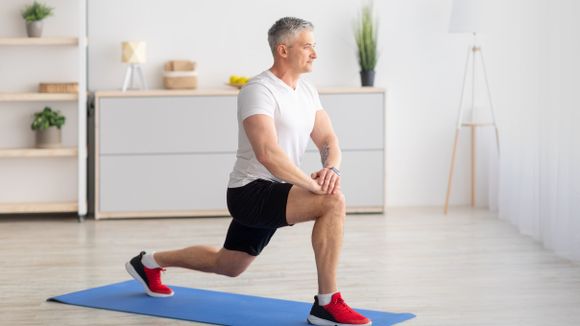
In an era saturated with high-tech fitness gadgets, celebrity trainers, and ever-evolving workout fads, the quest for optimal health and longevity can often feel overwhelming and financially draining. Yet, amidst this cacophony of modern fitness, a quiet revolution is brewing, championed by exercise scientists and gerontologists alike. Their message is clear, refreshingly simple, and profoundly impactful: the forward lunge is not just an exercise; it's a cornerstone of lifelong physical autonomy, particularly vital for those navigating the challenges of aging.
For decades, the fitness industry has often equated strength with heavy lifting, complex machinery, and grueling, high-intensity regimens. While these approaches have their place, they often overshadow the fundamental, bodyweight movements that form the bedrock of human movement and functional strength. The forward lunge, a deceptively simple motion, embodies this principle, offering a comprehensive workout that targets multiple muscle groups, improves balance, and enhances mobility without the need for a single piece of specialized equipment or a costly gym membership.
The Science Behind the Simplicity: Why Lunges Matter
The human body is a marvel of engineering, designed for movement, balance, and adaptability. As we age, however, a natural decline in muscle mass, bone density, and neuromuscular coordination—a process known as sarcopenia—begins to accelerate, typically after the age of 30. This decline significantly impacts our ability to perform daily activities, increases the risk of falls, and diminishes overall quality of life. Traditional resistance training is a well-established antidote, but the lunge offers a unique advantage.
Unlike bilateral exercises such as squats or deadlifts, the lunge is a unilateral movement, meaning it works one side of the body at a time. This characteristic is critical for several reasons. Firstly, it helps to identify and correct muscular imbalances between the left and right sides of the body, which are common and can lead to compensatory movements and injuries. Secondly, unilateral exercises demand greater core stability and balance, as the body must work harder to stabilize itself on a single leg. This translates directly to improved functional balance, a crucial factor in preventing falls, which are a leading cause of injury and mortality among older adults.
Research consistently highlights the benefits. A study published in the Journal of Gerontology emphasized the importance of lower body strength and balance for independent living in older populations. Another meta-analysis in Sports Medicine indicated that unilateral training, including lunges, can lead to significant improvements in strength and power, comparable to or even surpassing bilateral training in certain contexts, while also enhancing proprioception—our body's sense of its position in space.
Beyond Muscle: The Holistic Benefits of Lunging
The forward lunge is far more than just a leg exercise. It's a full-body functional movement that engages a complex network of muscles and systems. When performed correctly, it activates:
* Quadriceps and Hamstrings: The primary movers for leg extension and flexion. * Glutes: Essential for hip extension, external rotation, and overall power. * Calves: Crucial for ankle stability and propulsion. * Core Muscles (Abdominals and Obliques): Engaged intensely to maintain an upright posture and prevent rotation. * Spinal Stabilizers: Work to keep the torso erect and protect the spine.
Moreover, the dynamic nature of the lunge, involving a step forward and controlled descent, mimics everyday movements like walking, climbing stairs, and stepping over obstacles. This functional transfer is what makes the lunge so invaluable. It doesn't just build isolated strength; it builds strength that is directly applicable to the demands of daily life, fostering independence and confidence. For individuals over 50, maintaining this functional capacity is paramount for a high quality of life.
Historical Context and Modern Misconceptions
Throughout human history, movements akin to lunging have been integral to survival and daily activities, from hunting and gathering to farming and construction. Our bodies are biomechanically optimized for such dynamic, multi-joint actions. However, with the advent of industrialized societies and sedentary lifestyles, these natural movements have often been replaced by prolonged sitting and specialized, often isolated, exercises promoted by the commercial fitness industry.
The modern fitness landscape, often driven by aesthetics and performance metrics, has frequently prioritized exercises that promise quick results or target specific muscle groups for hypertrophy. While there's nothing inherently wrong with these goals, they sometimes overshadow the foundational importance of functional movements. The lunge, despite its efficacy, has sometimes been relegated to a warm-up or an accessory exercise, rather than being recognized as a cornerstone of a robust fitness regimen. The perception that effective exercise requires heavy weights or complex machines is a significant misconception that prevents many from embracing simpler, yet profoundly effective, movements.
Integrating Lunges into Your Routine: Practical Advice
For those looking to reap the benefits, integrating lunges is straightforward. Start with bodyweight lunges, focusing on proper form:
1. Starting Position: Stand tall with feet hip-width apart, hands on hips or at your sides. 2. Step Forward: Take a large step forward with one leg, landing on the heel then the ball of your foot. 3. Lower Down: Lower your hips until both knees are bent at approximately a 90-degree angle. Ensure your front knee is directly above your ankle, and your back knee hovers just above the floor. 4. Maintain Posture: Keep your torso upright, shoulders back, and core engaged. 5. Push Back: Push off your front foot to return to the starting position.
Begin with 2-3 sets of 8-12 repetitions per leg, 2-3 times a week. As strength and balance improve, consider variations such as reverse lunges, lateral lunges, or adding light dumbbells for increased resistance. Consulting with a qualified fitness professional can provide personalized guidance and ensure safe progression, especially for those with pre-existing conditions.
The Future of Functional Fitness: A Call to Action
The message from exercise scientists is clear: the path to sustainable strength and vitality doesn't necessarily lie in the latest expensive gadget or the most exclusive gym. Often, it's found in rediscovering the fundamental movements our bodies were designed to perform. The forward lunge stands as a powerful testament to this principle, offering an accessible, effective, and profoundly beneficial exercise for people of all ages, but particularly for those over 50 striving to maintain their independence and quality of life.
As our global population ages, the imperative to promote accessible and effective strategies for healthy aging becomes ever more critical. Embracing exercises like the lunge is not just about physical fitness; it's about investing in a future where mobility, balance, and strength are not luxuries, but fundamental aspects of everyday living. It's a call to action for individuals to take ownership of their health, one powerful lunge at a time, proving that sometimes, the simplest solutions are indeed the most revolutionary.
Stay Informed
Get the world's most important stories delivered to your inbox.
No spam, unsubscribe anytime.
Comments
No comments yet. Be the first to share your thoughts!