Trump's Critical Minerals Strategy: A New Scramble for Africa's Resources
The Trump administration's aggressive pursuit of critical minerals is reshaping global trade policy, placing resource-rich African nations at a pivotal crossroads. This strategy, driven by economic and national security concerns, presents both unprecedented opportunities and significant risks for the continent. As Washington recalibrates its approach to mineral access, African countries must navigate complex geopolitical currents to maximize benefits and avoid past exploitation patterns.
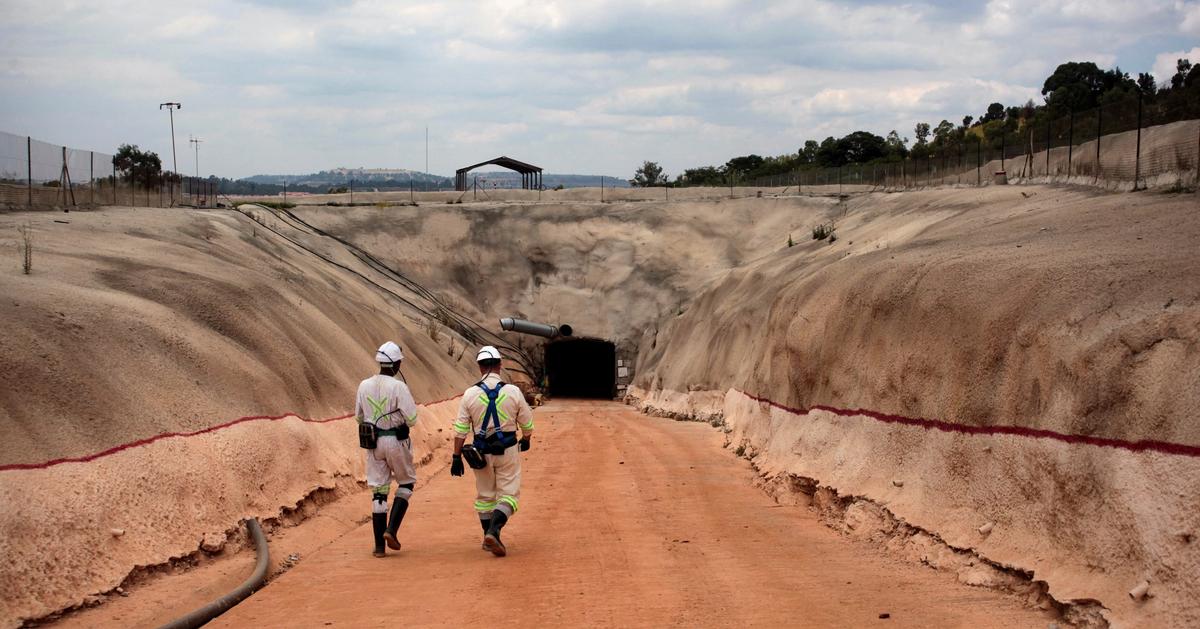
In a world increasingly reliant on technology, from electric vehicles to advanced defense systems, the demand for critical minerals has surged, transforming them into geopolitical assets of paramount importance. The Trump administration, recognizing this strategic imperative, has begun to aggressively reorient its trade policy to secure reliable access to these vital resources. This shift is not merely an economic maneuver; it is a profound recalibration of global power dynamics, with resource-rich African countries firmly in its crosshairs. This new focus marks a potential 'scramble for Africa's resources' reminiscent of historical colonial patterns, yet with modern geopolitical nuances.
The Geopolitical Chessboard: Why Critical Minerals Matter
Critical minerals, a category that includes rare earths, cobalt, lithium, and graphite, are indispensable components in a vast array of modern technologies. Their scarcity, combined with concentrated supply chains often dominated by a single nation – notably China – has raised alarm bells in Western capitals. For the United States, securing these minerals is a matter of national security, economic competitiveness, and technological supremacy. The Trump administration's approach, as highlighted by a paper from Columbia University’s Zainab Usman, signals a hardening stance: access to these minerals will be a defining feature of its future trade agreements and diplomatic engagements. This isn't just about trade; it's about control over the raw materials that fuel the 21st-century economy and military.
The previous administration's policies, while acknowledging the importance of critical minerals, often relied on market mechanisms and multilateral cooperation. The Trump era, however, appears poised for a more unilateral and transactional approach, emphasizing bilateral deals and direct engagement. This shift could lead to a more competitive, and potentially confrontational, global environment for mineral acquisition. The implications for Africa are profound: the continent holds vast, untapped reserves of many of these critical minerals, making it an indispensable player in this evolving geopolitical game.
Africa's Dilemma: Opportunity or Exploitation?
For African nations, the renewed interest from a major global power like the United States presents a complex dilemma. On one hand, it offers an unprecedented opportunity for economic development, infrastructure investment, and job creation. Demand for these minerals could drive significant foreign direct investment (FDI) into mining sectors, potentially boosting national revenues and fostering industrial growth. Countries like the Democratic Republic of Congo (DRC), with its vast cobalt reserves, or Zimbabwe, rich in lithium, could find themselves courted by powerful nations eager to secure supply.
However, this opportunity comes with significant caveats. Africa's history is replete with examples of resource exploitation, where the continent's wealth was extracted with minimal benefit to its people. The danger of a 'resource curse' – where abundant natural resources lead to corruption, conflict, and underdevelopment – looms large. African governments must navigate these waters with extreme caution, ensuring that any deals struck are transparent, equitable, and genuinely contribute to sustainable development. This requires strong governance, robust legal frameworks, and a clear vision for how mineral wealth can be leveraged for long-term national benefit, rather than short-term gains for a select few.
Navigating the New Rules of Engagement
The Trump administration's strategy is likely to involve a combination of incentives and pressures. This could include: * Direct investments: Funding for mining projects, infrastructure development, and processing facilities. * Trade agreements: Preferential trade terms in exchange for mineral access. * Security cooperation: Linking mineral access to broader strategic partnerships. * Countering Chinese influence: Offering alternative financing and development models to reduce Africa's reliance on China.
African nations, in turn, have several strategies to employ. They can form regional blocs to negotiate from a position of strength, diversify their trading partners, and insist on value-added processing within their borders rather than merely exporting raw materials. Developing local processing capabilities, for instance, could transform raw cobalt into battery-grade material, significantly increasing its value and creating more skilled jobs domestically. This would move beyond the traditional model of exporting raw materials, which often leaves African nations at the lower end of the value chain.
Furthermore, African leaders must prioritize environmental sustainability and human rights in their mining sectors. The extraction of critical minerals can be environmentally destructive and often involves challenging labor conditions. Ensuring responsible mining practices will be crucial for long-term social license and avoiding international condemnation.
The Path Forward: Strategic Autonomy and Sustainable Development
The ultimate success or failure of Africa's engagement with this new critical minerals strategy will depend on its ability to assert strategic autonomy. This means not simply reacting to external pressures but proactively shaping the terms of engagement. It involves: * Investing in human capital: Training a skilled workforce in geology, engineering, and metallurgy. * Strengthening institutions: Building transparent and accountable governance structures to manage resource wealth. * Diversifying economies: Reducing over-reliance on mineral exports by fostering other sectors like agriculture, manufacturing, and services. * Regional cooperation: Collaborating with neighboring countries to create larger, more attractive markets and supply chains.
The Trump administration's focus on critical minerals is a clear signal that the global competition for these resources is intensifying. For Africa, this moment represents a double-edged sword. It is a chance to leverage its natural endowments for genuine, transformative development, but also a risk of falling back into patterns of dependency and exploitation. The choices made by African leaders in the coming years will determine whether this new scramble leads to prosperity and self-determination, or merely a continuation of historical resource extraction narratives. The world is watching, and the stakes could not be higher for the continent's future trajectory in the global economy.
Stay Informed
Get the world's most important stories delivered to your inbox.
No spam, unsubscribe anytime.
Comments
No comments yet. Be the first to share your thoughts!