Trump's Iran Stance: A High-Stakes Review and the Shadow of Military Action
President Donald Trump has initiated a critical review of the proposed Iran nuclear deal, signaling a potential shift in U.S. policy towards Tehran. His stern warning of possible military strikes if Iran "misbehaves" underscores the volatile nature of Middle Eastern geopolitics. This development has sent ripples across the international community, raising questions about the future of nuclear diplomacy and regional stability. The world watches closely as Washington re-evaluates its approach to a long-standing adversary.
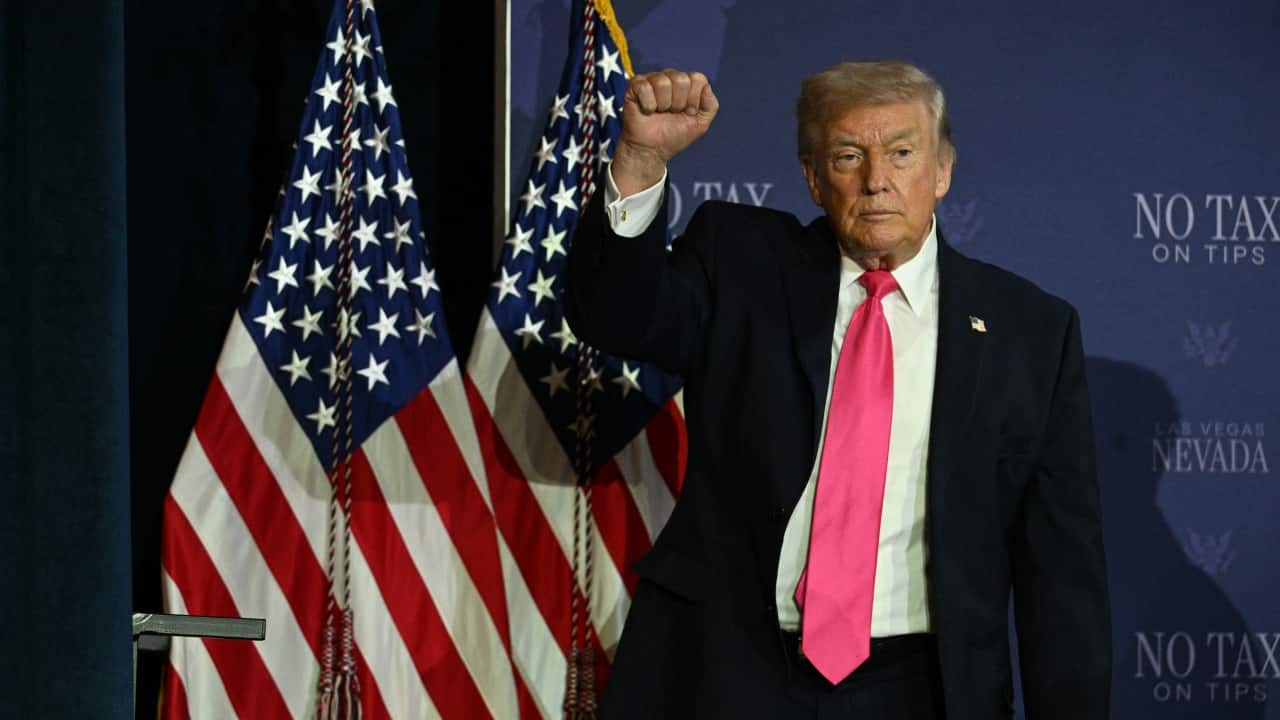
In a move that has immediately heightened geopolitical tensions, U.S. President Donald Trump announced a comprehensive review of the proposed Iran nuclear deal, simultaneously issuing a stark warning that military action remains a tangible option should Tehran exhibit any form of "misbehavior." The declaration, made before boarding a flight from West Palm Beach, Florida, signals a potentially dramatic recalibration of American foreign policy towards the Islamic Republic, echoing a long-held skepticism within certain U.S. political circles regarding the efficacy and safety of the existing agreement.
Trump's statement, though brief, carries immense weight, suggesting a departure from the Obama-era diplomatic framework that sought to curb Iran's nuclear ambitions through multilateral engagement. The Joint Comprehensive Plan of Action (JCPOA), as the deal is formally known, was a landmark agreement signed in 2015 by Iran and the P5+1 nations (China, France, Germany, Russia, the United Kingdom, and the United States). It aimed to prevent Iran from developing nuclear weapons in exchange for sanctions relief. However, critics, including President Trump, have consistently argued that the deal was too lenient, did not adequately address Iran's ballistic missile program, or its destabilizing activities in the Middle East.
The Genesis of the Iran Nuclear Deal: A Troubled History
The relationship between the U.S. and Iran has been fraught with tension since the 1979 Islamic Revolution, which overthrew the U.S.-backed Shah. Decades of sanctions, proxy conflicts, and mutual distrust culminated in a global effort to prevent Iran from acquiring nuclear weapons. By the early 2000s, revelations about Iran's clandestine nuclear facilities spurred international concern, leading to a series of UN Security Council resolutions imposing severe sanctions. These sanctions crippled Iran's economy, eventually bringing it to the negotiating table. The JCPOA, finalized after years of arduous diplomacy, was hailed by its proponents as a historic achievement, effectively rolling back Iran's nuclear program and placing it under stringent international oversight by the International Atomic Energy Agency (IAEA).
Key provisions of the JCPOA included: reducing Iran's centrifuges by two-thirds, capping uranium enrichment levels at 3.67% (far below weapons-grade), reducing its enriched uranium stockpile by 98%, and redesigning the Arak heavy water reactor to prevent plutonium production. In return, Iran received relief from nuclear-related economic sanctions. For many, the deal represented the best possible outcome to prevent a nuclear arms race in the Middle East and avoid military confrontation. However, from its inception, the agreement faced fierce opposition, particularly from Israel, Saudi Arabia, and a significant faction within the U.S. Congress, who viewed it as fundamentally flawed and dangerous.
Trump's Review: What Does "Misbehaves" Entail?
President Trump's use of the term "misbehaves" is deliberately vague, leaving ample room for interpretation and concern. Does it refer to violations of the JCPOA itself, which international observers like the IAEA have largely confirmed Iran is adhering to? Or does it extend to Iran's regional actions, such as its support for Houthi rebels in Yemen, Hezbollah in Lebanon, or its influence in Syria and Iraq? The latter interpretation would significantly broaden the scope of potential U.S. intervention, moving beyond nuclear proliferation to encompass a wider array of geopolitical grievances. This ambiguity creates a climate of uncertainty, forcing Tehran and its allies to speculate on Washington's red lines.
The review process itself is likely to involve a deep dive into intelligence assessments, diplomatic reports, and consultations with allies and adversaries. It could lead to several outcomes: a full withdrawal from the JCPOA, a renegotiation of certain terms, stricter enforcement of existing provisions, or a more aggressive posture concerning Iran's non-nuclear activities. A withdrawal would be highly contentious, potentially isolating the U.S. from its European allies who remain committed to the deal and raising the risk of Iran restarting its full nuclear program. Conversely, a more robust enforcement strategy, coupled with targeted sanctions on Iran's Revolutionary Guard Corps (IRGC) or its ballistic missile program, could be seen as a middle ground, though still fraught with risks.
Regional Implications and Expert Analysis
The prospect of a renewed hawkish stance from Washington has sent tremors across the Middle East. Israel, a staunch opponent of the JCPOA, would likely welcome a tougher U.S. approach, viewing Iran as its primary existential threat. Saudi Arabia and other Gulf states, locked in a regional power struggle with Iran, would also favor increased pressure. However, escalating tensions could easily spill over, exacerbating existing conflicts in Yemen, Syria, and Iraq, and potentially leading to direct confrontations. A more aggressive U.S. policy could also embolden hardliners within Iran, making future diplomatic engagement even more challenging.
Experts are divided on the optimal path forward. Dr. Emily Thorne, a Middle East policy analyst, suggests that "any move to dismantle the JCPOA without a viable alternative risks pushing Iran closer to nuclear weaponization, not further away. The deal, for all its imperfections, provided a verifiable cap on Iran's nuclear program." Conversely, former National Security Advisor John Bolton, a vocal critic of the deal, has argued that "the JCPOA merely delayed Iran's nuclear ambitions and legitimized its regime. A stronger, more comprehensive approach is needed to truly neutralize the threat." The debate underscores the complexity of the issue, with no easy answers.
The Path Forward: Diplomacy or Deterrence?
President Trump's review of the Iran deal places the international community at a critical juncture. The balance between diplomacy and deterrence is delicate, and missteps could have catastrophic consequences. While the threat of military strikes serves as a powerful deterrent, history has shown that such actions often lead to unintended escalations and prolonged conflicts. The challenge for the U.S. administration will be to craft a strategy that effectively addresses its concerns about Iran's behavior without unraveling the existing nuclear non-proliferation framework or igniting a wider regional war.
Ultimately, the path forward will likely involve a combination of continued pressure and selective engagement. The international community, particularly the European signatories to the JCPOA, will play a crucial role in mediating and potentially mitigating any drastic shifts in U.S. policy. The coming months will reveal whether President Trump opts for a radical overhaul of U.S. Iran policy or a more nuanced approach that seeks to strengthen existing mechanisms while addressing perceived shortcomings. The stakes, for regional stability and global security, could not be higher. The world watches, holding its breath, as the future of the Iran nuclear deal hangs in the balance.
Stay Informed
Get the world's most important stories delivered to your inbox.
No spam, unsubscribe anytime.
Comments
No comments yet. Be the first to share your thoughts!