Tucker Carlson's 'Antichrist' Remark on Trump: A Deep Dive into Political Rhetoric and Media Manipulation
Conservative firebrand Tucker Carlson recently faced scrutiny over a past comment questioning if Donald Trump could be the 'Antichrist,' a remark he now vehemently denies making in that context. This incident highlights the volatile nature of political discourse and the selective memory often employed by public figures. It also underscores the power of media narratives and the blurring lines between satire, speculation, and serious commentary in contemporary politics.
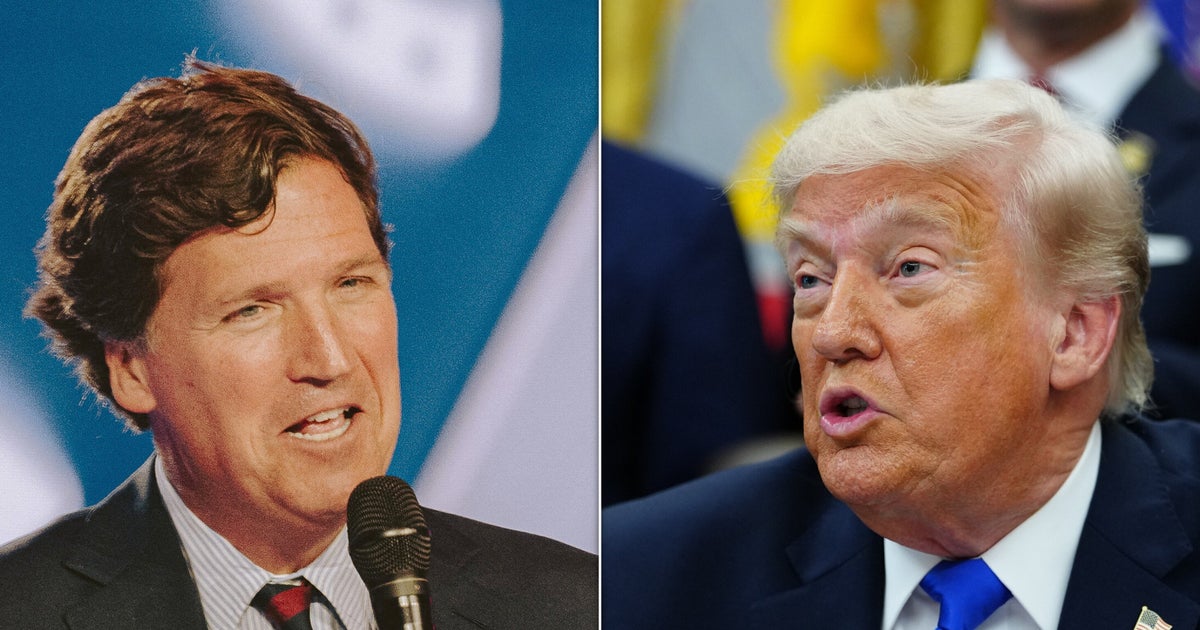
In the tumultuous landscape of American political commentary, few figures command as much attention and controversy as Tucker Carlson. The conservative podcaster, known for his provocative style and often incendiary remarks, recently found himself in the spotlight once again, this time over a comment made in April regarding former President Donald Trump. The essence of the controversy: Carlson had mused aloud, "Could this be the Antichrist? Well, who knows?" in reference to Trump, a statement he now adamantly denies having made in any serious or critical context.
This incident, though seemingly minor, opens a Pandora's Box of questions about the nature of political rhetoric, the shifting allegiances within conservative media, and the strategic use of denial and reinterpretation by public figures. Carlson’s subsequent confrontation and denial underscore a broader trend where past statements are often disavowed or reframed to fit current political narratives, particularly when inconvenient truths emerge.
The Anatomy of a Controversial Remark
The original comment, made during an interview or monologue back in April, was not an outright accusation but rather a rhetorical question posed by Carlson. The exact context, while crucial, has been somewhat obscured by the subsequent denial. However, the mere suggestion of such a religiously charged and eschatological term being applied, even speculatively, to a prominent political figure like Donald Trump, is inherently sensational. The "Antichrist" in Christian theology represents the ultimate adversary of Christ, a figure associated with deception, tyranny, and the end times. To even entertain this notion, however fleetingly, about a former ally and a leading figure in the Republican party, speaks volumes about the depth of Carlson's rhetorical arsenal and his willingness to push boundaries.
Carlson's denial, according to reports, was vehement. He reportedly claimed that the remark was taken out of context or was a misinterpretation, suggesting it was perhaps a jest or an exploration of extreme possibilities rather than a genuine query about Trump's messianic or demonic status. This act of denial is a common tactic in public relations, aiming to control the narrative and mitigate potential damage to one's reputation or political standing. For Carlson, whose audience often holds strong religious and conservative views, being perceived as questioning Trump's character in such a profound way could be damaging, especially given his past support for the former president.
Shifting Sands: Carlson's Evolving Relationship with Trump
The dynamic between Tucker Carlson and Donald Trump has been a fascinating and often contradictory one. For years, Carlson was seen as one of Trump's most vocal and influential supporters in conservative media, frequently defending his policies and actions on his highly-rated Fox News show. His platform provided a significant boost to Trump's populist message and often mirrored the former president's own rhetoric.
However, since Carlson's departure from Fox News and the launch of his independent podcast, there have been subtle, and at times not-so-subtle, shifts in his commentary. While still broadly aligned with conservative principles, Carlson has shown an increasing willingness to critique elements of the Republican establishment and, occasionally, even Trump himself. This evolving relationship is not unique; many figures within the conservative movement have grappled with how to navigate their allegiance to Trump while maintaining their own distinct voices and brands. The "Antichrist" comment, regardless of its intended meaning, serves as a stark illustration of this complex and often fraught political dance.
This isn't merely about personal relationships; it reflects deeper ideological currents within the Republican party. As Trump continues to dominate the party, figures like Carlson must decide whether to remain fully in his orbit or carve out a more independent, albeit still conservative, path. The use of extreme language, even in jest, can be a way to test boundaries, signal independence, or simply generate engagement in a crowded media landscape.
The Weaponization of Religious and Eschatological Language in Politics
The invocation of terms like "Antichrist" in political discourse is not new, but its application to a figure like Trump by a mainstream conservative commentator is particularly noteworthy. Throughout history, political opponents have often been demonized using religious metaphors, portraying them as agents of evil or forces against divine will. This kind of language taps into deep-seated cultural and religious anxieties, capable of mobilizing fervent support or intense opposition.
In the American context, particularly among certain evangelical Christian demographics, eschatological beliefs about the end times and the rise of an "Antichrist" figure are significant. For a commentator to even hint at such a connection, however playfully, can resonate powerfully with segments of the audience, potentially sowing seeds of doubt or, conversely, reinforcing a sense of divine struggle in the political arena. This weaponization of religious language elevates political disagreements to a spiritual battle, making compromise and rational debate far more difficult.
Consider the historical parallels: figures throughout history, from Roman emperors to modern dictators, have been both deified and demonized using religious terminology. The power of such language lies in its ability to transcend mere policy debates and tap into fundamental questions of good and evil, salvation and damnation. When a media personality as influential as Carlson employs such terms, it is rarely without consequence, regardless of his stated intent.
Implications for Media Credibility and Public Discourse
This incident also raises critical questions about media credibility and the state of public discourse. When prominent figures make controversial statements and then deny or reinterpret them, it erodes trust in both the media and the individuals involved. The public is left to decipher what is genuine commentary, what is rhetorical flourish, and what is outright dissimulation.
In an era of deep political polarization and widespread misinformation, the line between fact and opinion, and between serious analysis and performative rhetoric, has become increasingly blurred. Carlson's situation exemplifies this challenge. His audience, often highly loyal, may accept his denial at face value, while critics will view it as further evidence of disingenuousness.
Furthermore, the constant need for public figures to clarify, deny, or walk back statements contributes to a climate of cynicism. It makes it harder for citizens to engage meaningfully with political issues when the very words spoken by leaders and commentators are subject to constant reinterpretation. This creates a feedback loop where extreme statements are made to grab attention, then denied to manage fallout, further muddying the waters of public understanding.
The Road Ahead: Navigating a Fractured Information Landscape
The Tucker Carlson-Donald Trump "Antichrist" saga is more than just a fleeting news item; it is a microcosm of the challenges facing contemporary political communication. It illustrates the intricate dance between media personalities and political figures, the strategic deployment of rhetoric, and the profound impact of language on public perception. As the 2024 election cycle intensifies, we can expect to see more such instances where past statements are scrutinized, allegiances are tested, and the very fabric of political discourse is stretched to its limits.
For readers, the lesson is clear: critical engagement with media is paramount. Understanding the context, recognizing rhetorical strategies, and questioning denials are essential skills in navigating an increasingly fractured and often disingenuous information landscape. The incident serves as a stark reminder that in the world of high-stakes political commentary, words have power, and their meaning, once uttered, can take on a life of their own, regardless of the speaker's original intent.
Stay Informed
Get the world's most important stories delivered to your inbox.
No spam, unsubscribe anytime.
Comments
No comments yet. Be the first to share your thoughts!