West Bengal Elections: EVM Security Sparks Fierce Political Battle Ahead of Vote Count
As West Bengal braces for the counting of votes from its recent assembly elections, a heated controversy has erupted between the Trinamool Congress (TMC) and the Bharatiya Janata Party (BJP) over the security of Electronic Voting Machines (EVMs). Allegations of 'lax security' and 'blacked-out CCTV footage' at strongrooms have fueled political tensions, raising critical questions about electoral integrity. This dispute underscores the high stakes of the election and its potential implications for India's political landscape.
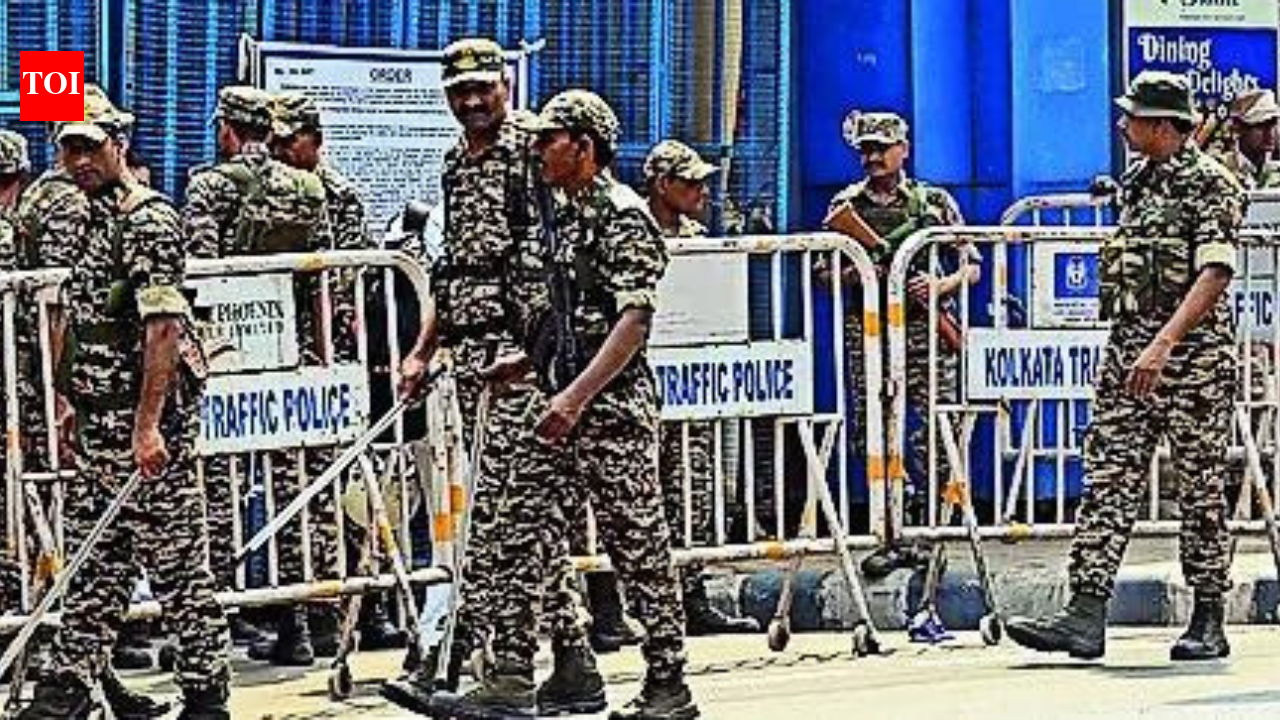
The air in West Bengal is thick with anticipation and political acrimony as the state prepares for the crucial counting of votes from its recent assembly elections. Far from a peaceful wait, the period leading up to the May 4 tally has been marred by a fierce and escalating dispute between the incumbent Trinamool Congress (TMC) and the Bharatiya Janata Party (BJP) over the integrity and security of Electronic Voting Machines (EVMs). This controversy, characterized by allegations of ‘lax security’ and ‘blacked-out CCTV footage’ at EVM strongrooms, has not only amplified pre-counting tensions but also cast a shadow of doubt over the sanctity of the electoral process itself.
The Spark of Suspicion: Allegations and Counter-Allegations
The controversy ignited on Saturday, just days before the scheduled vote count. Reports emerged from various districts detailing incidents that quickly became flashpoints for political confrontation. TMC leaders and cadres raised alarms about alleged security lapses at several EVM strongrooms, the heavily guarded facilities where the machines are stored after polling. Specific concerns included instances of unauthorized vehicles near strongrooms, unexplained power outages leading to blacked-out CCTV footage, and a perceived lack of transparency in security protocols. These incidents, though seemingly isolated, were quickly aggregated by the TMC into a narrative of deliberate attempts to compromise the election results.
The BJP, on the other hand, vehemently denied these accusations, dismissing them as a desperate attempt by the TMC to create a pretext for rejecting unfavorable outcomes. BJP spokespersons countered by accusing the TMC of engaging in its own brand of electoral malpractices and attempting to discredit the Election Commission of India (ECI). They argued that the ECI's robust security protocols, including multi-layered guarding by central armed police forces and continuous surveillance, were sufficient to prevent any tampering. The back-and-forth accusations have transformed the pre-counting period into a political battleground, with both parties mobilizing their supporters and engaging in a war of words through media and social channels.
A History of EVM Debates in India
The debate over EVM security is not new to India's electoral landscape. For years, the reliability and tamper-proof nature of EVMs have been a recurring subject of contention, particularly among opposition parties after significant electoral defeats. The introduction of EVMs in the late 1990s was hailed as a revolutionary step towards modernizing and streamlining the voting process, promising greater efficiency and reducing instances of booth capturing and ballot stuffing prevalent in the paper ballot era. However, skepticism has persisted.
Opposition parties, including the Congress, Aam Aadmi Party, and others, have frequently raised concerns about the potential for EVM manipulation, citing various technical vulnerabilities. These concerns often intensify during closely contested elections or when results defy pre-poll predictions. The ECI has consistently maintained that EVMs are robust, stand-alone machines, not connected to any network, and are therefore immune to remote hacking. They have also introduced Voter Verifiable Paper Audit Trail (VVPAT) units, which allow voters to verify that their vote has been cast correctly, adding another layer of transparency and auditability. Despite these assurances and technical explanations, the political narrative around EVM integrity continues to resurface, reflecting a deeper mistrust in the electoral system among certain political factions.
The Stakes in West Bengal: More Than Just an Election
The West Bengal assembly elections were arguably one of the most fiercely contested and high-stakes polls in recent Indian history. The BJP, under Prime Minister Narendra Modi, made a concerted and aggressive push to unseat the two-term incumbent TMC, led by Chief Minister Mamata Banerjee. For the BJP, capturing West Bengal would be a significant ideological and political victory, expanding its footprint into a crucial eastern state that has historically resisted its Hindutva-driven politics. For the TMC, retaining power was a matter of survival and a defense of regional identity against a powerful national party.
The campaign was marked by intense rhetoric, massive rallies, and instances of political violence, underscoring the deep polarization within the state. The outcome is seen as a bellwether for national politics, potentially influencing future general elections and the broader political narrative of India. Given this context, any perceived compromise to the electoral process, no matter how minor, is bound to be magnified and weaponized by political actors. The current EVM security controversy is thus not merely a technical dispute but a reflection of the intense political rivalry and the desperation to win at all costs.
Expert Analysis and Implications for Democratic Trust
Experts in electoral politics and technology offer varying perspectives on the current situation. While the ECI's official stance emphasizes the tamper-proof nature of EVMs and the stringent security protocols, the persistent allegations from political parties cannot be entirely dismissed. Dr. Rohan Sharma, a political analyst specializing in Indian elections, notes, "Even if the machines are technically secure, the perception of security is equally vital for maintaining public trust in the democratic process. When political parties, especially major ones, raise such concerns, it erodes confidence, regardless of the factual basis." He suggests that the ECI needs to be even more proactive in its communication and transparency, perhaps by allowing greater access for party representatives to monitor strongrooms under strict guidelines.
Another perspective highlights the psychological aspect of these allegations. "Accusations of EVM tampering serve multiple purposes for political parties," explains Professor Anjali Mehta, a sociologist. "They can be used to rally disillusioned voters, create an excuse for potential defeat, or even to delegitimize a victory by an opponent. In a highly polarized environment like West Bengal, such narratives gain significant traction." The long-term implication of such repeated allegations, regardless of their veracity, is a gradual erosion of faith in democratic institutions, which can have far-reaching consequences for India's political stability.
Moving Forward: The Path to Resolution and Rebuilding Trust
As the counting day approaches, the immediate focus will be on the ECI to ensure a smooth and transparent process. Any further incidents or unresolved complaints could further inflame tensions. The ECI has a critical role to play in addressing the concerns raised by the TMC and other parties, providing clear explanations, and demonstrating an unwavering commitment to electoral integrity. This might involve publishing detailed security logs, reviewing CCTV footage with party representatives, and holding open dialogues to dispel doubts.
Beyond the immediate crisis, there is a broader need for a national conversation about electoral reforms and enhancing trust in the voting system. This could include exploring independent audits, greater involvement of civil society organizations in monitoring, and continuous technological upgrades that are transparently vetted. The West Bengal EVM controversy serves as a stark reminder that in a vibrant, often contentious democracy like India, the perception of fairness is as crucial as fairness itself. Rebuilding and maintaining public confidence in the electoral machinery is paramount for the health and longevity of its democratic traditions. The outcome of this election, and how the EVM security concerns are ultimately resolved, will undoubtedly shape the narrative of Indian democracy for years to come.
Stay Informed
Get the world's most important stories delivered to your inbox.
No spam, unsubscribe anytime.
Comments
No comments yet. Be the first to share your thoughts!