West Bengal Elections: Decoding Amit Shah's 'Bye Didi' Prophecy and India's Shifting Political Landscape
Union Home Minister Amit Shah's audacious 'bye Didi' prediction for West Bengal's assembly elections, coupled with his 'Anga, Banga, Kalinga' vision, has become a focal point of India's political discourse. This article delves into the historical context of West Bengal's electoral battles, the strategies employed by the BJP and TMC, and the broader implications for India's federal structure and national politics. It examines how these prophecies reflect deeper ideological clashes and the evolving dynamics of regional power.
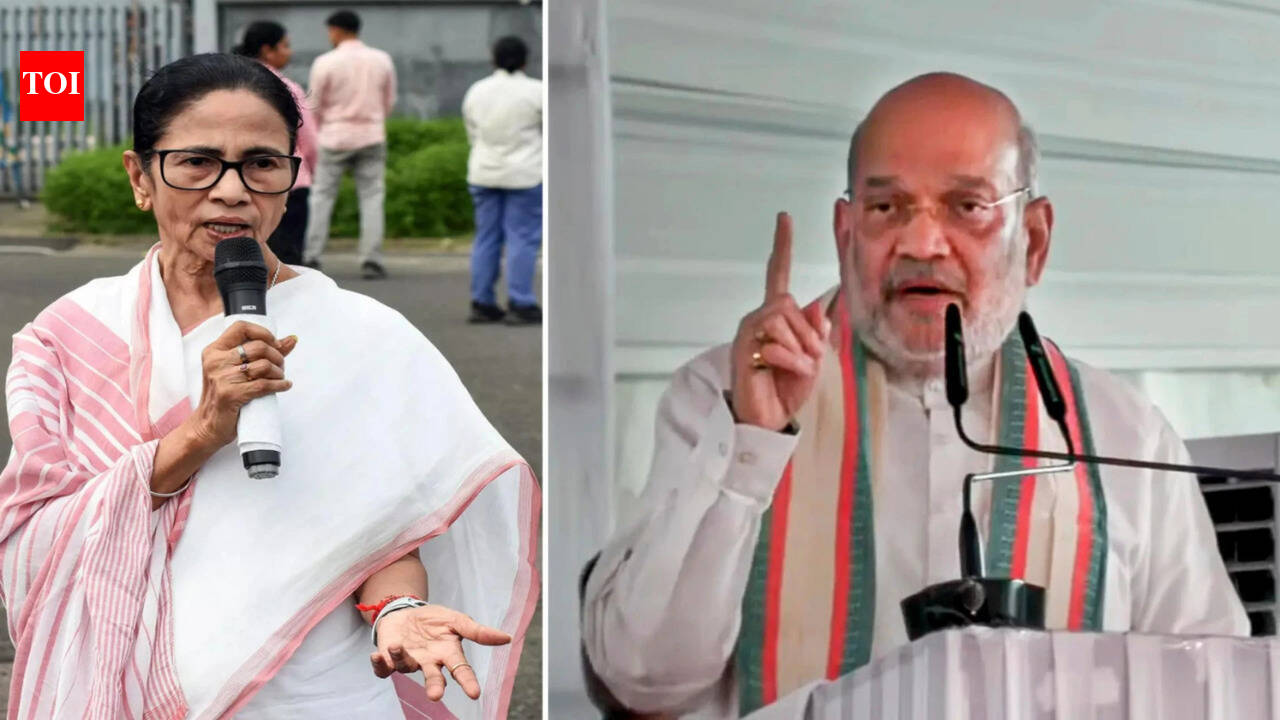
The political arena of India is no stranger to bold predictions and high-stakes rhetoric, but few pronouncements have captured the national imagination quite like Union Home Minister Amit Shah's confident declaration regarding West Bengal's assembly elections. "Counting will begin in the morning of May 4. Ballot box will open at 8 am, first round will be over at 9 and second round at 10. Counting will be over at 1 pm and it will be ta ta, good-bye to didi." This audacious prophecy, aimed squarely at Chief Minister Mamata Banerjee, or 'Didi' as she is affectionately known, wasn't just a political soundbite; it was a gauntlet thrown down, a challenge that encapsulated the Bharatiya Janata Party's (BJP) aggressive push into a state long dominated by regional forces. Beyond the immediate electoral battle, Shah's vision of 'Anga, Banga, Kalinga' – a reference to ancient regional kingdoms encompassing parts of modern-day Bihar, West Bengal, and Odisha – hinted at a grander, more ambitious realignment of political power across Eastern India, signaling a profound shift in the nation's political landscape.
The Battle for Bengal: A Historical Perspective
West Bengal has always held a unique place in India's political tapestry. From its intellectual and cultural renaissance to its long-standing embrace of communist ideology, the state has often charted its own course. For over three decades, from 1977 to 2011, the Communist Party of India (Marxist) (CPI(M))-led Left Front governed West Bengal, a record unparalleled in democratic history. This era of entrenched left-wing rule was eventually dismantled by Mamata Banerjee's Trinamool Congress (TMC), which rose to power on a wave of anti-incumbency and promises of change, culminating in a decisive victory in 2011. Banerjee, a fiery and charismatic leader, consolidated her position, becoming a formidable regional satrap and a vocal critic of the central government. Her 'Didi' persona resonated deeply with the masses, particularly women and rural populations, cementing her party's dominance. The BJP's entry into this deeply entrenched political ecosystem was initially met with skepticism. Historically, the party had a minimal presence in West Bengal, its Hindutva-centric ideology finding limited traction in a state with a significant Muslim population and a strong secular-left intellectual tradition. However, the 2014 and 2019 general elections saw a dramatic surge in BJP's vote share and seat count, positioning them as the principal opposition and a serious contender for the state assembly.
Shah's Strategy: From 'Bye Didi' to 'Anga, Banga, Kalinga'
Amit Shah, often dubbed the BJP's chief strategist, has been instrumental in the party's expansion beyond its traditional strongholds. His 'bye Didi' prediction was not merely an expression of confidence but a carefully calculated psychological maneuver designed to demoralize the opposition and galvanize his own party cadres. It was part of a broader strategy that involved extensive campaigning, high-profile rallies, and a relentless narrative building around issues of corruption, law and order, and alleged appeasement politics by the TMC government. The BJP also skillfully tapped into sentiments around Bengali identity and nationalism, attempting to counter the TMC's regional appeal. The 'Anga, Banga, Kalinga' concept, though seemingly historical, serves a contemporary political purpose. It suggests a vision of a unified, BJP-led eastern India, breaking down traditional regional barriers and consolidating power across multiple states. This narrative aims to project the BJP not just as a national party but as a pan-regional hegemon, capable of stitching together diverse linguistic and cultural zones under its ideological umbrella. It implicitly challenges the existing federal structure where strong regional parties often act as bulwarks against national dominance, suggesting a future where the BJP's influence extends seamlessly across these historical territories.
Electoral Dynamics and Key Issues
The West Bengal elections were a multi-faceted contest fought on several fronts. For the TMC, the election was a battle for survival and the preservation of regional identity against what it painted as an encroaching central power. Mamata Banerjee highlighted her government's welfare schemes, such as 'Duare Sarkar' (government at your doorstep) and 'Kanyashree' (a scheme for girl child education), and portrayed the BJP as an outsider force attempting to impose its will on Bengal. The BJP, on the other hand, focused on alleged corruption within the TMC, the state's law and order situation, and the issue of illegal immigration. Prime Minister Narendra Modi and Amit Shah led an aggressive campaign, deploying a significant portion of the party's national machinery. The defection of several prominent TMC leaders to the BJP further fueled the narrative of a crumbling TMC and a rising BJP. The role of identity politics, particularly around religion and caste, also played a crucial part. While the BJP sought to consolidate Hindu votes, the TMC relied heavily on its traditional support base among minorities and marginalized communities. The Left Front and Congress, once dominant, found themselves marginalized, struggling to regain relevance in a bipolar contest.
Implications for Indian Federalism and National Politics
The outcome of the West Bengal elections, regardless of who ultimately prevailed, carried significant implications for India's federal structure and national politics. A strong BJP performance would have further cemented its dominance, potentially weakening the voice of regional parties and centralizing power. Conversely, a robust TMC victory would have provided a much-needed boost to the opposition, demonstrating that the BJP is not invincible and that regional strongholds can resist national waves. The 'Anga, Banga, Kalinga' prophecy, if realized, would have reshaped the political map of Eastern India, creating a contiguous belt of BJP-ruled states. This would have given the party immense leverage in national policy-making and resource allocation, potentially impacting the balance of power between the center and states. Furthermore, the election was seen as a litmus test for the BJP's ability to replicate its success in Hindi-heartland states in culturally distinct regions, particularly those with strong regional identities. The strategies employed, the narratives built, and the results obtained would undoubtedly inform future electoral battles across the country, especially in states where regional parties remain strong.
Conclusion: The Enduring Legacy of a High-Stakes Battle
The West Bengal elections were more than just a state assembly contest; they were a clash of ideologies, personalities, and visions for India's future. Amit Shah's 'bye Didi' prediction and his broader 'Anga, Banga, Kalinga' ambition underscored the BJP's determination to expand its footprint and reshape the political geography of the nation. While the immediate results of such prophecies are subject to the democratic will of the people, the long-term implications for India's federalism, the role of regional parties, and the trajectory of national politics are profound. The intense campaigning, the high-pitched rhetoric, and the sheer scale of the political mobilization in West Bengal served as a powerful reminder of the vibrancy and often fierce nature of Indian democracy. As the dust settles, political analysts will continue to dissect the strategies, the outcomes, and the enduring lessons learned from this pivotal electoral battle, which has undoubtedly left an indelible mark on India's evolving political narrative. The contest highlighted the resilience of regional identities and the complex interplay between national aspirations and local realities, setting the stage for future political confrontations and realignments across the subcontinent.
Stay Informed
Get the world's most important stories delivered to your inbox.
No spam, unsubscribe anytime.
Comments
No comments yet. Be the first to share your thoughts!