Australia Fortifies Defense: A$1.2 Billion Investment in Armored Vehicles Signals Indo-Pacific Shift
Australia is significantly bolstering its defense capabilities with a A$1.2 billion (US$860 million) investment in nearly 300 new Bushmaster armored vehicles and extensive upgrades to its military truck fleet. This substantial expenditure underscores Canberra's strategic pivot towards enhanced self-reliance and regional security, particularly in the volatile Indo-Pacific. The move reflects growing geopolitical tensions and a proactive approach to modernizing the Australian Defence Force (ADF) for future challenges.
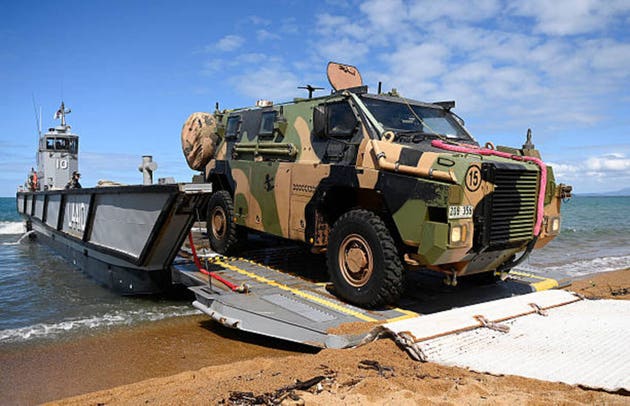
In a decisive move signaling a profound recalibration of its defense posture, Australia has announced a massive A$1.2 billion (approximately US$860 million) investment into its military vehicle fleet. This substantial commitment, unveiled by the Department of Defence, will see the acquisition of nearly 300 new Bushmaster protected mobility vehicles and critical upgrades to existing military trucks. The announcement comes at a time of escalating geopolitical complexities, particularly within the Indo-Pacific region, underscoring Canberra's strategic imperative to enhance its self-sufficiency and operational readiness.
The Bushmaster, an Australian-designed and manufactured armored vehicle, has earned a formidable reputation for its resilience and effectiveness in protecting personnel in combat zones globally. This latest procurement is not merely an expansion but a strategic enhancement, aiming to provide the Australian Defence Force (ADF) with superior capabilities for troop transport, reconnaissance, and logistical support in diverse operational environments. The investment is a clear indicator of Australia's commitment to modernizing its military assets to meet contemporary and future security challenges, reflecting a broader trend among regional powers to strengthen their defense infrastructure.
The Strategic Imperative: Why Now?
Australia's defense spending has been on an upward trajectory for several years, driven by a confluence of factors including rising tensions in the South China Sea, increased military assertiveness from major regional players, and the evolving nature of global threats. The A$1.2 billion outlay for Bushmasters and truck upgrades is a significant component of a larger defense strategy that seeks to project strength, deter potential adversaries, and protect national interests. This particular investment focuses on land-based mobility and force protection, critical elements for any modern military engaged in expeditionary operations or territorial defense.
The Indo-Pacific region, stretching from the Indian Ocean to the Pacific, is increasingly recognized as the epicenter of global strategic competition. Nations like Australia, traditionally reliant on alliances, are now also emphasizing their independent defense capabilities. The acquisition of more Bushmasters allows the ADF to deploy forces with greater protection and agility, whether for humanitarian assistance and disaster relief (HADR) operations in the Pacific Islands or for more conventional military engagements. This move aligns with the Defence Strategic Review, which has been guiding Australia's military planning and procurement decisions, emphasizing capabilities that are agile, lethal, and sustainable.
Bushmaster: A Proven Asset
The Bushmaster Protected Mobility Vehicle (PMV) is a cornerstone of the ADF's land force capabilities. Designed and built by Thales Australia, it is renowned for its blast and ballistic protection, offering superior safety for its occupants against improvised explosive devices (IEDs), landmines, and small arms fire. Its robust design and all-terrain capability make it suitable for a wide range of missions, from peacekeeping to high-intensity combat. The vehicle's operational history, including deployments in Afghanistan and Iraq, has solidified its reputation as a highly effective and reliable platform.
This new acquisition will not only increase the sheer number of Bushmasters in the ADF's inventory but also likely incorporate the latest technological advancements. These could include enhanced communications systems, improved situational awareness tools, and potentially even integration with unmanned systems. The upgrades to military trucks, while less glamorous, are equally vital. They ensure that the logistical backbone of the ADF remains robust, capable of supporting sustained operations and transporting critical supplies, equipment, and personnel across vast distances and challenging terrains. This holistic approach to land mobility demonstrates a mature understanding of modern military logistics and operational requirements.
Economic and Industrial Implications
Beyond its strategic defense advantages, this A$1.2 billion investment carries significant economic benefits for Australia. The Bushmaster is manufactured domestically, meaning the procurement supports local jobs, fosters advanced manufacturing capabilities, and strengthens the nation's defense industrial base. This commitment to local production reduces reliance on foreign suppliers for critical military hardware, enhancing Australia's sovereign defense capabilities. It also stimulates innovation within the Australian defense sector, encouraging research and development that can lead to further advancements.
The defense industry is a significant employer and contributor to Australia's economy. Investments like this ensure a steady pipeline of work for skilled engineers, technicians, and factory workers. Furthermore, the expertise gained from designing, manufacturing, and maintaining such sophisticated vehicles can have spin-off benefits for other sectors, promoting technological transfer and fostering a highly skilled workforce. This strategic procurement is therefore not just about military hardware; it's also about economic resilience and national self-reliance.
Regional Dynamics and Future Outlook
Australia's expanded military build-out is being closely watched by its regional neighbors and global powers alike. It signals a clear intent to play a more active and capable role in maintaining stability and security in the Indo-Pacific. While Australia maintains strong alliances, particularly with the United States through ANZUS, this investment underscores a desire for greater autonomy and the ability to act independently or as a stronger partner in coalition operations. The emphasis on protected mobility vehicles suggests a focus on the survivability and effectiveness of its ground forces in potential future conflicts or humanitarian missions.
The geopolitical landscape of the Indo-Pacific is characterized by increasing competition and a complex web of alliances and rivalries. Nations are investing heavily in their defense capabilities, leading to a regional arms race of sorts. Australia's move is a response to this evolving environment, ensuring it remains a credible security actor. Looking ahead, this investment is likely to be followed by further enhancements across air and naval capabilities, as Australia continues to implement its long-term defense strategy. The goal is to build a modern, agile, and resilient force capable of protecting Australia's interests in an increasingly unpredictable world, reinforcing its position as a key player in regional security discussions and initiatives.
Stay Informed
Get the world's most important stories delivered to your inbox.
No spam, unsubscribe anytime.
Comments
No comments yet. Be the first to share your thoughts!