Ukraine Escalates Drone War: Yaroslavl Refinery Hit Amid Broader Russian Offensive
Ukrainian drones have significantly escalated their attacks on Russian infrastructure, with a major oil refinery in Yaroslavl among several targets struck. This latest wave of assaults, confirmed by Ukraine's General Staff, highlights Kyiv's strategy to disrupt Russia's war economy and supply lines. The strikes underscore a new phase in the conflict, pushing the front lines deep into Russian territory and raising questions about Moscow's air defense capabilities. International observers are closely monitoring the implications for global energy markets and the broader geopolitical landscape.
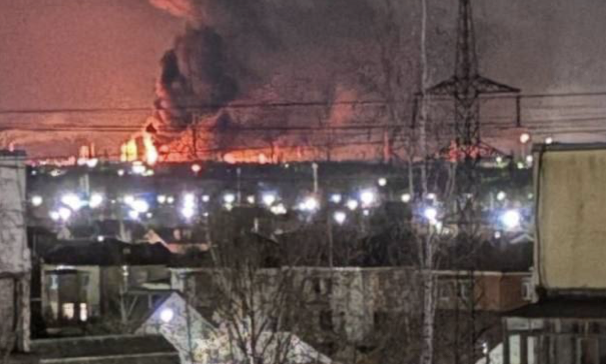
In a dramatic escalation of the ongoing conflict, Ukrainian drones launched a coordinated assault across multiple Russian regions and occupied Crimea overnight on April 26, with a significant strike reported at an oil refinery in the city of Yaroslavl. This latest wave of attacks, confirmed by Ukraine's General Staff, represents a bold and increasingly effective strategy by Kyiv to target critical Russian infrastructure, aiming to disrupt Moscow's war machine and exert pressure far beyond the conventional front lines. The incident at Yaroslavl, located hundreds of kilometers from the Ukrainian border, underscores the growing reach and sophistication of Ukraine's unmanned aerial vehicle (UAV) capabilities.
The early morning hours saw reports of explosions and fires across various locations, but the Yaroslavl oil refinery strike quickly emerged as a focal point due to its strategic importance. Yaroslavl is a major industrial hub, and its refinery is one of Russia's largest, playing a crucial role in supplying fuel to both military and civilian sectors. The attack not only demonstrates Ukraine's intent to cripple Russia's energy complex but also raises serious questions about the efficacy of Russian air defenses, particularly in areas previously considered well beyond the immediate threat zone.
The Expanding Drone Offensive: A Strategic Shift
Since late 2023, Ukraine has intensified its drone campaign against Russian energy facilities, moving from sporadic attacks to a sustained, strategic offensive. This shift is a direct response to Russia's continued aggression and its relentless bombardment of Ukrainian cities and energy infrastructure. Kyiv's strategy appears twofold: first, to degrade Russia's capacity to produce and transport fuel for its military operations; and second, to impose economic costs on the Kremlin, potentially impacting its ability to fund the war. The targeting of refineries, oil depots, and other energy assets directly challenges Russia's economic stability, which is heavily reliant on hydrocarbon exports.
The attacks have not been limited to energy targets. Ukrainian drones have also struck military installations, airfields, and logistical hubs, demonstrating a comprehensive approach to disrupting Russia's war effort. The use of domestically produced long-range drones has allowed Ukraine to project power deep into Russian territory, forcing Moscow to divert valuable air defense assets from the front lines to protect its interior. This diversion creates vulnerabilities for Russian forces in occupied Ukrainian territories, potentially aiding Kyiv's defensive and future offensive operations.
Yaroslavl: A Symbol of Vulnerability
The strike on the Yaroslavl refinery is particularly symbolic. Located approximately 250 kilometers northeast of Moscow and over 800 kilometers from the Ukrainian border, its targeting indicates a significant leap in Ukraine's operational range and targeting precision. While Russian authorities initially reported that the drone was suppressed by electronic warfare and caused no significant damage, subsequent social media reports and independent analyses suggested a fire at the facility. Such discrepancies are common in wartime reporting, but the very fact that a drone reached such a distant and critical target is a major concern for Moscow.
This incident adds to a growing list of successful Ukrainian strikes on Russian refineries, including those in Ryazan, Nizhny Novgorod, and Samara. These attacks have reportedly impacted Russia's refining capacity, leading to temporary fuel shortages in some regions and potentially affecting global oil prices. The psychological impact on the Russian populace, realizing that no region is entirely safe from Ukrainian retaliation, is also a significant factor.
International Implications and Expert Analysis
International reactions to Ukraine's escalating drone campaign have been mixed. While some Western allies quietly support Ukraine's right to defend itself and strike legitimate military targets within Russia, there are concerns about potential escalation and the impact on global energy markets. The United States, for instance, has reportedly expressed reservations about attacks on Russian oil infrastructure, fearing a spike in oil prices that could complicate efforts to contain inflation.
However, military analysts argue that these strikes are a necessary component of Ukraine's defense strategy. "Ukraine is fighting for its survival, and disrupting Russia's ability to wage war is a legitimate objective," states Dr. Anya Petrova, a geopolitical expert. "By targeting oil refineries, Ukraine is directly hitting Russia's economic lifeline, forcing the Kremlin to make difficult choices about resource allocation. It's a form of asymmetric warfare that leverages Ukraine's technological ingenuity against Russia's quantitative superiority."
The long-term implications are profound. If Ukraine can sustain and expand these attacks, it could significantly degrade Russia's military logistics and economic stability. This pressure might compel Russia to reassess its war strategy or seek a diplomatic resolution, although Moscow has shown little inclination to do so thus far. Furthermore, the development of sophisticated, long-range drones by a non-major power like Ukraine could set a precedent for future conflicts, highlighting the evolving nature of modern warfare.
The Road Ahead: Resilience and Retaliation
As the conflict enters a new phase characterized by deep strikes, both sides are likely to adapt. Russia will undoubtedly seek to bolster its air defenses and develop countermeasures against Ukrainian drones. However, the sheer scale of Russian territory makes comprehensive defense incredibly challenging. Ukraine, in turn, will likely continue to innovate, developing more advanced drones and refining its targeting strategies.
For the international community, the unfolding drone war presents a complex challenge. Balancing support for Ukraine's defense with concerns about global economic stability and escalation risks will remain a delicate act. The attacks on Russian refineries are not just military operations; they are also powerful political statements, demonstrating Ukraine's unwavering resolve and its capacity to inflict pain on its aggressor. The world watches closely as this technological and strategic contest continues to redefine the boundaries of modern conflict, with the flames at Yaroslavl serving as a stark reminder of the war's far-reaching consequences and Ukraine's relentless fight for freedom. The resilience of the Ukrainian people, coupled with their innovative military tactics, continues to surprise and challenge the conventional wisdom of warfare, proving that even against a larger adversary, strategic ingenuity can level the playing field. These strikes are a testament to Ukraine's determination to reclaim its sovereignty and ensure a lasting peace on its own terms, no matter the distance or the perceived invincibility of the aggressor's heartland.
Stay Informed
Get the world's most important stories delivered to your inbox.
No spam, unsubscribe anytime.
Comments
No comments yet. Be the first to share your thoughts!