Trump's Bold Claim: Iran Conflict Nearing 'Very Soon' End Amidst Diplomatic Overtures
Former President Donald Trump has made a striking assertion, suggesting that the long-standing conflict with Iran could conclude 'very soon' if Tehran is willing to engage in dialogue. His remarks, emphasizing a potential shift towards telephonic diplomacy with Pakistan's continued involvement, signal a departure from traditional negotiation tactics. This declaration raises questions about the feasibility and implications of such a rapid resolution, given the complex geopolitical landscape and historical tensions between the nations. The international community watches closely for any concrete developments following these provocative statements.
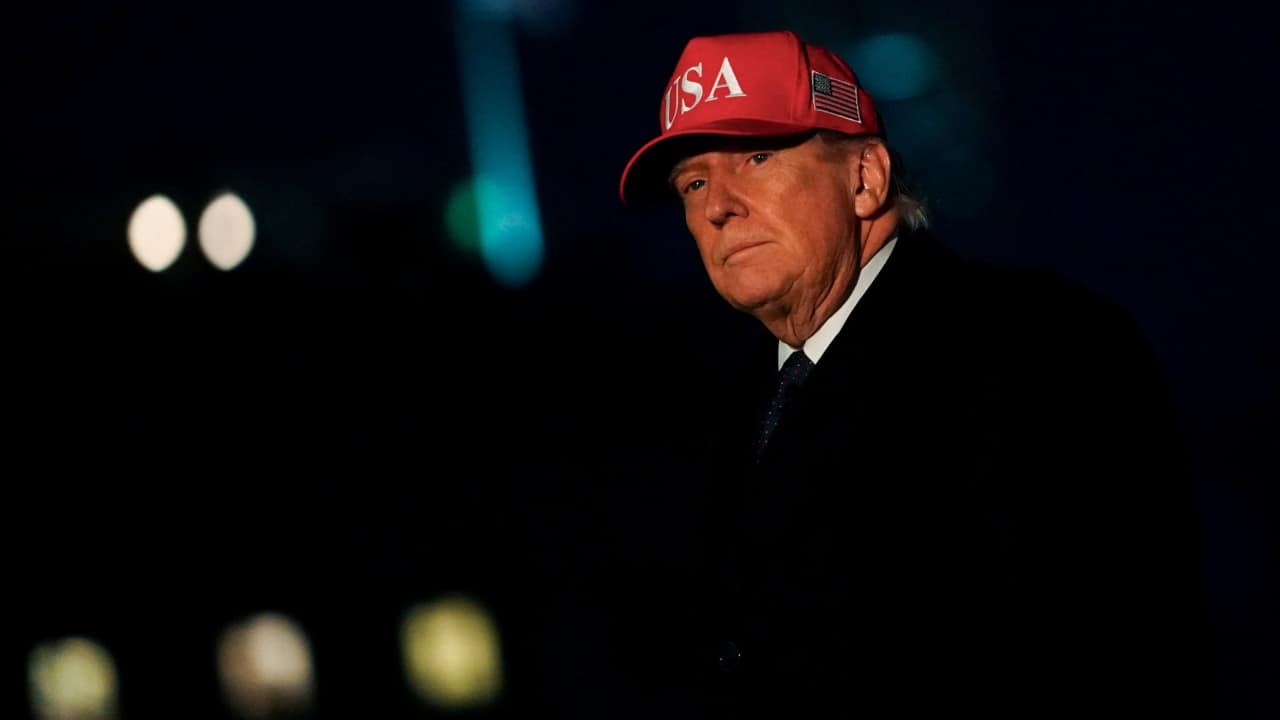
In a characteristic move that blends audacious rhetoric with a hint of diplomatic pragmatism, former US President Donald Trump recently declared that the protracted and often volatile conflict with Iran could end 'very soon.' His statement, delivered with his signature confidence, posited a simple condition: 'If they want to talk, they can call us.' This seemingly straightforward invitation, coupled with the assertion that Pakistan would remain involved in future progress via 'telephonic conversations,' paints a picture of a potential, albeit unconventional, path to de-escalation.
Trump's remarks, though brief, carry significant weight given the historical animosity and intricate web of geopolitical interests at play in the Middle East. The prospect of a swift resolution to a conflict that has simmered for decades, punctuated by periods of intense confrontation, is both intriguing and met with a healthy dose of skepticism by international observers. The former president's approach, often characterized by direct communication and a willingness to bypass traditional diplomatic channels, suggests a belief that personal engagement, even over the phone, could unlock a breakthrough.
A History of Hostility: The US-Iran Standoff
The relationship between the United States and Iran has been fraught with tension since the 1979 Islamic Revolution, which saw the overthrow of the US-backed Shah and the establishment of an anti-Western, clerical regime. Decades of mistrust followed, marked by events such as the Iran hostage crisis, US sanctions, and Iran's nuclear program. The 2015 Joint Comprehensive Plan of Action (JCPOA), or Iran nuclear deal, offered a brief period of détente, but Trump's withdrawal from the agreement in 2018 reignited tensions, leading to a 'maximum pressure' campaign against Tehran.
This period saw a series of escalations, including attacks on oil tankers, drone strikes, and the assassination of Iranian General Qassem Soleimani, bringing the two nations to the brink of war. Iran, in turn, retaliated with missile strikes on US bases in Iraq and continued to enrich uranium beyond JCPOA limits. The underlying issues are multifaceted: Iran's regional influence, its ballistic missile program, human rights concerns, and the future of its nuclear ambitions. Any talk of a 'very soon' end to the conflict must contend with these deeply entrenched grievances and strategic objectives from both sides.
The Role of Pakistan and Telephonic Diplomacy
Trump's mention of Pakistan's continued involvement, specifically through 'telephonic conversations,' adds an interesting layer to his proposed diplomatic strategy. Pakistan has historically maintained complex relationships with both the US and Iran, often attempting to mediate or at least facilitate dialogue in regional disputes. Its geographical proximity and religious ties to Iran, combined with its strategic alliance with the US, position it as a potential, albeit delicate, interlocutor.
However, the idea of resolving such a complex geopolitical standoff primarily through telephone calls, even with a third-party facilitator, raises questions about the depth and formality of such negotiations. While direct communication can sometimes cut through bureaucratic red tape, major international agreements typically require extensive face-to-face meetings, detailed negotiations, and robust verification mechanisms. The emphasis on telephonic discussions might reflect Trump's preference for direct, less formal engagement, but it also underscores the challenge of achieving a comprehensive and lasting peace through such means.
Key considerations for telephonic diplomacy include: * Trust Building: Can trust be effectively built and maintained without in-person interactions, especially between adversaries? * Nuance and Interpretation: The subtleties of diplomatic language and body language are often lost over the phone, potentially leading to misinterpretations. * Commitment and Verification: How would commitments made over the phone be formalized, verified, and enforced? * Inclusivity: Would all necessary stakeholders be adequately represented and heard in such a format?
Expert Analysis and Implications
Experts on Middle Eastern affairs and international relations offer varied perspectives on Trump's declaration. Some view it as a strategic maneuver, designed to project strength and openness to dialogue simultaneously, potentially putting pressure on Iran to respond. Others see it as characteristic Trumpian bravado, a statement made without a clear, actionable plan, intended more for domestic consumption or to assert his continued influence on foreign policy debates.
Dr. Sarah Khan, a geopolitical analyst, notes, "While any call for de-escalation is welcome, the notion of ending such a deeply rooted conflict 'very soon' via phone calls is highly optimistic, if not unrealistic. The issues at stake are systemic, not merely transactional. A sustainable resolution would require multilateral engagement, addressing Iran's security concerns, its nuclear program, and its regional activities in a comprehensive framework, not just a series of phone calls." She adds, "However, it does signal a potential willingness from the US side, at least in Trump's view, to re-engage, which could be a tiny crack in the door for future diplomacy."
The implications of such a rapid resolution, if it were to materialize, would be profound. It could significantly alter the balance of power in the Middle East, potentially leading to a reduction in regional proxy conflicts and a shift in global energy markets. Conversely, a rushed or superficial agreement could prove unstable, leading to renewed hostilities down the line. The statement also highlights the enduring influence of former presidents in shaping public discourse on foreign policy, even after leaving office.
The Path Forward: A Complex Tapestry of Diplomacy
Despite Trump's optimistic pronouncement, the path to a genuine and lasting peace between the US and Iran remains arduous. While the door to dialogue, even telephonic, is always preferable to outright conflict, the complexities demand more than just a willingness to talk. Any meaningful progress would likely involve:
* Direct, high-level negotiations: Beyond phone calls, face-to-face meetings between senior diplomats are crucial for building rapport and trust. * Multilateral engagement: Involving other world powers (e.g., the P5+1 nations) to ensure a broad consensus and enforcement mechanism. * Addressing core grievances: Both sides must be willing to acknowledge and negotiate on their fundamental security and strategic concerns. * Phased de-escalation: A gradual process of confidence-building measures, rather than an abrupt resolution. * Verification and monitoring: Robust mechanisms to ensure compliance with any agreements, particularly concerning nuclear activities.
Ultimately, while Trump's statement injects a new dynamic into the US-Iran narrative, it serves more as a provocative thought experiment than a concrete diplomatic roadmap. The aspiration for a 'very soon' end to the conflict is laudable, but the reality of international diplomacy suggests that such deep-seated enmities require patient, meticulous, and multifaceted engagement. The world will be watching to see if Tehran picks up the phone, and more importantly, what substantive conversations might follow, if any, to truly pave the way for peace.
Stay Informed
Get the world's most important stories delivered to your inbox.
No spam, unsubscribe anytime.
Comments
No comments yet. Be the first to share your thoughts!