Iran's Internal Fault Lines: Secret Letter Exposes Deep Cracks in 'Resistance' Strategy Amidst Mounting Pressure
Beneath a carefully constructed facade of unity, Iran faces a profound internal crisis, exacerbated by international pressure and economic hardship. A leaked letter to Mojtaba Khamenei reportedly reveals deep divisions within the leadership and questions the sustainability of its 'resistance' strategy. This article explores the growing dissent, the implications for regional stability, and the potential future trajectory of the Islamic Republic.
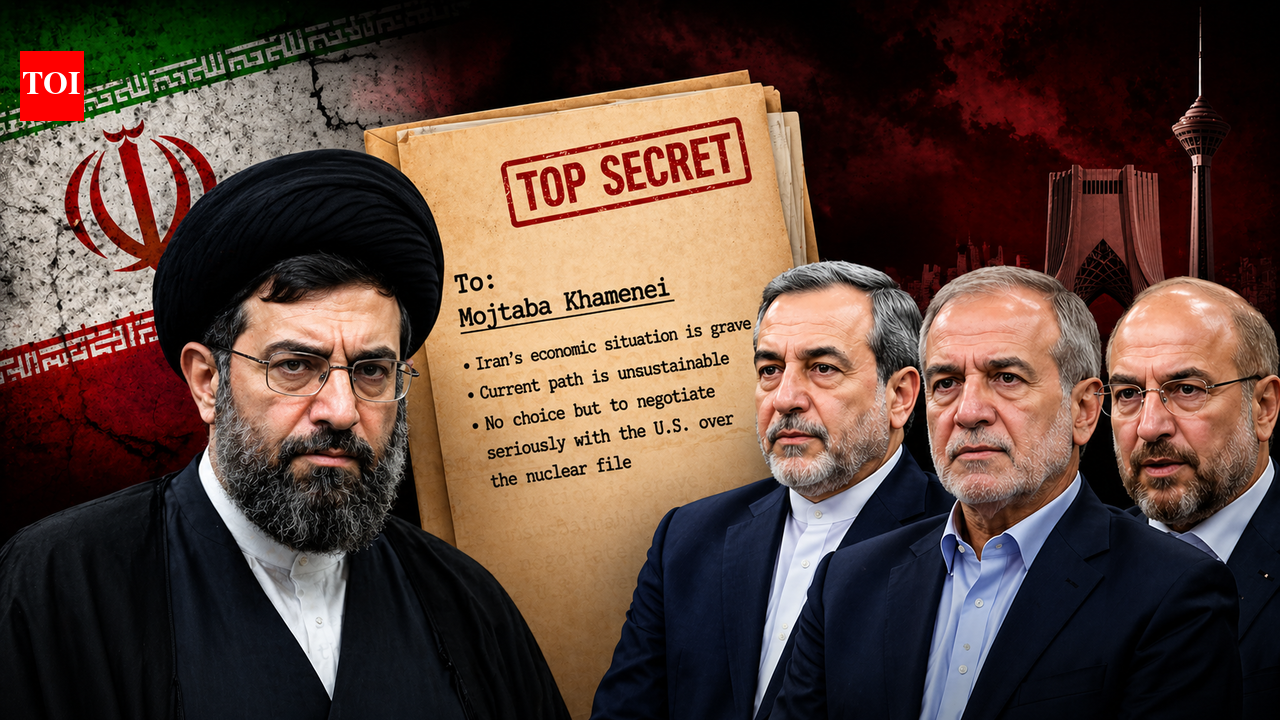
In the intricate and often opaque world of Iranian politics, a recent revelation has sent ripples through diplomatic and intelligence circles, suggesting that the Islamic Republic’s carefully curated image of unwavering unity may be crumbling from within. What began as a public display of defiance against US President Donald Trump’s claims of internal rifts has reportedly evolved into a far more profound crisis, hinted at by accounts circulating within Tehran’s political elite. At the heart of this unfolding drama is a purported secret letter addressed to Mojtaba Khamenei, the influential son of Supreme Leader Ali Khamenei, which allegedly flags significant strains and fundamental cracks in Iran’s long-standing ‘resistance’ strategy. This development signals a critical juncture for a nation already grappling with crippling sanctions, regional proxy conflicts, and a restive populace.
The Cracks in the Facade: A Secret Letter's Echoes
The notion of a secret letter reaching Mojtaba Khamenei is not merely a rumor; it symbolizes the deep anxieties permeating the highest echelons of Iranian power. Mojtaba, often seen as a potential successor to his ailing father, holds immense sway, particularly within the Revolutionary Guard Corps (IRGC) and the intelligence apparatus. A direct appeal to him, bypassing official channels, underscores the desperation and the perceived inability of traditional institutions to address the mounting challenges. While the exact contents remain unverified, reports suggest the letter details a stark assessment of the country's economic woes, the diminishing returns of its regional interventions, and the growing disillusionment among key stakeholders. It paints a picture of a leadership struggling to maintain control, caught between ideological purity and pragmatic survival. The 'resistance' strategy, a cornerstone of Iran's foreign policy since the 1979 revolution, is increasingly being questioned not just by external adversaries but by internal voices who fear its long-term costs outweigh its benefits.
This strategy, characterized by support for proxy groups across the Middle East – from Hezbollah in Lebanon to the Houthis in Yemen and various militias in Iraq and Syria – was designed to project Iranian power and deter external aggression. However, the letter reportedly highlights how these costly endeavors have drained national resources, fueled international isolation, and failed to deliver tangible security or economic improvements for the Iranian people. The economic impact of international sanctions, particularly those reimposed after the US withdrawal from the JCPOA, has been devastating. Inflation is rampant, unemployment remains high, and the national currency has plummeted in value, leading to widespread public discontent and sporadic protests. The letter, if authentic, serves as an internal admission that the current path is unsustainable, pushing the regime towards an existential crossroads.
Historical Context and the Evolution of 'Resistance'
To fully grasp the significance of these internal debates, one must understand the historical trajectory of Iran's 'resistance' doctrine. Born from the crucible of the Iran-Iraq War (1980-1988) and solidified during decades of confrontation with the United States and its allies, this strategy has been central to the Islamic Republic's identity. It posits that only through unwavering defiance and the cultivation of regional allies can Iran safeguard its sovereignty and promote its revolutionary ideals. Figures like the late Qassem Soleimani, commander of the Quds Force, epitomized this approach, building a formidable network of proxies that extended Iran's influence far beyond its borders.
However, the geopolitical landscape has shifted dramatically. The rise of new regional alliances, such as the Abraham Accords, and the increasing assertiveness of rivals like Saudi Arabia and Israel, have complicated Iran's strategic calculations. Furthermore, the domestic cost of maintaining this expansive network has become increasingly burdensome. Public sentiment, especially among the younger generation, is increasingly focused on economic opportunities and social freedoms rather than ideological struggles abroad. The government's continued investment in foreign ventures while its own citizens struggle with basic necessities has fueled a deep sense of betrayal and anger, manifesting in protests that have, at times, directly challenged the legitimacy of the ruling establishment. This historical context underscores that the current questioning of the 'resistance' strategy is not merely a tactical adjustment but a potential ideological re-evaluation, fraught with peril for the regime.
Expert Analysis: A Tipping Point for Tehran?
Analysts are divided on the immediate implications of these internal rifts. Some view the alleged letter as a sign of genuine policy debate and a potential opening for a more pragmatic approach to foreign policy. Others, however, see it as a desperate attempt by certain factions to consolidate power or shift blame, without necessarily indicating a fundamental change in direction. "The Iranian system is notoriously resilient and adept at managing internal dissent," notes Dr. Sarah Khan, a Middle East expert at Chatham House. "However, the economic pressure combined with public frustration and now, seemingly, elite-level questioning of core strategies, suggests that the regime is under unprecedented strain. This isn't just about policy; it's about the very survival of the revolutionary ideals that underpin the state."
The implications for regional stability are profound. A weakened or internally divided Iran could either become more unpredictable, lashing out to project strength, or it could be forced to scale back its regional ambitions, potentially altering the balance of power in the Middle East. The nuclear program, a constant source of international tension, also factors into this equation. If the regime feels cornered, it might accelerate its nuclear activities as a deterrent, or conversely, be more amenable to negotiations if internal pressure becomes unbearable. The role of the IRGC, a powerful state-within-a-state, will be crucial. Its leadership has historically been a staunch proponent of the 'resistance' strategy. Any significant shift would require their buy-in, or at least their acquiescence, which is far from guaranteed given their vested interests.
The Path Forward: Navigating a Precarious Future
Iran stands at a critical juncture, facing a confluence of internal and external pressures that demand difficult choices. The alleged secret letter to Mojtaba Khamenei, regardless of its full authenticity, serves as a powerful symbol of the deep introspection and anxiety within the Iranian establishment. The options available are stark: continue with the current 'resistance' strategy, risking further economic decline and social unrest; or pivot towards a more conciliatory approach, potentially alienating hardline elements and risking the perception of weakness. Neither path is without significant risks.
For the international community, understanding these internal dynamics is paramount. A nuanced approach that recognizes the complexities of Iranian politics, rather than a monolithic view, will be essential for effective engagement. The future trajectory of the Islamic Republic will depend heavily on how its leadership navigates these treacherous waters. Will the calls for change from within lead to a genuine re-evaluation of its core strategies, or will the regime double down on its revolutionary principles, further entrenching its isolation? The answer will not only shape the destiny of Iran but also significantly impact the geopolitical landscape of the entire Middle East. The whispers of dissent from within Tehran's corridors of power may yet prove to be the harbingers of a new era for the embattled nation, one where the cost of 'resistance' is finally weighed against the imperative of survival and prosperity for its people.
Stay Informed
Get the world's most important stories delivered to your inbox.
No spam, unsubscribe anytime.
Comments
No comments yet. Be the first to share your thoughts!