USS Rafael Peralta Enforces Iran Blockade: A Deep Dive into Escalating Tensions
The United States Central Command recently showcased the USS Rafael Peralta enforcing a blockade on Iranian ports, signaling a significant escalation in the long-standing standoff between Washington and Tehran. This move, part of a broader strategy involving carrier deployments and vessel interceptions, underscores the volatile geopolitical landscape in the Persian Gulf. As global powers watch, the implications for international shipping, regional stability, and energy markets are profound, pushing the delicate balance of power to its limits.
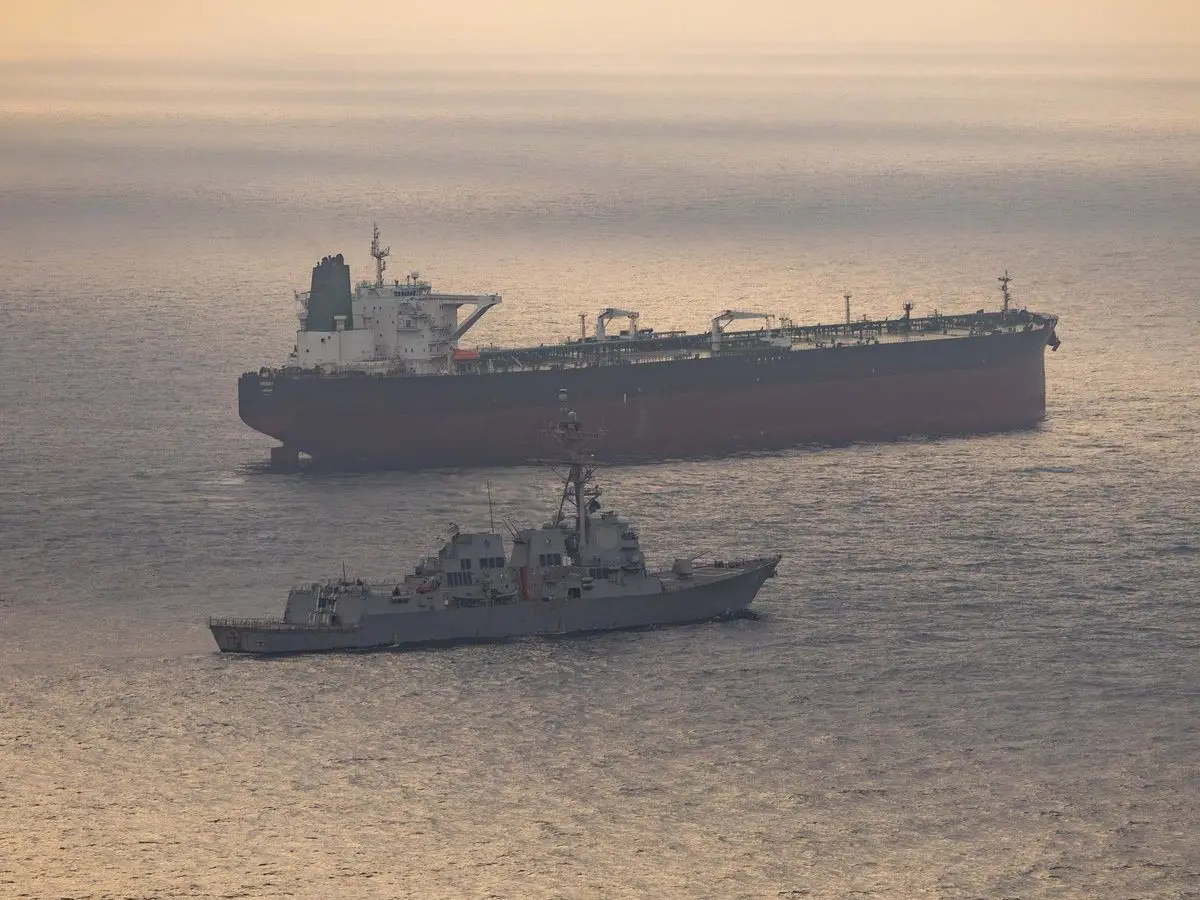
The vast, shimmering expanse of the Persian Gulf, a critical artery for global commerce and energy, has once again become a crucible of geopolitical tension. On a recent Friday, the United States Central Command (CENTCOM) released a striking image: the Guided-missile destroyer USS Rafael Peralta (DDG 115), a symbol of American naval might, meticulously enforcing a blockade on Iranian ports. This visual confirmation is not merely a snapshot; it's a stark declaration of intent, underscoring Washington's unwavering resolve to curtail Iranian maritime activity and, by extension, its economic lifelines. As the American forces continue to halt and intercept vessels attempting to navigate to and from Iranian shores, the world holds its breath, recognizing that each such maneuver ratchets up the pressure in an already volatile region.
The deployment of advanced naval assets like the USS Rafael Peralta, coupled with the broader strategy of deploying aircraft carriers and intercepting commercial ships, signals a new, more assertive phase in the protracted standoff between the United States and Iran. This isn't just about controlling shipping lanes; it's a complex game of brinkmanship with profound implications for global energy security, regional alliances, and the future of international diplomacy. The stakes are extraordinarily high, demanding a closer look at the historical context, the immediate ramifications, and the potential pathways forward.
Historical Echoes: Decades of Distrust
To fully grasp the gravity of the current situation, one must delve into the turbulent history that has shaped US-Iran relations. The roots of this animosity stretch back decades, punctuated by pivotal events such as the 1953 coup, the 1979 Islamic Revolution, and the subsequent hostage crisis. These historical traumas laid the groundwork for a relationship characterized by deep mistrust, ideological clashes, and proxy conflicts across the Middle East. The Iranian nuclear program emerged as a central flashpoint in the early 21st century, leading to a series of international sanctions aimed at curbing Tehran's nuclear ambitions.
The landmark Joint Comprehensive Plan of Action (JCPOA), signed in 2015, offered a brief respite, promising sanctions relief in exchange for verifiable limits on Iran's nuclear activities. However, the US withdrawal from the agreement in 2018 under the Trump administration, followed by the re-imposition of stringent sanctions, shattered this fragile détente. This move was a critical turning point, effectively dismantling diplomatic channels and pushing both nations back to a confrontational posture. Iran responded by gradually rolling back its commitments under the JCPOA, intensifying uranium enrichment, and increasing its support for regional proxies, further fueling the cycle of escalation. The current blockade, therefore, is not an isolated incident but a direct consequence of this unraveling, a tactical move in a much larger, ongoing strategic contest.
The Anatomy of a Blockade: Legalities and Logistics
Enforcing a naval blockade, particularly against a sovereign nation, is an act fraught with legal complexities and operational challenges. International law generally permits blockades under specific conditions, primarily during armed conflict or as a measure sanctioned by the UN Security Council. The US, however, frames its actions as part of a broader sanctions regime aimed at preventing Iran from developing nuclear weapons and supporting terrorism, rather than an act of war. This distinction is crucial, as it attempts to navigate the fine line between economic coercion and military aggression.
Operationally, a blockade requires significant naval resources and meticulous coordination. The USS Rafael Peralta, an Arleigh Burke-class destroyer, is equipped with advanced radar systems, missile capabilities, and a highly trained crew, making it ideal for maritime interdiction operations. Its mission involves:
* Surveillance: Monitoring vast swathes of maritime traffic. * Identification: Distinguishing legitimate commercial vessels from those suspected of sanctions violations. * Interception: Physically stopping and boarding vessels for inspection. * Diversion: Rerouting ships found to be in violation of sanctions.
Such operations are inherently dangerous, carrying the risk of miscalculation or accidental confrontation. The sheer volume of shipping through the Strait of Hormuz, a narrow chokepoint through which approximately 20% of the world's petroleum passes, complicates matters immensely. Any disruption here sends immediate shockwaves through global energy markets, as evidenced by past incidents involving tanker attacks and seizures.
Regional Ripple Effects and Global Implications
The US blockade on Iranian ports sends a clear message, but its repercussions extend far beyond the immediate maritime theater. Regionally, it exacerbates existing tensions with Saudi Arabia, the UAE, and Israel, all of whom view Iran as a primary threat to their security. These nations, often tacitly or overtly supporting US pressure on Iran, are also acutely aware of the potential for any misstep to ignite a wider conflict. The presence of US naval power is a deterrent but also a potential magnet for retaliatory actions, particularly from Iran's Revolutionary Guard Corps (IRGC) and its proxy groups like the Houthis in Yemen or Hezbollah in Lebanon.
Globally, the implications are equally significant:
* Energy Markets: Any sustained disruption to Iranian oil exports or, more critically, to the flow of oil through the Strait of Hormuz, would cause crude oil prices to surge, impacting economies worldwide. Iran, despite sanctions, still manages to export some oil, primarily to Asian markets. * International Law and Sovereignty: Critics argue that unilateral blockades, not sanctioned by the UN, challenge principles of international law and state sovereignty, potentially setting dangerous precedents. * Diplomatic Stalemate: The increased military pressure makes diplomatic de-escalation even more challenging. Iran is unlikely to negotiate under duress, and the US may find it harder to offer concessions once such a high-stakes strategy is in motion. * Humanitarian Concerns: Blockades can have severe humanitarian consequences, restricting the flow of essential goods, including food and medicine, to civilian populations.
The Path Forward: De-escalation or Confrontation?
The current trajectory appears to be one of continued escalation, yet the costs of a direct military confrontation are almost unfathomable. Both Washington and Tehran are aware of the devastating potential of a full-scale conflict, which would destabilize the entire Middle East and send shockwaves across the global economy. Therefore, despite the rhetoric and military posturing, there remains a cautious reluctance on both sides to cross certain red lines.
Potential avenues for de-escalation, however narrow, might include:
* Renewed Diplomacy: A return to multilateral negotiations, possibly involving European powers, to revive a modified version of the JCPOA or a new comprehensive agreement addressing both nuclear and regional security concerns. * Confidence-Building Measures: Small, reciprocal steps to reduce tensions, such as limited sanctions relief in exchange for verifiable Iranian de-escalation of enrichment activities. * Third-Party Mediation: Engaging neutral actors or international bodies to facilitate indirect talks and bridge the communication gap.
The image of the USS Rafael Peralta enforcing a blockade is more than just a news item; it's a potent symbol of a geopolitical tightrope walk. The world watches, hoping that the delicate balance can be maintained, and that statesmanship will ultimately prevail over the perilous allure of confrontation. The lessons of history are clear: unchecked escalation in such a vital region carries a price that no nation, or the global community, can truly afford.
Stay Informed
Get the world's most important stories delivered to your inbox.
No spam, unsubscribe anytime.
Comments
No comments yet. Be the first to share your thoughts!