UK Endorses Morocco's Autonomy Plan: A New Chapter for the Western Sahara Dispute?
The United Kingdom has officially reaffirmed its strong support for Morocco's autonomy plan as the most credible and pragmatic solution to the decades-long Western Sahara dispute. This endorsement, reiterated by UK Foreign Secretary Yvette Cooper, signals a significant diplomatic shift and aligns London with other major international players. The move underscores growing international consensus around the Moroccan proposal, potentially paving the way for renewed efforts towards a peaceful resolution in the contested territory.
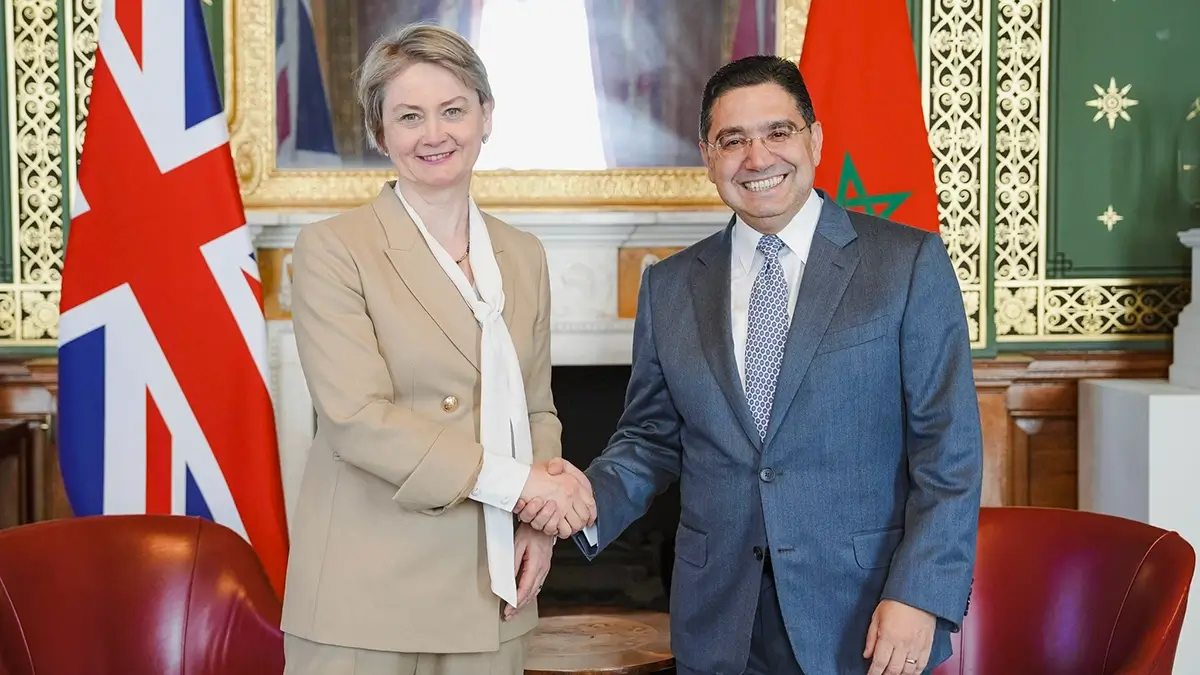
In a significant diplomatic development that could reshape the geopolitical landscape of North Africa, the United Kingdom has unequivocally thrown its weight behind Morocco’s autonomy plan for the Western Sahara. This endorsement, articulated by UK Foreign Secretary Yvette Cooper, marks a pivotal moment, signaling London’s alignment with a growing chorus of international powers that view the Moroccan proposal as the most viable path to peace and stability in the long-standing territorial dispute. The announcement, made during a high-level bilateral meeting, underscores a pragmatic shift in UK foreign policy and injects new momentum into a conflict that has defied resolution for nearly half a century. For Morocco, this represents a major diplomatic victory, further solidifying its position on the international stage regarding the Sahara issue.
The Roots of a Protracted Conflict
The Western Sahara dispute dates back to 1975, when Spain withdrew from its former colony, leaving a power vacuum that was swiftly filled by Morocco and Mauritania. Morocco claimed the territory based on historical ties, while the Polisario Front, a Sahrawi nationalist liberation movement, proclaimed the Sahrawi Arab Democratic Republic (SADR) and sought self-determination through independence. This led to a protracted armed conflict that lasted until a UN-brokered ceasefire in 1991. Since then, the dispute has been largely a diplomatic and political stalemate, with the UN attempting to facilitate a referendum on self-determination, which has never materialized due to disagreements over voter eligibility. The region, rich in phosphates and potential offshore oil reserves, holds significant strategic importance, making its resolution crucial for regional stability.
Morocco’s autonomy plan, first presented in 2007, proposes a broad autonomy for the Western Sahara region under Moroccan sovereignty. This plan offers the Sahrawi population the opportunity to manage their local affairs democratically through legislative, executive, and judicial bodies, while Morocco would retain control over defense and foreign policy. Rabat views this as a compromise solution that respects its territorial integrity while granting significant self-governance to the local population. The Polisario Front, supported by Algeria, continues to advocate for a full independence referendum, maintaining that the Sahrawi people have an inalienable right to self-determination as enshrined in international law. This fundamental divergence has been the primary obstacle to a lasting peace.
UK's Strategic Shift and International Alignment
Historically, the UK has maintained a more neutral stance on the Western Sahara, generally supporting UN-led efforts without explicitly endorsing either side’s proposal. However, this recent declaration by Foreign Secretary Yvette Cooper signifies a decisive shift. Cooper's statement, emphasizing the Moroccan autonomy plan as the “most credible and pragmatic basis for resolving the long-standing dispute,” mirrors the positions adopted by other influential nations, notably the United States, France, and Spain. The US recognized Moroccan sovereignty over the Western Sahara in December 2020 under the Trump administration, a decision that, while controversial, has not been reversed by the Biden administration. Spain, the former colonial power, also publicly backed the autonomy plan in March 2022, describing it as the “most serious, realistic and credible basis” for a solution. France has long been a staunch supporter of Morocco’s position.
This convergence of major Western powers around the Moroccan proposal is not coincidental. It reflects a growing recognition that the current stalemate is unsustainable and that Morocco’s plan offers a realistic pathway to de-escalation and regional integration. For the UK, this move could be seen as part of a broader strategy to strengthen its post-Brexit diplomatic and economic ties with North African nations, particularly Morocco, which is a key partner in counter-terrorism, trade, and renewable energy. The UK’s decision adds significant diplomatic weight, making it harder for the Polisario Front and its allies to maintain their current stance without appearing to obstruct a widely supported international initiative.
Implications for Regional Stability and Future Prospects
The UK’s endorsement carries substantial implications. Firstly, it further isolates the Polisario Front and its principal backer, Algeria, which views the Moroccan proposal as an abandonment of the Sahrawi people’s right to self-determination. This could heighten regional tensions, particularly between Morocco and Algeria, whose relations are already strained. Secondly, it strengthens Morocco’s hand in future negotiations, potentially pressuring the UN to re-evaluate its approach and focus more on the autonomy framework. The UN Secretary-General’s Personal Envoy for Western Sahara, Staffan de Mistura, has been actively engaging with all parties, and this new development will undoubtedly influence his mediation efforts.
Economically, a resolution to the Western Sahara dispute could unlock significant investment opportunities in the region, particularly in renewable energy, fisheries, and tourism. Morocco has already invested heavily in infrastructure projects in the southern provinces, aiming to integrate them fully into its national economy. International recognition of its autonomy plan could encourage further foreign direct investment, transforming the region into a hub for trade and development. For instance, the Dakhla Atlantic Port project, a multi-billion dollar initiative, aims to establish a major maritime gateway, boosting trade with West Africa and beyond. Such projects are contingent on a stable political environment, which the autonomy plan seeks to provide.
However, challenges remain. The Polisario Front’s unwavering commitment to independence, coupled with Algeria’s continued support, means that a swift resolution is unlikely. Any lasting peace will require significant concessions and a genuine commitment to dialogue from all parties. The international community, including the UK, will need to exert sustained diplomatic pressure to bring the parties to the negotiating table with a renewed mandate. The role of the UN will be critical in ensuring that any solution respects human rights and provides a dignified future for the Sahrawi population.
A Path Towards Pragmatic Peace
The UK’s endorsement of Morocco’s autonomy plan is more than just a diplomatic statement; it reflects a growing international consensus that a pragmatic, rather than ideological, approach is needed to resolve the Western Sahara conflict. By aligning with the US, France, and Spain, the UK reinforces the idea that the Moroccan proposal offers the most realistic framework for achieving peace, stability, and prosperity in the region. While the road ahead is undoubtedly complex and fraught with obstacles, this latest development provides a glimmer of hope that a decades-old dispute may finally be moving towards a resolution. The focus will now be on how this diplomatic momentum can be translated into concrete steps towards a negotiated settlement that benefits all stakeholders and ensures a stable future for the people of the Western Sahara. The international community's continued engagement and commitment to fostering dialogue will be paramount in navigating these intricate geopolitical waters.
Stay Informed
Get the world's most important stories delivered to your inbox.
No spam, unsubscribe anytime.
Comments
No comments yet. Be the first to share your thoughts!