Iran's IRGC Issues Stern Warning to US: 'Appropriate Response' Promised for Any Breach of Commitments
Iran's Islamic Revolutionary Guards Corps (IRGC) has issued a stark warning to the United States, vowing an "appropriate response" to any perceived breach of commitments. This declaration comes amid escalating regional tensions and ongoing geopolitical maneuvering, raising concerns about potential flashpoints in the Middle East. The IRGC's statement underscores Iran's firm stance on its national security and regional influence, signaling a potential hardening of positions in future diplomatic engagements.
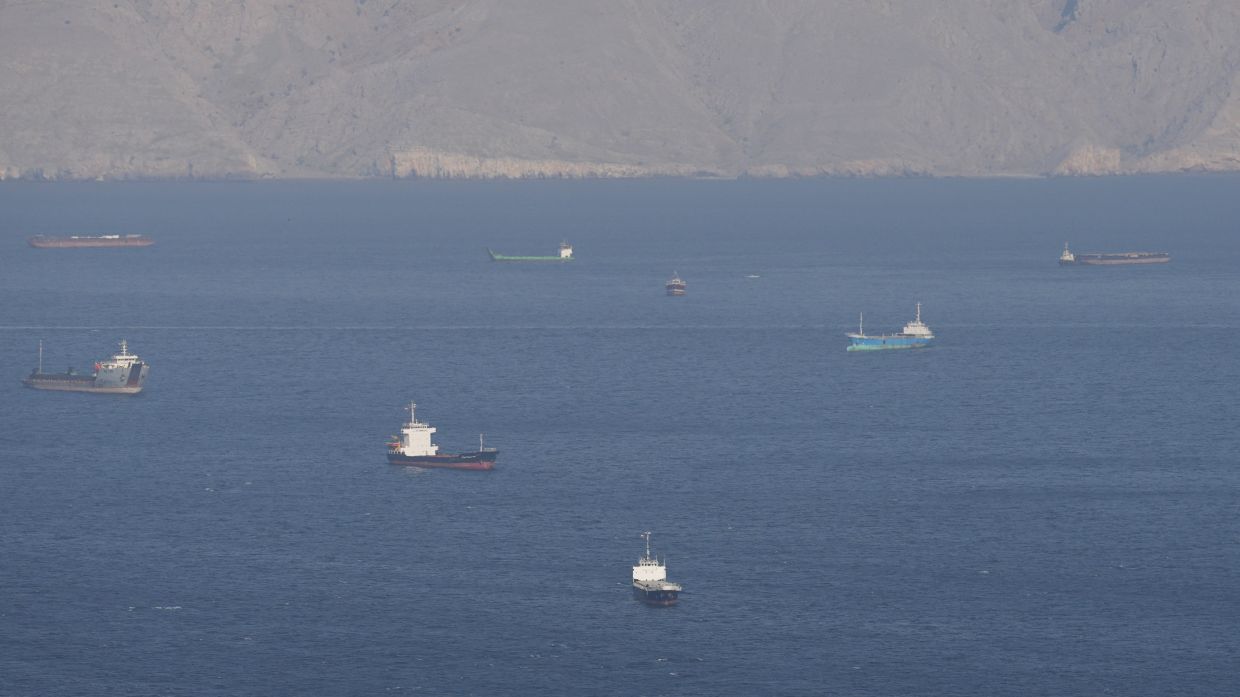
In a significant development that underscores the volatile geopolitical landscape of the Middle East, Iran's Islamic Revolutionary Guards Corps (IRGC) issued a stern warning to the United States on Saturday. The powerful military organization declared that "any breach of commitments" by Washington would be met with "an appropriate response," as reported by Anadolu Ajansi (AA).
This pronouncement, while not detailing the specific nature of the commitments or the anticipated response, immediately reverberated through international diplomatic circles. It highlights the deeply entrenched distrust and ongoing friction between Tehran and Washington, two nations whose relationship has been fraught with tension for decades. The IRGC's statement serves as a potent reminder of Iran's resolve to protect its interests and project its power in a region already teetering on the brink of wider conflict.
The Context of Escalating Tensions
The IRGC's warning does not occur in a vacuum. It is set against a backdrop of persistent regional instability, marked by proxy conflicts, naval incidents in strategic waterways, and the enduring stalemate over Iran's nuclear program. For years, the United States has maintained a significant military presence in the Middle East, citing the need to protect its allies and ensure the free flow of oil. Iran, conversely, views this presence as a destabilizing force and a direct threat to its sovereignty.
Recent months have seen a renewed intensity in rhetoric from both sides. The collapse of the Joint Comprehensive Plan of Action (JCPOA), or the Iran nuclear deal, following the US withdrawal in 2018, further exacerbated these tensions. While efforts to revive the agreement have stalled, the underlying issues – Iran's ballistic missile program, its support for regional non-state actors, and its nuclear ambitions – remain unresolved and continue to fuel mistrust. The IRGC, as a key instrument of Iranian foreign policy and military power, often articulates the nation's most resolute positions.
Understanding the Islamic Revolutionary Guards Corps (IRGC)
To fully grasp the weight of this warning, one must understand the nature and role of the IRGC. Established shortly after the 1979 Islamic Revolution, the IRGC is far more than a conventional military force. It is an ideological army, deeply intertwined with Iran's political, economic, and social fabric. Unlike the regular Iranian army, the Artesh, the IRGC's primary mission is to protect the Islamic Republic's revolutionary ideals and internal security, as well as project its influence abroad.
Its vast network includes ground, naval, and air forces, intelligence units, and the Basij paramilitary organization. Crucially, the IRGC's Quds Force, an elite special operations unit, is responsible for extraterritorial operations, providing support to allied groups across the Middle East, including Hezbollah in Lebanon, various Iraqi militias, and the Houthis in Yemen. This expansive reach and operational capability make any statement from the IRGC a matter of serious international concern, as it often reflects the supreme leadership's strategic thinking and potential future actions.
Potential Implications and Future Scenarios
The IRGC's threat of an "appropriate response" could manifest in various ways, depending on the nature of the perceived US breach. Historically, Iran has employed a strategy of asymmetric warfare, leveraging its missile capabilities, naval assets in the Persian Gulf, and proxy forces to counter perceived threats. Potential responses could include:
* Increased naval activity: Harassment of commercial shipping or US naval vessels in the Strait of Hormuz, a critical chokepoint for global oil supplies. * Cyberattacks: Targeting critical infrastructure or military networks of the US or its regional allies. * Support for proxy groups: Escalation of activities by groups aligned with Iran in Iraq, Syria, Lebanon, or Yemen, potentially leading to attacks on US interests or personnel. * Acceleration of nuclear activities: Further enrichment of uranium or development of advanced centrifuges, pushing closer to weapons-grade material.
Such actions, even if limited, carry the inherent risk of miscalculation and unintended escalation, potentially drawing the US and its allies into a direct confrontation. The international community, therefore, watches these developments with bated breath, urging de-escalation and diplomatic solutions.
The Diplomatic Tightrope and Global Impact
For global powers, the IRGC's warning complicates an already delicate diplomatic balance. Efforts by European nations to salvage the JCPOA have been largely unsuccessful, and the prospect of a renewed nuclear deal seems distant. The current geopolitical climate, characterized by the war in Ukraine and rising energy prices, adds further layers of complexity, making stability in the Middle East even more critical.
Any significant escalation between Iran and the US would have profound global economic consequences, particularly for oil markets. Furthermore, it could destabilize regional alliances and empower extremist groups, creating a ripple effect that extends far beyond the immediate conflict zone. Therefore, the onus is on both sides to exercise restraint and explore avenues for de-escalation, even as they maintain firm stances on their respective interests.
Conclusion: A Precarious Path Forward
The latest warning from Iran's IRGC serves as a stark reminder of the enduring tensions between Tehran and Washington. It signals Iran's unwavering determination to resist what it perceives as US hegemony and to assert its regional influence. While the exact trigger for this warning and the nature of the "appropriate response" remain to be seen, the implications are clear: the Middle East remains a powder keg, and any misstep could ignite a wider, more devastating conflict.
As diplomats and strategists analyze the situation, the immediate future hinges on careful navigation, clear communication, and a renewed commitment to finding peaceful resolutions. The alternative, a cycle of retaliation and escalation, carries a price that the region, and indeed the world, can ill afford.
Stay Informed
Get the world's most important stories delivered to your inbox.
No spam, unsubscribe anytime.
Comments
No comments yet. Be the first to share your thoughts!