Moscow Under Siege: Victory Day Preparations Marred by Heightened Security Fears and Drone Threats
As Russia geared up for its pivotal Victory Day parade on May 9th, Moscow experienced unprecedented security measures, including airport shutdowns and mobile internet disruptions. These actions underscore the Kremlin's deep-seated anxieties over potential Ukrainian drone attacks, transforming a national celebration into a stark display of wartime vigilance. The tightening grip on public life reflects a nation grappling with the ongoing conflict's domestic repercussions and a palpable sense of vulnerability.
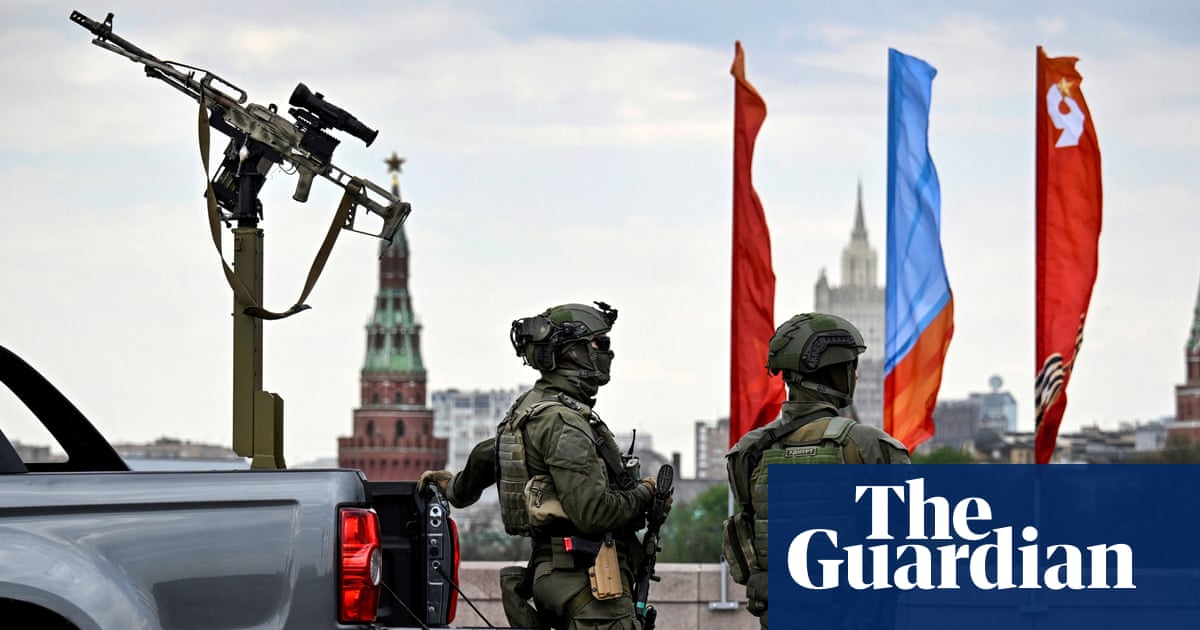
In a stark illustration of the ongoing conflict's domestic impact, Moscow found itself under an unprecedented security lockdown as Russia prepared for its most sacred national holiday: Victory Day on May 9th. The annual commemoration, marking the Soviet Union's triumph over Nazi Germany in World War II, was overshadowed this year by palpable fears of Ukrainian drone strikes. On Tuesday, days before the grand parade, the Russian capital witnessed the temporary closure of its major airports and widespread disruptions to mobile internet services, signaling a Kremlin on edge.
This tightening of security, far from being a routine precaution, speaks volumes about the shifting realities of the war in Ukraine. What was once a distant conflict has increasingly encroached upon Russian territory, particularly its capital. The measures taken were not just about protecting a parade; they were a public acknowledgment of a perceived threat, transforming a day of national pride into a demonstration of wartime vigilance and vulnerability. The implications extend beyond immediate security, touching upon public morale, economic stability, and the Kremlin's narrative control.
The Shadow of the Drone: A New Era of Vulnerability
The decision to shut down airports and disrupt mobile communications was a direct response to a series of drone attacks that have targeted Russian territory, including Moscow, in recent months. While Ukrainian officials rarely claim responsibility for these incidents, they have become a persistent and unsettling feature of the conflict. The Kremlin's actions on the eve of Victory Day suggest a significant escalation in its concern over these aerial threats. The temporary closure of Vnukovo, Domodedovo, Sheremetyevo, and Zhukovsky airports, leading to flight diversions and delays, sent a clear message: no part of Russia, not even its capital, is immune from the conflict's reach.
Mobile internet disruptions, often a precursor to or accompaniment of heightened security operations, served multiple purposes. They can hinder communication among potential attackers, disrupt drone control signals, and limit the real-time dissemination of information or imagery by the public during an incident. For ordinary Muscovites, however, these measures translated into inconvenience and a chilling reminder of the war's proximity. The psychological impact of such disruptions, coupled with visible security enhancements, contributes to an atmosphere of apprehension, contrasting sharply with the celebratory spirit Victory Day traditionally embodies.
Victory Day: A Symbol Under Strain
Victory Day is more than just a public holiday in Russia; it is the cornerstone of the nation's historical narrative and a powerful tool for fostering national unity and patriotism. The annual parade on Red Square, featuring thousands of troops, tanks, and ballistic missiles, is a meticulously choreographed display of military might and historical continuity. For President Vladimir Putin, it has long served as a platform to project strength, rally public support, and reinforce his vision of Russia's place in the world. This year, however, the symbolism was fraught with tension.
The scaled-back nature of some regional celebrations, coupled with the extraordinary security in Moscow, underscored the Kremlin's dilemma. How does one celebrate a historic victory while simultaneously engaged in a costly and protracted conflict that has brought the threat of attack to the homeland? The narrative of a glorious past is now intertwined with a challenging present, forcing a re-evaluation of national identity and security priorities. The parade, while still a grand spectacle, became a symbol of both defiance and defensiveness, a complex tableau reflecting Russia's current geopolitical isolation and internal pressures.
Economic and Social Repercussions
The security measures, particularly the airport shutdowns, inevitably carry economic costs. Flight delays and cancellations disrupt supply chains, impact business travel, and inconvenience thousands of passengers. While temporary, such disruptions contribute to a broader climate of uncertainty that can deter investment and economic activity. Beyond the immediate financial implications, there are significant social repercussions.
* Public Morale: The constant threat of attack and the visible security apparatus can erode public morale, fostering anxiety and a sense of siege. This contrasts with the government's efforts to maintain a facade of normalcy and control. * Information Control: Mobile internet disruptions, even temporary, highlight the state's capacity and willingness to control information flow, raising concerns about censorship and access to independent news sources. * International Perception: Such measures further solidify the international perception of Russia as a nation under duress, isolated and increasingly authoritarian in its response to external and internal challenges.
These factors combine to create a complex social fabric where national pride coexists with a growing undercurrent of unease, challenging the monolithic image of unity the Kremlin often seeks to project.
Expert Analysis: A Calculated Risk and a Message to the West
Security analysts view the Kremlin's actions as a calculated maneuver with multiple objectives. "The decision to implement such stringent measures for Victory Day is a clear signal," explains Dr. Anya Petrova, a geopolitical strategist specializing in Eastern European affairs. "Firstly, it's a genuine attempt to mitigate risk following previous drone incidents. Secondly, and perhaps more importantly, it's a domestic propaganda tool. It allows the Kremlin to portray Russia as a nation under attack, galvanizing support for the war effort and justifying further authoritarian measures." Dr. Petrova also notes the international dimension: "It sends a message to the West that Russia is resilient, but also that the conflict is far from contained, and its consequences are increasingly felt within Russia's borders."
Other experts point to the psychological warfare aspect. "By creating an atmosphere of heightened alert, Moscow aims to project an image of a nation united against a common enemy, even if that enemy's capabilities are largely symbolic in comparison to Russia's," says Professor Mark Jenkins, a security studies expert. "However, this also risks exposing vulnerabilities and can inadvertently fuel public skepticism if the threats don't materialize or if the disruptions become too frequent and burdensome."
Looking Ahead: A New Normal for Russian Security
The events leading up to this year's Victory Day parade suggest a fundamental shift in Russia's domestic security landscape. The era of relative invulnerability for Moscow appears to be over, replaced by a "new normal" where aerial threats are a persistent concern. This will likely lead to further investments in air defense systems, more frequent security drills, and potentially more intrusive measures affecting daily life.
The Kremlin's challenge will be to balance the need for security with the desire to maintain public confidence and avoid widespread panic. The narrative surrounding the war, already carefully curated, will need to adapt to incorporate these domestic vulnerabilities. As the conflict in Ukraine continues, Russia's most important national celebration has become a poignant barometer of the war's evolving nature, reflecting not just military might but also the deep anxieties and transformations gripping the nation. The echoes of past victories now resonate with the stark realities of a present-day conflict, reshaping Russia's future in profound and unpredictable ways.
Stay Informed
Get the world's most important stories delivered to your inbox.
No spam, unsubscribe anytime.
Comments
No comments yet. Be the first to share your thoughts!