Thales Soars: Defense Demand Fuels Sales Amid Geopolitical Tensions and Iran Concerns
Thales SA, the French aerospace and defense giant, has reported sales exceeding expectations, driven by a remarkable 75% surge in its defense division orders. This robust performance underscores a global uptick in defense spending, largely influenced by escalating geopolitical tensions, particularly those involving Iran. The company's success highlights a significant shift in market dynamics, reflecting the critical role of advanced defense technologies in an increasingly volatile world.
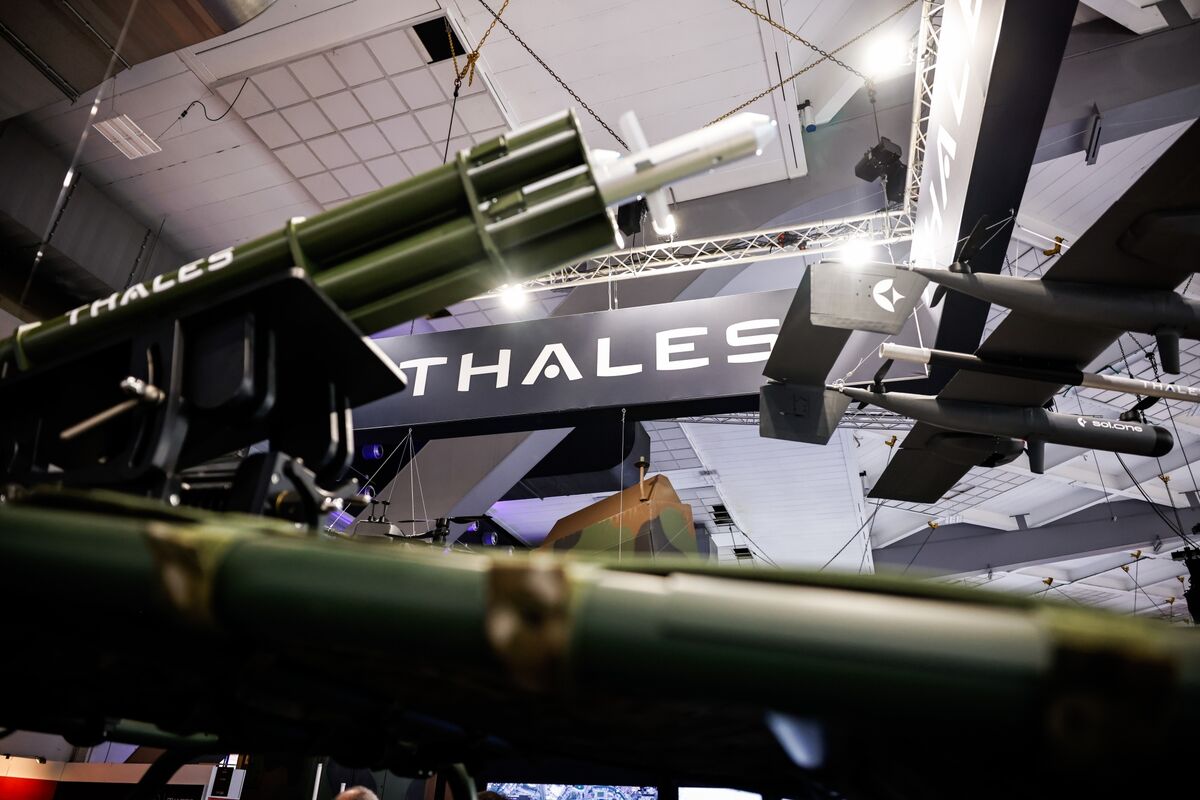
In a global landscape increasingly defined by geopolitical volatility, French aerospace and defense behemoth Thales SA has emerged as a bellwether for the industry, reporting sales that have not only met but significantly exceeded market expectations. The company's latest financial disclosures reveal a staggering 75% jump in orders for its defense division, a clear indicator of the robust and sustained demand for military hardware and advanced security solutions worldwide. This surge is intrinsically linked to heightened international tensions, with particular emphasis on the evolving dynamics in the Middle East and the persistent concerns surrounding Iran's regional influence and nuclear ambitions.
Thales's performance is more than just a financial success story; it's a profound reflection of a paradigm shift in global security priorities. Nations are recalibrating their defense strategies, investing heavily in modernizing their arsenals and securing their borders against a backdrop of complex threats ranging from conventional warfare to cyber warfare and hybrid conflicts. The company, known for its cutting-edge technologies in areas like radar systems, cybersecurity, and secure communications, is perfectly positioned to capitalize on this renewed focus on national security.
Geopolitical Undercurrents: The Iran Factor and Beyond
The dramatic increase in defense spending, particularly benefiting companies like Thales, cannot be understood without acknowledging the swirling currents of international politics. While the source mentions 'Iran Tensions' as a key driver, this is part of a broader tapestry of global instability. The war in Ukraine has undeniably reshaped European defense policies, prompting NATO members and other allies to boost their military budgets significantly. However, the Middle East remains a perennial flashpoint, and Iran's actions and ambitions continue to be a primary concern for many regional and global powers.
Iran's development of advanced missile capabilities, its support for proxy groups across the region, and the ongoing, albeit often stalled, negotiations around its nuclear program, all contribute to a climate of apprehension. This directly translates into increased demand for sophisticated defense systems capable of deterrence, surveillance, and rapid response. Countries in the Gulf Cooperation Council (GCC), for instance, have been consistently investing in air defense systems, naval capabilities, and intelligence gathering technologies, areas where Thales holds significant expertise. The perceived threat from Iranian drones and ballistic missiles has spurred a regional arms race, with Thales being a key beneficiary. Moreover, the broader competition between global powers, including the US, China, and Russia, also fuels defense spending as nations seek to maintain a strategic edge.
Thales's Strategic Prowess: A Deep Dive into Defense Innovation
Thales's success is not merely a passive response to market demand; it's a testament to its strategic investments in research and development and its ability to deliver state-of-the-art solutions. The company operates across several critical domains:
* Aerospace: While civilian aerospace has faced challenges, Thales's defense aerospace segment, including avionics for military aircraft and air traffic management systems, remains robust. * Space: Satellite communication, observation, and navigation systems are crucial for modern military operations, and Thales Alenia Space is a key player. * Ground Transportation: Secure communication and signaling systems for military logistics and infrastructure. * Defense & Security: This is the core of the recent surge, encompassing: * Radar and Air Defense Systems: Essential for detecting and neutralizing aerial threats. * Naval Systems: Sonars, combat management systems, and electronic warfare for surface vessels and submarines. * Cybersecurity: Protecting critical infrastructure and military networks from digital attacks, an increasingly vital component of national defense. * Secure Communications: Ensuring reliable and encrypted communication for armed forces. * Intelligence, Surveillance, and Reconnaissance (ISR): Technologies that provide critical battlefield awareness.
The company's integrated approach, combining hardware with software and services, allows it to offer comprehensive solutions that are highly attractive to governments seeking to modernize their defense capabilities. For example, the demand for electronic warfare systems has surged as adversaries increasingly employ sophisticated jamming and deception tactics. Thales's expertise in this area provides a significant competitive advantage.
Economic Implications and Market Outlook
The strong performance of defense contractors like Thales has broader economic implications. While often viewed through a geopolitical lens, the defense sector is a significant employer and driver of technological innovation. Increased orders translate into job creation, investment in R&D, and often, spin-off technologies that find applications in the civilian sector. However, it also raises questions about the allocation of national resources and the long-term sustainability of elevated defense spending.
From an investor's perspective, the defense sector, once considered cyclical, is now showing signs of more sustained growth. Geopolitical instability, coupled with the long procurement cycles inherent in defense contracts, provides a degree of revenue predictability. Analysts are closely watching how companies like Thales manage their supply chains and production capacities to meet this surging demand, especially in an environment where raw material costs and labor shortages can pose challenges.
The market outlook for defense remains strong. The ongoing conflict in Eastern Europe, the persistent tensions in the Indo-Pacific, and the volatile situation in the Middle East all suggest that the demand for advanced defense technologies will continue to grow in the foreseeable future. This trend is further amplified by the increasing sophistication of threats, necessitating continuous upgrades and innovation in defense capabilities. Thales, with its robust order book and strategic focus on key technological areas, appears well-positioned to maintain its trajectory of growth.
The Road Ahead: Balancing Security with Stability
Thales's impressive sales figures and the surge in defense orders paint a clear picture: the world is re-arming. This trend, while beneficial for defense companies, underscores a concerning reality of heightened global instability. The challenge for policymakers and international organizations will be to navigate these complex geopolitical waters, seeking to de-escalate tensions while ensuring national security.
For Thales, the path forward involves continuing to innovate and adapt to evolving threats. The integration of artificial intelligence (AI), quantum computing, and advanced data analytics into defense systems will be crucial. The company's ability to offer solutions that are not only powerful but also ethical and secure will define its leadership in the coming decades. As nations grapple with an increasingly unpredictable world, the demand for reliable, cutting-edge defense and security solutions will only intensify, positioning Thales at the forefront of this critical industry. The balance between maintaining robust defense capabilities and fostering global stability remains a delicate, yet paramount, endeavor.
Stay Informed
Get the world's most important stories delivered to your inbox.
No spam, unsubscribe anytime.
Comments
No comments yet. Be the first to share your thoughts!