Trump's Combative Defense: 'Treasonous' Critics and the Specter of Mideast Conflict
Former President Donald Trump delivered a fiery speech in Florida, vehemently defending his foreign policy decisions and lambasting domestic critics as 'treasonous'. He asserted that his actions averted a catastrophic conflict in the Middle East that could have engulfed Europe. The speech highlighted his consistent 'America First' doctrine and his confrontational approach to both international relations and internal dissent.
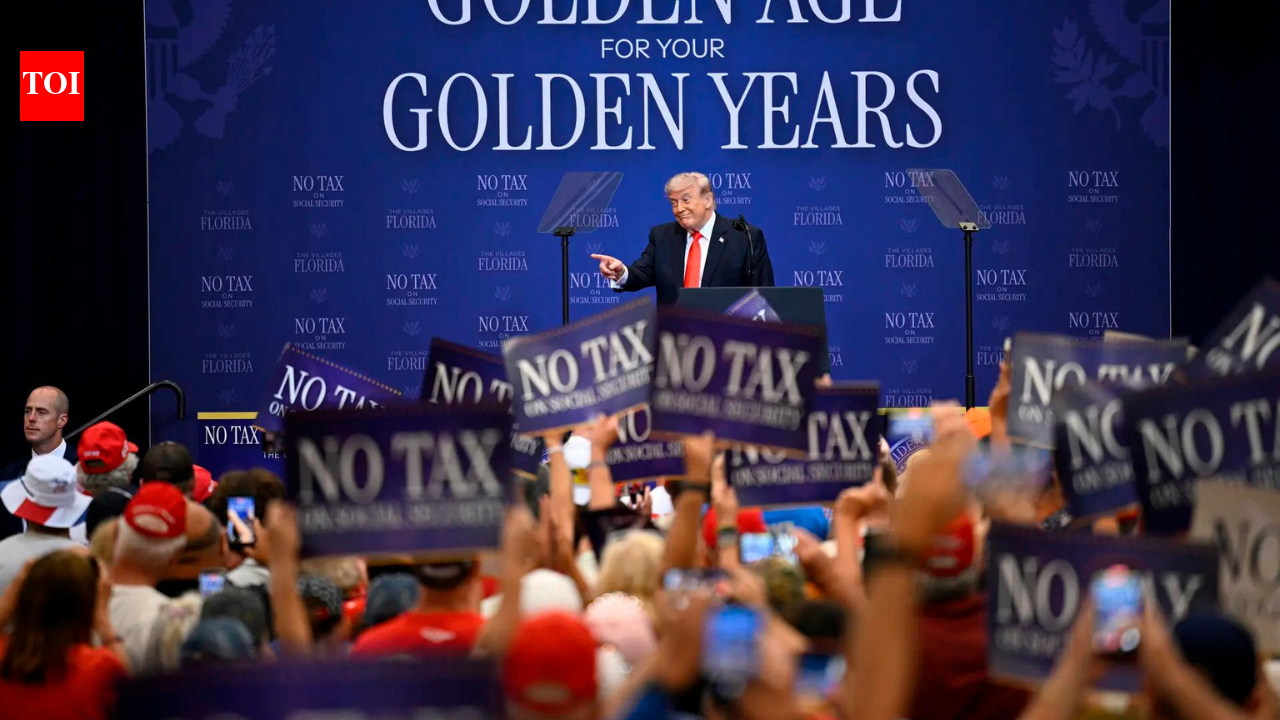
In a characteristic display of defiance and self-vindication, former U.S. President Donald Trump recently took to the stage in Florida, unleashing a torrent of criticism against his detractors while staunchly defending his foreign policy legacy. The wide-ranging and combative address, delivered to an enthusiastic audience in West Palm Beach and The Villages, saw Trump frame his administration's actions, particularly concerning the Middle East, as pivotal in averting a potentially devastating global conflict. His rhetoric, often bordering on the incendiary, labeled critics as 'treasonous,' underscoring a deep-seated conviction in the righteousness of his 'America First' agenda.
Trump's speech was not merely a retrospective; it was a reaffirmation of his political philosophy, a direct challenge to the establishment, and a clear signal of his continued influence on the American political landscape. The former president painted a vivid, albeit controversial, picture of a world teetering on the brink, saved from catastrophe by his decisive leadership. This narrative, while familiar to his supporters, reignited debates about the nature of U.S. foreign policy, the role of presidential power, and the boundaries of political discourse.
The 'Treasonous' Accusation and Domestic Dissent
One of the most striking elements of Trump's address was his unreserved condemnation of domestic critics, whom he branded as 'treasonous.' This strong language, a hallmark of his political career, was directed at those he perceived as undermining his foreign policy initiatives, particularly regarding Iran and the broader Middle East. The accusation of treason, traditionally reserved for acts against the state, when applied to political opposition, raises significant questions about the health of democratic debate and the polarization of American society. Critics argue that such rhetoric demonizes dissent and erodes the foundations of civil discourse, making it harder to find common ground on critical national security issues.
For Trump, however, this was not merely political posturing. It reflected a deeply held belief that opposition to his foreign policy was not just disagreement but an active effort to harm American interests. This perspective often characterized his presidency, where policy debates were frequently framed as battles between patriots and those seeking to undermine the nation. The speech served as a reminder that this confrontational style remains central to his public persona, appealing to a base that often feels unheard and unrepresented by mainstream political institutions.
The Iran Threat and averted Catastrophe
A central pillar of Trump's defense was his assertion that his administration's tough stance on Iran, including the withdrawal from the Joint Comprehensive Plan of Action (JCPOA), or the Iran nuclear deal, and the imposition of crippling sanctions, prevented a conflict that could have 'destroyed Europe, the Middle East, and beyond.' He argued that the previous administration's approach had emboldened Tehran, leading to increased instability and a greater risk of nuclear proliferation. His strategy, he maintained, was one of 'peace through strength,' designed to bring Iran to the negotiating table on terms more favorable to U.S. interests.
This claim, while resonating with his supporters, is viewed with skepticism by many foreign policy experts. They point to the fact that the withdrawal from the JCPOA led to Iran restarting parts of its nuclear program and increased tensions in the Persian Gulf, including attacks on oil tankers and drone strikes. The killing of Iranian General Qasem Soleimani in early 2020, while praised by Trump as a decisive blow against terrorism, also brought the U.S. and Iran to the brink of war. The debate over whether Trump's policies truly averted a larger conflict or merely shifted the nature of the threat remains a contentious point among analysts, with strong arguments on both sides. The long-term implications of these actions continue to unfold, shaping regional dynamics and international relations.
'America First' and a Reimagined Global Role
Trump's foreign policy, encapsulated by the slogan 'America First,' sought to redefine the United States' role in the world, prioritizing national interests above multilateral agreements and traditional alliances. This approach often manifested in unpredictable ways, from challenging NATO allies to engaging in direct, often transactional, diplomacy with adversaries. His speech in Florida reiterated this philosophy, suggesting that previous administrations had sacrificed American sovereignty and economic well-being for the sake of globalist ideals.
His supporters view 'America First' as a necessary correction to decades of perceived overreach and misguided interventions. They argue that it brought a pragmatic, business-like approach to foreign policy, focusing on tangible outcomes rather than abstract principles. Critics, however, contend that this approach alienated allies, weakened international institutions, and created a vacuum that rivals like China and Russia were quick to fill. The debate over the efficacy and long-term consequences of 'America First' continues to shape discussions about future U.S. foreign policy, particularly in a world grappling with new geopolitical challenges and shifting power dynamics.
The Enduring Legacy and Future Implications
Donald Trump's combative speech in Florida serves as a potent reminder of his enduring influence on American politics and foreign policy discourse. By defending his past actions and attacking his critics with vigor, he not only rallied his base but also forced a re-examination of the principles that guided his presidency. His claims of averting a major conflict in the Middle East, while debatable, highlight the high stakes of international relations and the profound impact of presidential decisions.
The implications of his rhetoric extend beyond mere political commentary. For international observers, it signals the continued potential for a return to a more nationalistic and transactional approach to global affairs. For domestic audiences, it underscores the deep ideological divides that persist within the United States, particularly concerning its role on the world stage. As the world navigates an increasingly complex geopolitical landscape, the legacy of Trump's 'America First' doctrine and his confrontational style will undoubtedly continue to shape debates about diplomacy, defense, and the very definition of American leadership. The question remains: was his approach a dangerous gamble or a necessary reset? The answer, like much of his presidency, remains fiercely contested, with history yet to render its final verdict.
Stay Informed
Get the world's most important stories delivered to your inbox.
No spam, unsubscribe anytime.
Comments
No comments yet. Be the first to share your thoughts!