UK Explores 'Defense Bank' to Bolster Northern European Allies Against Russian Threat
The United Kingdom is reportedly considering an ambitious plan to establish a 'defense bank' aimed at financing the rearmament efforts of its Northern European allies. This initiative, potentially modeled on a successful EU loan scheme, seeks to counter the escalating Russian threat and strengthen regional security. Such a move would mark a significant shift in UK foreign and defense policy, fostering deeper military cooperation and investment across the continent. It underscores a growing recognition of the need for collective defense in a rapidly changing geopolitical landscape.
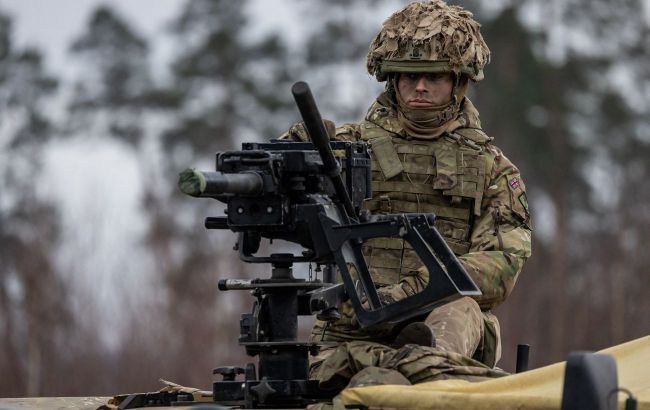
In a strategic move that could redefine European security architecture, the United Kingdom is reportedly exploring the creation of a dedicated 'defense bank' to facilitate the rearmament of its Northern European allies. This audacious proposal, first brought to light by The Telegraph, signifies a profound commitment by London to bolster regional defenses in the face of an increasingly assertive Russia. The initiative, if implemented, would not only provide crucial financial backing but also cement the UK's role as a pivotal security guarantor in the post-Brexit era.
The concept draws inspiration from a similar, highly successful €150 billion EU loan scheme designed to finance weapons purchases by member states. By adopting a comparable model, the UK aims to provide a robust financial mechanism for nations, particularly those on Russia's doorstep, to modernize and expand their military capabilities. This comes at a time when defense spending across Europe is experiencing a significant uptick, driven by the stark realities of the conflict in Ukraine and the perceived long-term threat emanating from Moscow.
The Geopolitical Imperative: A Shifting European Landscape
The idea of a defense bank emerges against a backdrop of profound geopolitical shifts. Russia's full-scale invasion of Ukraine in February 2022 served as a brutal awakening for many European nations, shattering decades of relative peace and challenging deeply held assumptions about continental security. Countries like Poland, the Baltic states (Estonia, Latvia, Lithuania), and the Nordic nations (Finland, Sweden, Norway, Denmark) have long viewed Russia with a mixture of caution and concern, given their historical experiences and geographical proximity. The war in Ukraine has amplified these anxieties, prompting an urgent re-evaluation of defense postures.
For the UK, which has consistently advocated for a strong European defense and has been a leading provider of military aid to Ukraine, this initiative aligns with its broader foreign policy objectives. Post-Brexit, London has sought to forge new alliances and deepen existing partnerships, particularly within its 'Northern European' sphere of influence. A defense bank would provide a tangible mechanism to operationalize this vision, transforming rhetoric into concrete action. It signals a departure from purely national defense strategies towards a more integrated, collective security approach, albeit one led by the UK outside the formal EU structures.
Modelling Success: Lessons from the EU's European Peace Facility
The Telegraph's report specifically mentions that the UK's plans could be modeled on an existing EU loan scheme. While the exact scheme isn't specified in the source, the most prominent and relevant EU mechanism for financing military aid and equipment is the European Peace Facility (EPF). Established in 2021, the EPF is an off-budget instrument designed to enhance the EU's ability to prevent conflicts, preserve peace, and strengthen international stability and security. Crucially, it allows the EU to finance actions with military or defense implications, including the provision of military equipment to partners.
Since the invasion of Ukraine, the EPF has been extensively utilized, with billions of euros allocated to reimburse member states for military equipment supplied to Kyiv. This facility demonstrates the effectiveness of a collective financial mechanism in rapidly mobilizing resources for defense purposes. The UK's proposed defense bank would likely aim to replicate this efficiency, potentially offering loans or guarantees to Northern European nations for the procurement of advanced weaponry, training, and infrastructure development. The key difference, of course, would be its UK-centric focus and its role in strengthening bilateral and multilateral ties outside the EU framework.
Who Benefits? The '10 Northern' and Beyond
The source indicates that the defense bank, if implemented, would primarily serve the '10 northern' nations. While the precise composition of this group isn't detailed, it almost certainly refers to a combination of Nordic, Baltic, and potentially other strategically important Northern European countries. This would include:
* Nordic Countries: Denmark, Finland, Iceland, Norway, Sweden (all of whom are now NATO members or applicants, except Iceland which has no standing army but is a NATO member). * Baltic States: Estonia, Latvia, Lithuania (all NATO members, sharing direct borders with Russia). * Poland: A crucial frontline state and a major defense spender, though geographically often considered Central-Eastern Europe, its strategic importance to Northern European security is undeniable. * Germany: While a major economic power, its geographical position and increasing defense commitments make it a potential partner. * Netherlands and Belgium: Key NATO allies with significant naval and air capabilities.
These nations often share similar security concerns regarding Russia's military posture in the Baltic Sea region, the Arctic, and along their land borders. A dedicated UK-led defense fund could provide a much-needed financial boost, enabling these countries to accelerate their defense modernization plans without solely relying on their national budgets or existing NATO mechanisms. It could also foster greater interoperability and joint procurement initiatives, leading to more efficient use of resources and stronger collective defense capabilities.
Implications and Challenges: A New Era of UK Leadership?
The establishment of a UK defense bank would carry significant implications. For the UK, it would underscore its commitment to European security and its desire to play a leading role on the continent, even after leaving the European Union. It would also serve as a powerful signal to Russia that Western nations are united in their resolve to defend their interests and territories.
However, such an ambitious undertaking is not without its challenges. Firstly, the financial commitment would be substantial. The UK government would need to determine the scale of the bank's capital, the terms of its loans, and the mechanisms for risk assessment. Secondly, political will is paramount. Securing cross-party support and maintaining a consistent policy direction over the long term will be crucial. Thirdly, coordination with existing structures like NATO and the EU will be essential to avoid duplication and ensure maximum effectiveness. The UK would need to demonstrate that this initiative complements, rather than competes with, established defense frameworks.
Furthermore, the success of the bank would depend on the willingness of recipient nations to participate and the transparency of its operations. Ensuring that funds are used effectively and contribute to genuine defense enhancements, rather than merely propping up inefficient military bureaucracies, will be a critical task.
Looking Ahead: A Stronger, More Resilient Europe
The proposal for a UK defense bank represents a bold and forward-thinking approach to European security. In an era defined by renewed great power competition and regional instability, innovative financial mechanisms are increasingly necessary to meet the demands of modern defense. By offering a dedicated funding stream, the UK could significantly contribute to the rearmament and resilience of its Northern European partners, fostering a more secure and stable continent.
This initiative is more than just about money; it's about solidarity, strategic alignment, and the collective determination to deter aggression. As Europe continues to grapple with the multifaceted challenges posed by Russia, the UK's potential defense bank could emerge as a cornerstone of a revitalized, collective security posture, ensuring that the nations on the front lines are equipped to defend their sovereignty and safeguard peace for generations to come.
Stay Informed
Get the world's most important stories delivered to your inbox.
No spam, unsubscribe anytime.
Comments
No comments yet. Be the first to share your thoughts!