US Troop Drawdown in Germany: A Catalyst for European Defense or a Strategic Blunder?
The planned withdrawal of 5,000 US troops from Germany has ignited a fierce debate across the Atlantic. While Berlin views it as a necessary impetus for greater European defense autonomy, top Republican lawmakers in the US express grave concerns about its implications for NATO and global stability. This move forces Europe to re-evaluate its security architecture amid evolving geopolitical challenges.
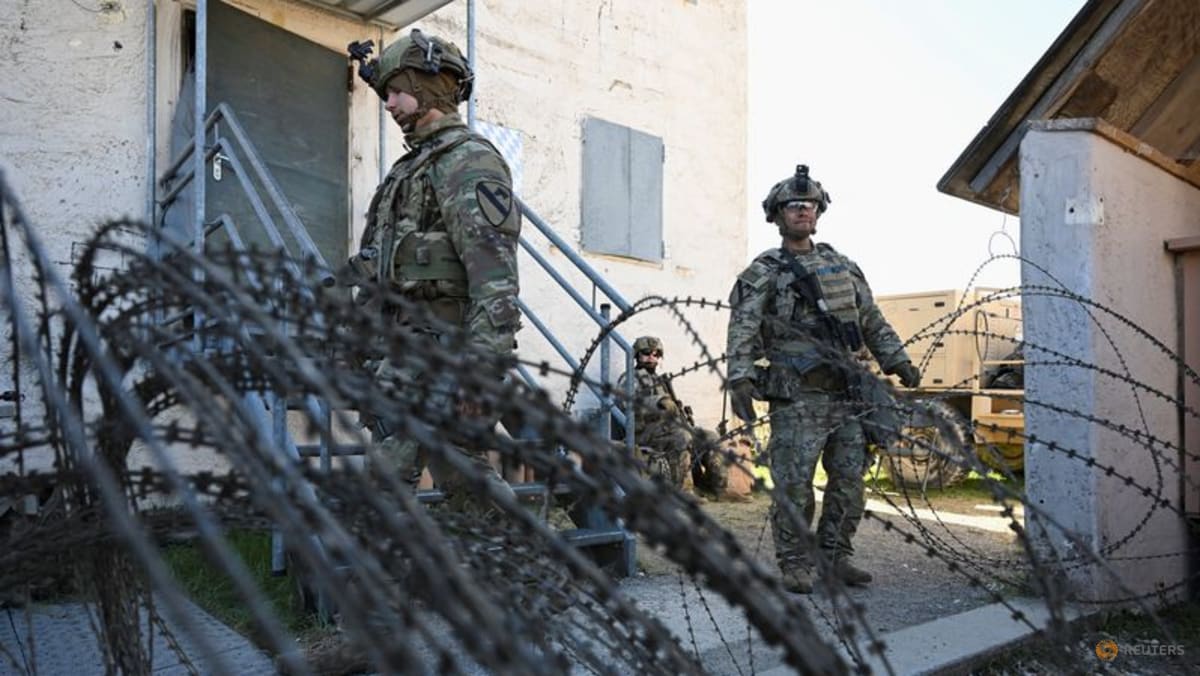
In a move that has sent ripples through transatlantic security circles, the United States announced a significant reduction of its military presence in Germany. President Donald Trump, in remarks to reporters, confirmed plans to cut down on troop numbers, stating, "We're going to cut way down and we're cutting a lot further than 5,000." This declaration has been met with a mixed reception, prompting both calls for greater European self-reliance and warnings of potential strategic vulnerabilities.
German Defence Minister Boris Pistorius, while acknowledging the decision, framed it as a crucial opportunity for Europe to bolster its own defense capabilities. "This should spur Europe to strengthen its own defenses," Pistorius stated, reflecting a sentiment shared by many European leaders who have long advocated for increased strategic autonomy. However, this perspective stands in stark contrast to the concerns voiced by prominent US Republican lawmakers, who fear the withdrawal could undermine NATO's collective security and embolden adversaries.
A Shifting Transatlantic Alliance: Historical Context
The presence of US troops in Germany dates back to the end of World War II, initially as an occupation force and later as a cornerstone of NATO's defense against the Soviet Union during the Cold War. At its peak, hundreds of thousands of American soldiers were stationed in West Germany, symbolizing the unwavering commitment of the United States to European security. Even after the fall of the Berlin Wall and the collapse of the Soviet Union, a substantial US military footprint remained, adapting to new threats such as terrorism and regional conflicts.
For decades, Germany has served as a vital logistical hub for US military operations in Europe, Africa, and the Middle East. Bases like Ramstein Air Base and Spangdahlem Air Base are critical for air transport, command and control, and medical evacuation. The US Army Garrison Wiesbaden houses the headquarters of the US Army Europe and Africa, while the US European Command (EUCOM) and US Africa Command (AFRICOM) are both headquartered in Stuttgart. This extensive infrastructure and strategic positioning have made Germany an indispensable partner in projecting American power and maintaining regional stability.
However, the relationship has not been without its tensions. Persistent calls from Washington for Germany to increase its defense spending to meet NATO's 2% of GDP target have often been a point of contention. The current administration's decision to reduce troop numbers can be seen, in part, as a response to these perceived shortfalls and a broader "America First" foreign policy agenda that prioritizes domestic interests and burden-sharing from allies.
Implications for European Security and NATO
The withdrawal of 5,000 US troops, while not a complete exodus, represents a significant reduction in force numbers and could have profound implications for European security. Top Republican lawmakers, including Senator Jim Inhofe, then-chairman of the Senate Armed Services Committee, and Representative Mac Thornberry, then-ranking member of the House Armed Services Committee, expressed strong opposition to the move. They argued that such a reduction would weaken NATO, harm US-German relations, and potentially expose Europe to greater risks from aggressive actors like Russia.
* Weakened Deterrence: A reduced US presence could be interpreted by potential adversaries as a sign of diminishing American commitment, potentially emboldening them to act more aggressively in Eastern Europe or other contested regions. * Logistical Challenges: The loss of personnel could strain existing logistical networks and operational capabilities, impacting the speed and effectiveness of NATO's rapid response forces. * Political Signal: The move sends a political signal that could undermine the unity and resolve of the transatlantic alliance, particularly at a time when collective action is crucial to address complex global challenges.
Conversely, proponents of the withdrawal argue that it could serve as a much-needed catalyst for European strategic autonomy. For years, European nations have relied heavily on the US security umbrella. This reduction, they contend, might finally push European Union members to invest more in their own defense capabilities, foster greater military cooperation, and develop a more coherent common security and defense policy. This aligns with the long-standing vision of a more self-reliant Europe capable of managing its own security challenges.
The Path Forward: European Autonomy vs. Transatlantic Unity
The debate surrounding the troop drawdown highlights a fundamental tension within the transatlantic alliance: the desire for European strategic autonomy versus the enduring need for American leadership and military might. Achieving a balance between these two objectives will be critical for the future of NATO and global security.
For Germany and other European nations, the immediate challenge will be to demonstrate a credible commitment to increased defense spending and military modernization. This includes investing in advanced military technologies, enhancing interoperability among European forces, and developing robust command and control structures. Initiatives like the Permanent Structured Cooperation (PESCO) and the European Defence Fund are steps in this direction, but they require sustained political will and financial investment to truly bear fruit.
From the US perspective, the decision to reduce troops in Germany is part of a broader re-evaluation of its global military posture. While some argue it's a punitive measure, others see it as a strategic recalibration to address emerging threats in the Indo-Pacific and other regions, requiring a more flexible and agile force deployment. The long-term impact will depend on how effectively the remaining US forces are utilized and how European allies step up to fill any perceived gaps.
Conclusion: A Defining Moment for Transatlantic Relations
The planned reduction of US troops in Germany marks a defining moment for the transatlantic alliance. It is a decision that forces Europe to confront its long-held reliance on American security guarantees and to accelerate its efforts towards building a more robust and independent defense capability. While the immediate concerns raised by US Republicans about NATO's strength are valid, the move also presents an unprecedented opportunity for Europe to forge a stronger, more unified security identity.
The coming years will test the resilience of the transatlantic bond and the resolve of European nations to take greater ownership of their own security. The outcome will not only shape the future of NATO but also redefine the geopolitical landscape, determining whether Europe emerges as a more capable and autonomous security actor or if the alliance faces a period of unprecedented strain. The world watches as this critical chapter unfolds, with profound implications for global stability and the balance of power.
Stay Informed
Get the world's most important stories delivered to your inbox.
No spam, unsubscribe anytime.
Comments
No comments yet. Be the first to share your thoughts!