Vilnius Summit: Eastern Europe and Central Asia Unite Against Corruption with OECD ACN
Anti-corruption leaders from Eastern Europe and Central Asia convened in Vilnius for a strategic dialogue, hosted by Lithuania's STT and the OECD ACN. The summit addressed pressing challenges like illicit financial flows, state capture, and the impact of geopolitical shifts. Participants emphasized the critical need for regional cooperation, digital innovation, and robust legal frameworks to combat corruption effectively and foster democratic resilience.
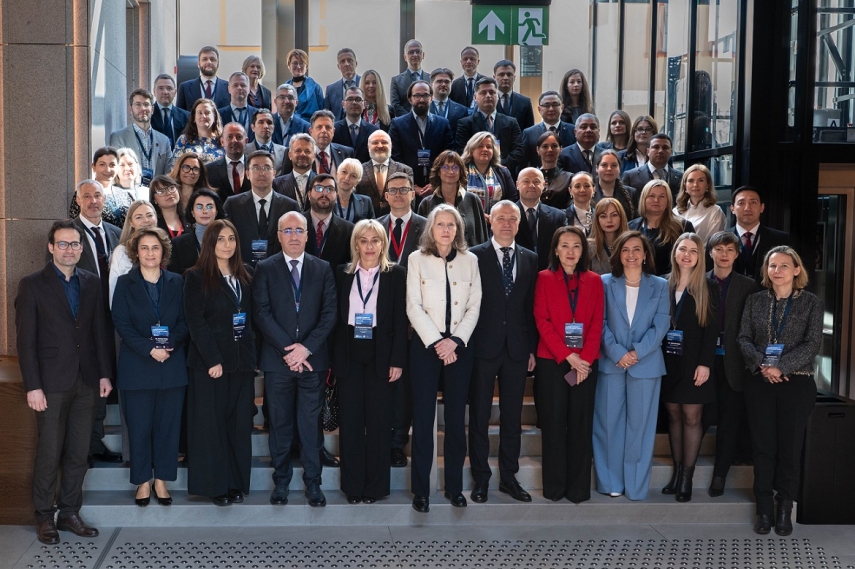
In a world grappling with complex geopolitical shifts and persistent threats to democratic governance, the fight against corruption remains a cornerstone of stability and prosperity. On April 21–22, 2024, the Lithuanian capital of Vilnius became the epicenter of this crucial battle, hosting the Strategic Dialogue of Anti-Corruption Leaders of Eastern Europe and Central Asia. Organized by Lithuania's Special Investigation Service (STT) in close cooperation with the OECD Anti-Corruption Network for Eastern Europe and Central Asia (ACN), this high-level gathering underscored a renewed commitment to tackling systemic graft across a region vital to global security and economic development.
The dialogue brought together an impressive array of participants, including heads of anti-corruption agencies, senior policy makers, and representatives from international organizations. Their collective mission: to forge stronger alliances, share best practices, and devise innovative strategies to combat the multifaceted challenge of corruption. The discussions were not merely theoretical; they delved into the practicalities of investigation, prevention, and international cooperation, recognizing that corruption is a transnational phenomenon demanding a coordinated, transnational response.
The Enduring Challenge: State Capture and Illicit Flows
The specter of state capture looms large over many nations in Eastern Europe and Central Asia. This insidious form of corruption, where private interests significantly influence a state's decision-making processes for their own gain, undermines public trust, distorts markets, and stifles economic growth. Participants at the Vilnius summit highlighted how state capture often manifests through opaque procurement processes, undue lobbying, and the manipulation of legal and regulatory frameworks. The consequences are dire, ranging from weakened institutions to a pervasive sense of injustice among citizens.
Another critical focus was the pervasive issue of illicit financial flows (IFFs). These flows, often the proceeds of corruption, organized crime, and tax evasion, drain billions from national economies annually, depriving states of resources vital for public services and development. The dialogue emphasized the urgent need for enhanced international cooperation in tracing, freezing, and recovering these assets. Experts discussed the complexities of following money trails across borders, often through intricate networks of shell companies and offshore accounts, and the necessity of robust legal frameworks to facilitate asset recovery. The role of financial intelligence units (FIUs) and their collaboration with law enforcement agencies was deemed paramount in disrupting these financial arteries of corruption.
Geopolitical Realities and the Fight Against Corruption
The current geopolitical landscape, marked by conflicts, political instability, and shifting alliances, adds another layer of complexity to anti-corruption efforts. The war in Ukraine, for instance, has not only highlighted the vulnerability of nations to external aggression but also underscored how corruption can weaken a state's resilience and its ability to defend itself. The dialogue acknowledged that in times of crisis, opportunities for corruption can proliferate, particularly in areas like humanitarian aid, reconstruction efforts, and defense procurement.
Participants discussed how geopolitical shifts influence the political will for anti-corruption reforms and the capacity of institutions to implement them. The need to safeguard anti-corruption bodies from political interference and ensure their independence was a recurring theme. Moreover, the discussions touched upon the weaponization of corruption by external actors to destabilize regions, making the domestic fight against graft an integral part of national security strategies. This perspective elevates anti-corruption from a purely domestic governance issue to a critical component of international stability and democratic defense.
Innovation and Cooperation: The Path Forward
The Vilnius dialogue was not just about identifying problems; it was fundamentally about finding solutions. A key takeaway was the emphasis on digital transformation and the adoption of cutting-edge technologies in anti-corruption efforts. Artificial intelligence, big data analytics, and blockchain technology offer unprecedented opportunities to enhance transparency, detect suspicious patterns, and streamline investigative processes. For example, AI can be used to analyze vast datasets of public procurement contracts to identify anomalies indicative of collusion or fraud, while blockchain could offer immutable records for land registries or supply chains, reducing opportunities for bribery and manipulation.
Beyond technology, the importance of regional and international cooperation was reiterated as non-negotiable. Corruption, by its very nature, transcends borders, and effective countermeasures require a collaborative spirit among nations. The OECD ACN, through its facilitation of such dialogues, plays a crucial role in fostering this cooperation, providing a platform for peer learning, mutual assistance, and the harmonization of anti-corruption standards. Bilateral agreements, multilateral initiatives, and the sharing of intelligence were identified as vital tools in building a collective defense against corruption.
Key areas for enhanced cooperation include: * Information Sharing: Establishing secure and efficient channels for exchanging financial intelligence and investigative data. * Joint Investigations: Coordinating cross-border probes into complex corruption cases, particularly those involving organized crime. * Capacity Building: Providing technical assistance and training to strengthen the institutional capabilities of anti-corruption agencies. * Asset Recovery: Streamlining legal processes for the international tracing, freezing, and repatriation of stolen assets.
A Commitment to Democratic Resilience
The Strategic Dialogue concluded with a strong message: the fight against corruption is inextricably linked to the broader goal of building democratic resilience. Robust anti-corruption frameworks are not merely about punishing wrongdoers; they are about strengthening the rule of law, protecting human rights, and ensuring that public resources serve the public good. The leaders present in Vilnius reaffirmed their commitment to implementing the highest international standards, including those set by the United Nations Convention Against Corruption (UNCAC) and the OECD's own recommendations.
The discussions also highlighted the critical role of civil society organizations, independent media, and the private sector as essential partners in this endeavor. Their vigilance, advocacy, and investigative journalism often serve as the first line of defense against corruption, holding power to account and demanding transparency. Moving forward, the insights and strategies developed at this summit will undoubtedly inform national policies and regional initiatives, reinforcing the collective resolve to create a more transparent, accountable, and just future for Eastern Europe and Central Asia. The path is challenging, but the unified front forged in Vilnius offers a beacon of hope for genuine reform and lasting change.
Stay Informed
Get the world's most important stories delivered to your inbox.
No spam, unsubscribe anytime.
Comments
No comments yet. Be the first to share your thoughts!