White House Correspondents' Dinner Attack: A Deep Dive into the Threat Against Trump
An attempted attack at the White House Correspondents' Dinner has sent shockwaves through Washington, with officials believing the suspect specifically targeted former President Donald Trump and his administration. This incident reignites critical discussions about political polarization, security vulnerabilities, and the escalating rhetoric in American public life. PulseWorld investigates the implications for national security and democratic institutions.
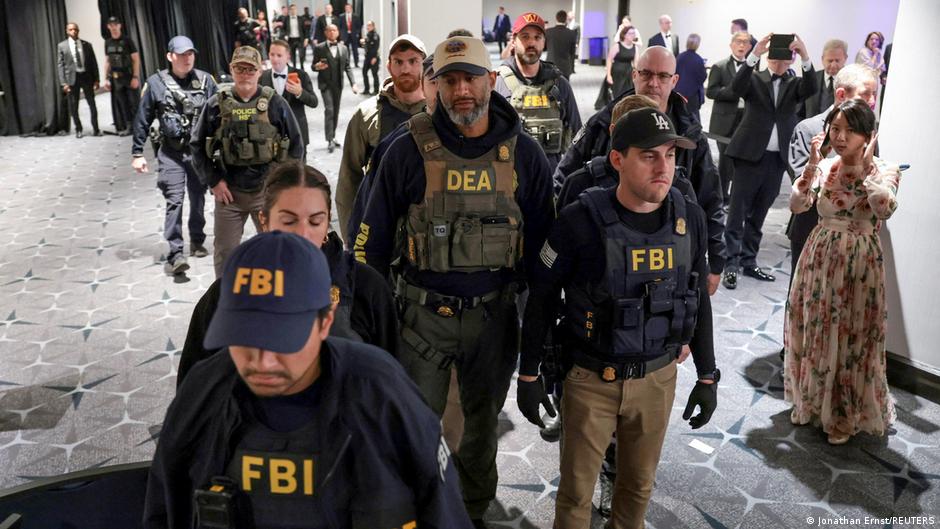
The glitz and glamour of the annual White House Correspondents' Dinner, a traditional gathering of journalists, politicians, and celebrities, was shattered by a chilling attempted attack that has reverberated across the nation. On April 26, 2026, an individual, now identified as the primary suspect, allegedly sought to disrupt the event with violent intent, with initial reports from law enforcement and intelligence officials suggesting a specific targeting of former US President Donald Trump and members of his administration. This incident, while thankfully averted from causing mass casualties, has ignited a fervent debate about the state of political discourse, the effectiveness of security protocols, and the very fabric of American democracy.
The immediate aftermath saw a flurry of activity, with security forces swiftly apprehending the suspect and initiating a comprehensive investigation. While details remain under wraps, the preliminary assessment that Trump was the intended target underscores a disturbing trend of escalating political animosity. The White House Correspondents' Dinner, often a lighthearted affair, has in recent years become a more politically charged event, sometimes boycotted by sitting presidents, including Trump himself during his term. This year's event, with Trump in attendance, presented a high-profile target for anyone seeking to make a violent political statement.
The Anatomy of a Threat: Who Was Targeted and Why?
According to sources close to the investigation, the suspect's motives appear to be deeply rooted in political grievances. While the full extent of their planning and capabilities is still being unraveled, the focus on President Trump and his former administration officials points to a highly specific, politically motivated agenda. This is not merely an act of random violence but a calculated attempt to strike at the heart of American political power. The implications are profound, suggesting a level of radicalization that transcends traditional protest and veers into dangerous territory.
The choice of the Correspondents' Dinner as a venue is particularly symbolic. It is a place where the press and politicians, often adversaries, gather in a rare moment of shared humanity, albeit with underlying tensions. An attack here would not only target individuals but also the institutions they represent: the presidency, the free press, and the democratic process itself. The incident serves as a stark reminder that political violence, once a distant specter, is increasingly becoming a tangible threat in the United States.
Historical Echoes: Political Violence in America
America has a long and often tragic history of political violence, from assassinations of presidents like Abraham Lincoln and John F. Kennedy to attempts on the lives of figures such as Ronald Reagan and Gabby Giffords. The late 1960s and early 1970s saw a surge in politically motivated bombings and attacks by groups on both the far-left and far-right. More recently, the attack on the US Capitol on January 6, 2021, demonstrated the fragility of democratic institutions when confronted by extremist ideologies and violent intent.
This latest incident at the Correspondents' Dinner fits into a worrying pattern. The rise of hyper-partisanship, the proliferation of misinformation, and the dehumanization of political opponents in public discourse have created a fertile ground for radicalization. Social media, in particular, has been identified as a significant amplifier of extremist views, allowing individuals to find echo chambers that reinforce their grievances and potentially incite them to action. Understanding this historical context is crucial for comprehending the gravity of the current threat landscape.
Security Implications and the Future of Public Events
The attempted attack will undoubtedly lead to a comprehensive review of security protocols for high-profile public events, especially those attended by current and former government officials. The Secret Service, responsible for protecting the president and other dignitaries, will face intense scrutiny. Questions will be raised about intelligence gathering, threat assessment, and the physical security measures in place at venues like the Washington Hilton, where the dinner is traditionally held.
For events like the Correspondents' Dinner, which thrive on accessibility and a certain level of public interaction, balancing security with tradition will be a significant challenge. The desire to maintain an open society must contend with the grim reality of evolving threats. This could mean more stringent background checks for attendees, increased perimeter security, and potentially a re-evaluation of the format of such gatherings to minimize risks. The incident forces a difficult conversation: how much freedom are we willing to sacrifice for security, and where do we draw the line?
The Broader Societal Impact: Polarization and Rhetoric
Beyond the immediate security concerns, this incident casts a long shadow over the state of American political discourse. The targeting of a former president, regardless of one's political affiliation, is an attack on the office itself and the democratic process. It highlights the dangerous consequences of unchecked political polarization, where opponents are increasingly viewed not just as rivals but as enemies.
Leaders across the political spectrum have a responsibility to de-escalate rhetoric and foster an environment where disagreements can be aired without inciting violence. The language used by politicians, media figures, and even ordinary citizens online can have real-world consequences. This event serves as a somber reminder that words matter, and that inflammatory language can be interpreted as a call to action by those predisposed to extremism. Rebuilding civility and mutual respect in public life is not just an ideal; it has become a critical component of national security.
Moving Forward: A Call for Unity Amidst Division
The attempted attack at the White House Correspondents' Dinner is a stark wake-up call. It underscores the urgent need for a collective societal effort to address the roots of political violence. This includes strengthening mental health services, combating misinformation, promoting media literacy, and fostering a culture of respectful debate. It also requires law enforcement and intelligence agencies to adapt continually to new threats, leveraging technology and intelligence to prevent future incidents.
In the face of such challenges, the resilience of democratic institutions is tested. The ability of a society to come together, condemn violence unequivocally, and reaffirm its commitment to peaceful political processes is paramount. The incident at the Correspondents' Dinner must not be allowed to further divide an already fractured nation but instead serve as a catalyst for introspection, dialogue, and a renewed commitment to the principles of democracy and civility. The path forward is fraught with difficulty, but the alternative – a society consumed by fear and violence – is simply unacceptable. The future of American democracy hinges on its capacity to heal and unite.
Stay Informed
Get the world's most important stories delivered to your inbox.
No spam, unsubscribe anytime.
Comments
No comments yet. Be the first to share your thoughts!